Evening shadows — History & Facts
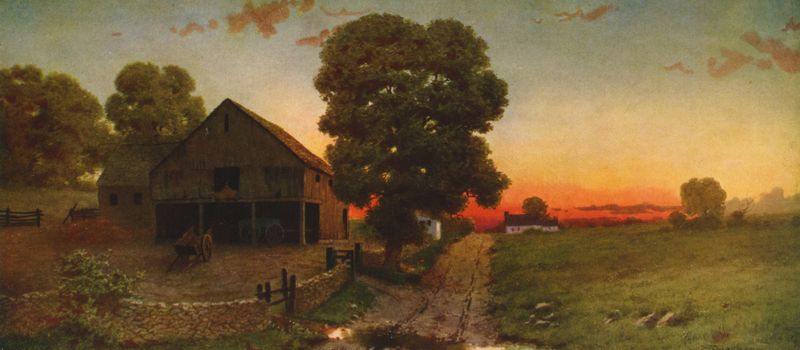
Could beauty survive in a century of chaos? This question resonates deeply within the stillness of Evening Shadows, capturing a moment that feels both timeless and fleeting. Focus on the deep hues that envelop the canvas, where twilight dances across the landscape, transforming mundane elements into ethereal forms. Notice how the gentle gradient of blue and orange creates a soothing transition between day and night, inviting the viewer to linger in its embrace. The interplay of light and shadow is masterfully rendered, guiding your eyes toward the silhouettes that emerge, hinting at the quiet stories hidden within their forms. Amidst the tranquil beauty, there lies an undercurrent of tension that stirs the soul.
The shadows may symbolize uncertainty and isolation, contrasting sharply with the warm glow of the fading sun. This juxtaposition speaks to the fragility of faith—how it stands resilient yet vulnerable amidst the encroaching darkness. Each stroke whispers of hope, suggesting that even in chaos, the remnants of light can inspire strength and reflection. Edwin Lamasure painted Evening Shadows around 1910, during a time of great change in Europe.
Emerging from an era marked by artistic experimentation, he found himself amid the tensions of the early 20th century, with the art world grappling with modernism and the tumult of societal transformation. It was a period that would soon usher in global conflict, yet Lamasure captured this moment of serene beauty, a poignant reminder that even in upheaval, moments of grace endure.