
Excavated church in the caverns at Inkermann, looking west — History & Facts
Can beauty exist without sorrow? The haunting allure of the underground reveals a yearning for solace amidst the remnants of loss and decay. Look closely at the intricate details of the caverns, where stone and shadow entwine. Focus on the crumbling archway to the left, framing the view of the church beyond. Notice how the dim light filters through the cave's entrance, illuminating the rough textures of the rock while casting long, deep shadows that suggest both depth and distance.
The muted palette of browns and grays evokes a sense of history and melancholy, inviting the viewer to ponder what stories lie buried within these silent walls. This painting encapsulates the tension between the sacred and the forsaken. The church stands like a ghost of faith, its presence a poignant reminder of what once was, while the surrounding caverns echo a longing for reconnection. The juxtaposition of the sturdy stone structure against the fragile, eroded landscape reflects the duality of hope and despair.
Each brushstroke whispers of the past, evoking a sense of loss intertwined with the beauty of the human spirit that sought refuge in this hidden sanctuary. In 1855, William Simpson was in the midst of his travels through the Crimean region, documenting the war and its aftermath. This period was marked by profound transformations in art, as many artists sought to capture the realities of life away from the heroic narratives that had dominated. Simpson, drawn by both the beauty of the landscape and the scars left by conflict, painted this scene during a time when the interplay of nature and architecture resonated with the collective memory of a society grappling with change.
More Artworks by William Simpson
Browse all →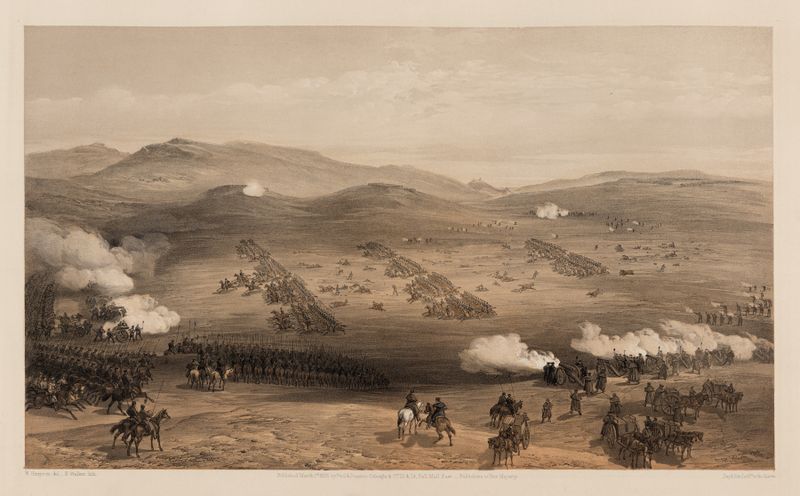
Charge of the light cavalry brigade, 25th Oct. 1854, under Major General the Earl of Cardigan
William Simpson

Charge of the heavy cavalry brigade, 25th Octr. 1854
William Simpson
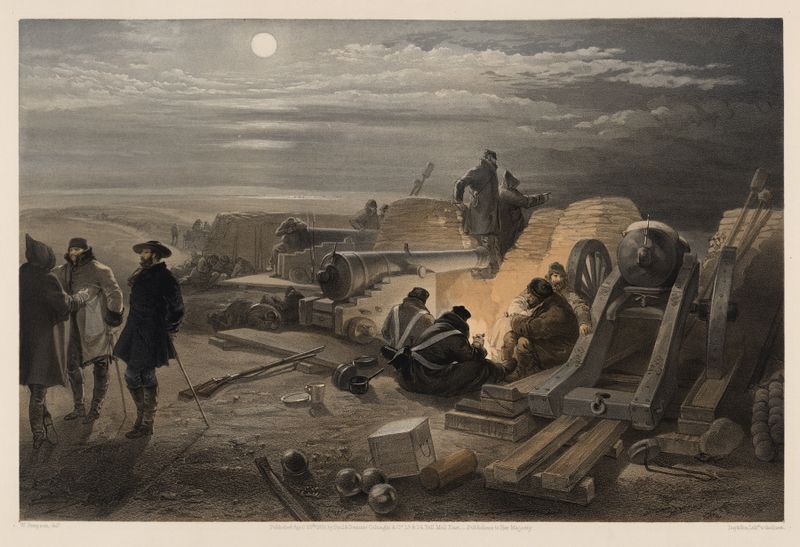
A quiet night in the batteries – a sketch in the Greenhill battery (Major Chapman’s), 29th Jany. 1855
William Simpson

The Great Wall of China
William Simpson
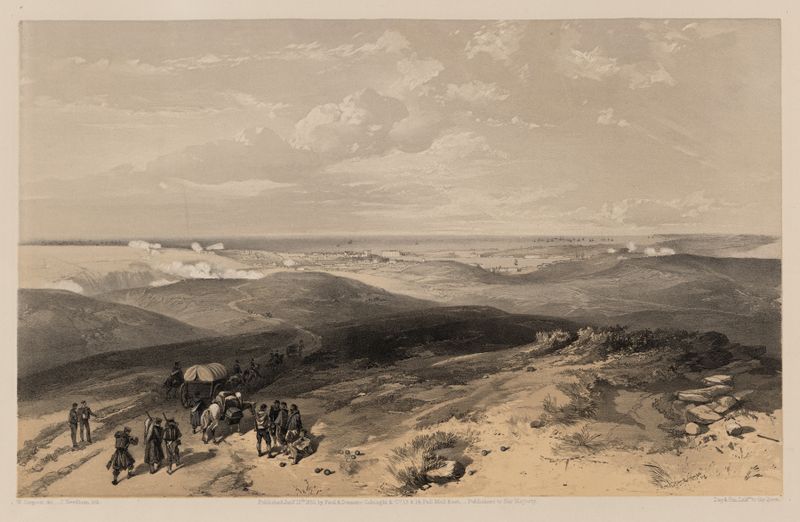
Sebastopol from the rear of the English batteries
William Simpson
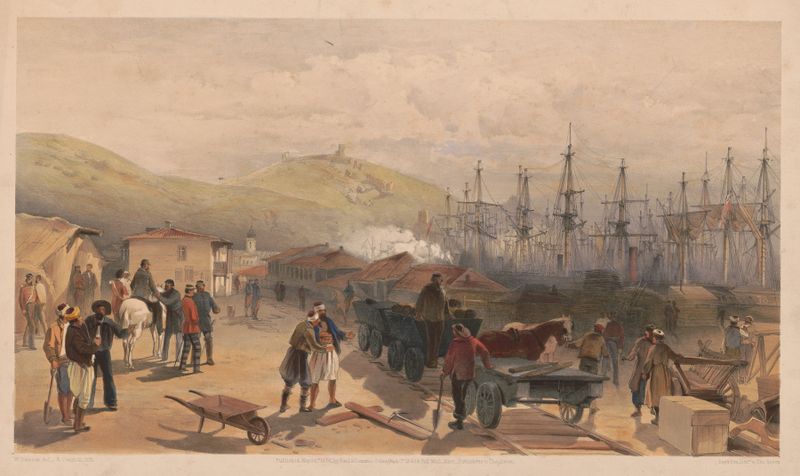
The railway at Balaklava, looking south
William Simpson

The Governor-General’s and Commander-in-Chief’s Camp at Jalandhar, 1 Febuary 1860
William Simpson
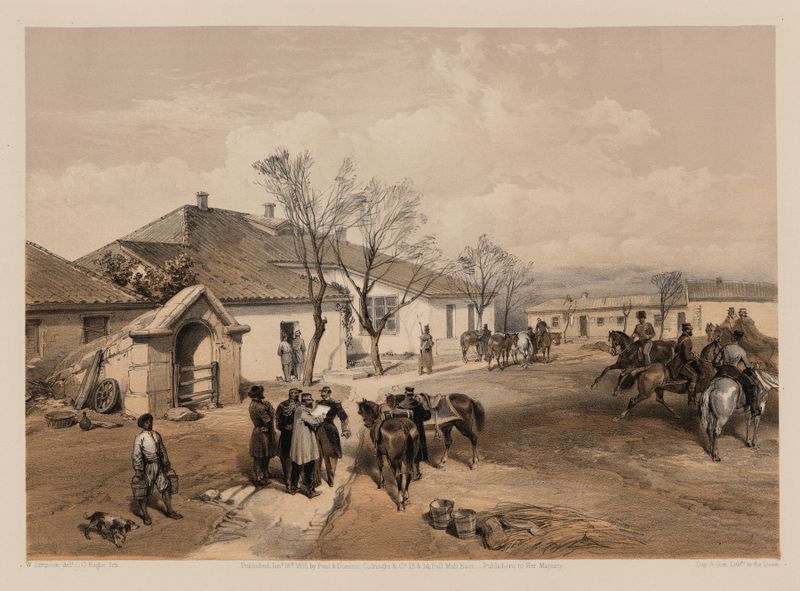
Lord Raglan’s head quarters at Khutor-Karagatch
William Simpson
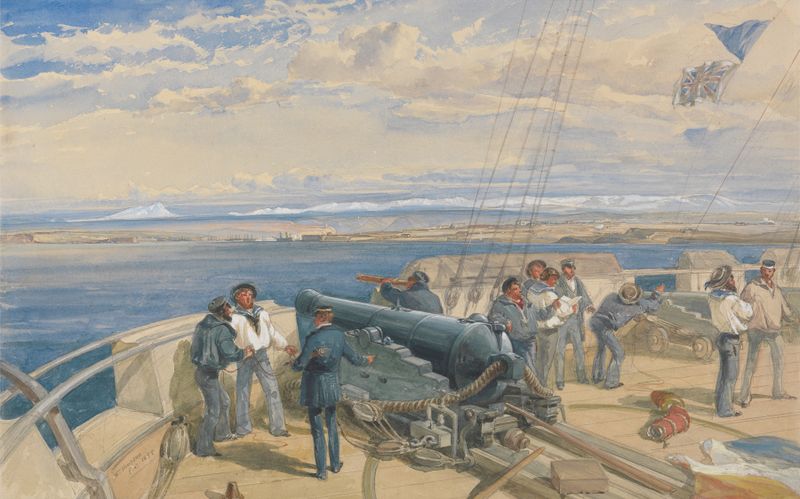
Sebastopol from the Sea, Sketched from the Deck of H. M. S. Sidon, Feb. 1855
William Simpson
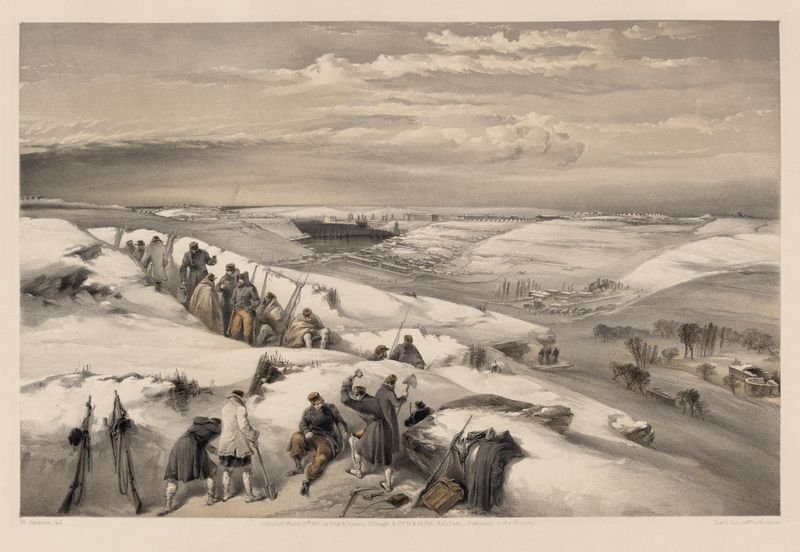
Sebastobol from the 26 gun battery on the extreme right of French attack
William Simpson
More Architecture Art
Browse all →
The statue of Liberty
Frédéric Auguste Bartholdi

View of Houses in Delft, Known as ‘The Little Street’
Johannes Vermeer

View of Houses in Delft, Known as ‘The Little Street’
Johannes Vermeer

The Cathedral in Rouen. The portal, Grey Weather
Claude Monet

The yellow house
Vincent van Gogh

The Church in Auvers-sur-Oise, View from the Chevet
Vincent van Gogh