
Fakir’s Rock at Sultanganj, on the Ganges River — History & Facts
Art reveals the soul when the world turns away. In Fakir’s Rock at Sultanganj, on the Ganges River, a moment of divine tranquility transcends the mundane, inviting the viewer to explore the depths of spiritual reflection amid a flowing landscape. Focus on the towering rock formation at the center, its rugged surface contrasting sharply with the serene waters of the Ganges below. Notice how Daniell captures the sunlight filtering through the lush foliage, casting dappled shadows that dance along the surface of the river.
The soft blues and greens of the vegetation are balanced by the warm earthy tones of the rock, merging nature and divinity in a harmonious embrace, creating an inviting yet mysterious atmosphere. In this juxtaposition of solidity and fluidity, the viewer is drawn to the delicate balance between the immovable rock and the ever-changing river. The solitary figure of the fakir, or ascetic, perched in contemplative silence reinforces a profound connection to both nature and spirituality. The scene evokes themes of pilgrimage and devotion, highlighting the sacredness of the Ganges, while subtly prompting reflections on one's own spiritual journey amidst the natural world. William Daniell created this work in 1790 during a time when the British were increasingly fascinated with India’s landscapes and culture.
This period marked a growing interest in Romanticism, where artists sought to capture the sublime qualities of nature. Daniell’s detailed rendering reflects both his artistic aspirations and the wider colonial context, offering a glimpse into a world at the crossroads of exploration, spirituality, and cultural exchange.
More Artworks by William Daniell
Browse all →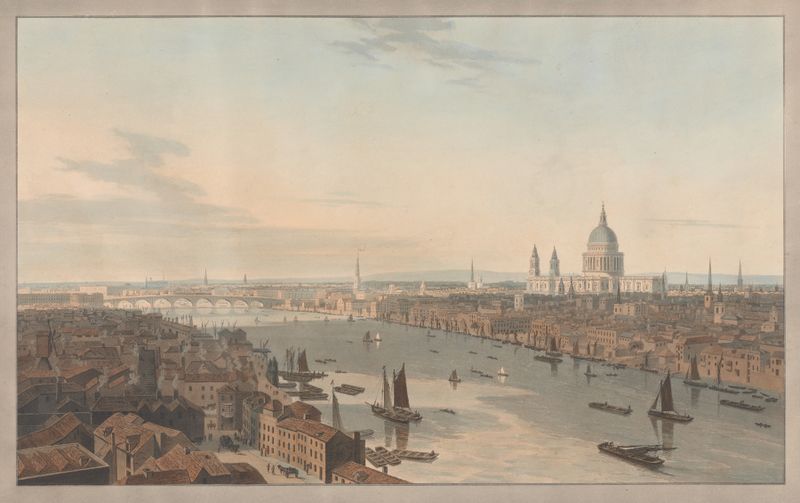
St. Paul’s and Blackfriars Bridge from Southwark
William Daniell
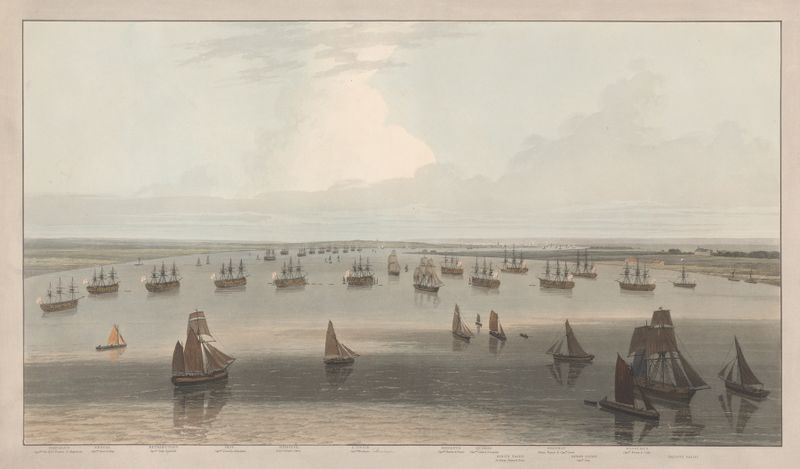
A View of the Frigates Stationed in the Hope under the Command of the Elder Brethen of the Trinity House, Thames Estuary
William Daniell

Main Entrance of the Jami Mosque, Jaunpur
William Daniell

London Bridge
William Daniell

London from Greenwich Park
William Daniell
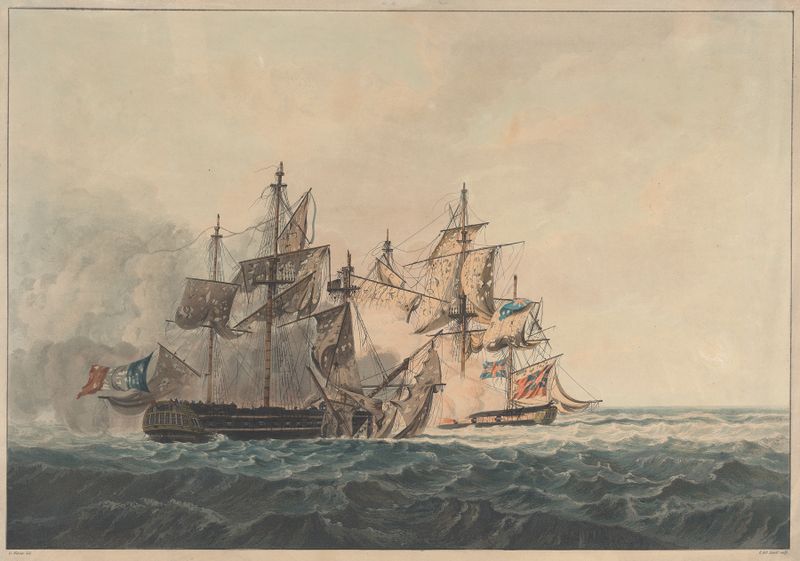
The Action between his Majesty’s Sloop ‘Bonne Citoyenne’ and the French Frigate ‘La Furieuse’
William Daniell
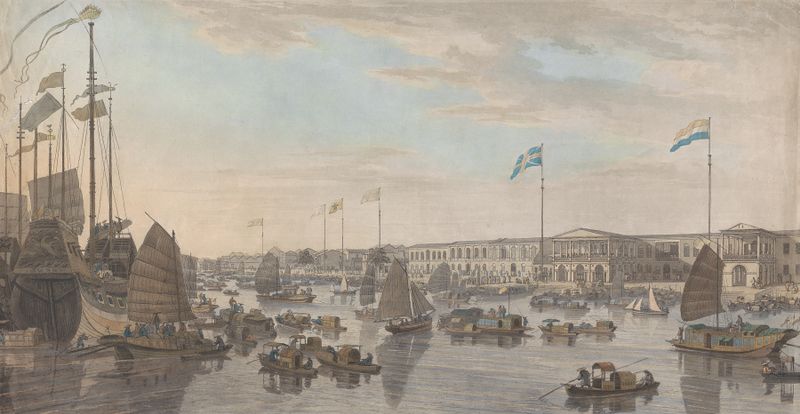
The European Factories at Canton in China
William Daniell

View of London Bridge and St. Paul’s Cathedral
William Daniell
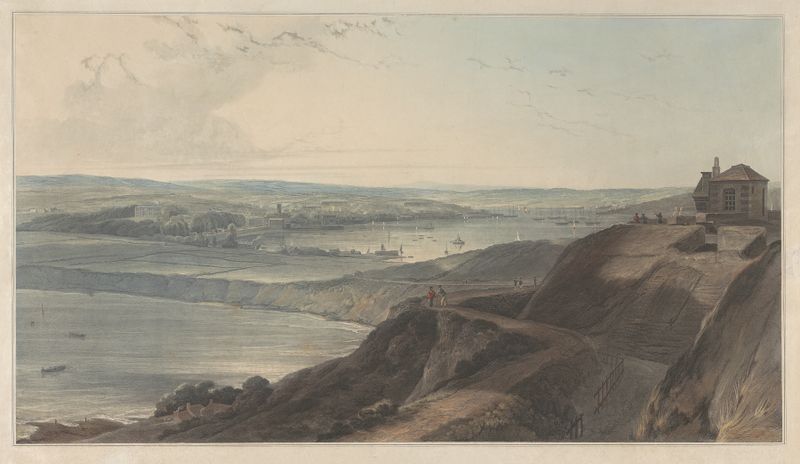
View of the Town and Part of the Harbour of Falmouth from Pendennis Castel, Cornwall
William Daniell

Madras, or Fort St. George, in the Bay of Bengal — A Squall Passing Off
William Daniell





