Farewell — History & Facts
The first thing that catches the eye in Farewell is the way figures dissolve into blocks of color, their faces left blank, as if memory itself is slipping away. The scene is busy but hushed, a crowd gathered in uncertain light, with two women at the left—one in a striking red hat—leaning close as if sharing last words. Children stand between them, their small forms echoed by the angular shapes that break up the ground and sky, while a reddish dog noses through the crowd, bridging the human and the everyday.
The palette is warm but shadowed, with ochres, reds, and greens fractured into prismatic shapes, guiding the viewer’s gaze in zigzags across the canvas, never settling for long. The facelessness of the figures is not an absence but a statement: this is a moment suspended between presence and departure, intimacy and anonymity. Painted in 1914, on the eve of a world about to change, Farewell belongs to the restless world of early twentieth-century German painting, when artists like August Macke sought new ways to capture the fleeting rhythms of modern life. This was the era of the Expressionists, who favored emotion and sensation over strict realism, often painting scenes of urban bustle, family gatherings, or departures—subjects that spoke to the anxieties and hopes of their time.
History has kept few traces of this particular canvas beyond its inclusion in the Yorck Project’s vast digital collection, but its fractured forms and uncertain mood speak volumes about the world that produced it. Look again at the way the light falls, the way the crowd seems both together and apart: in 1914, such a scene could only mean one thing—everything was about to change.
More Artworks by August Macke
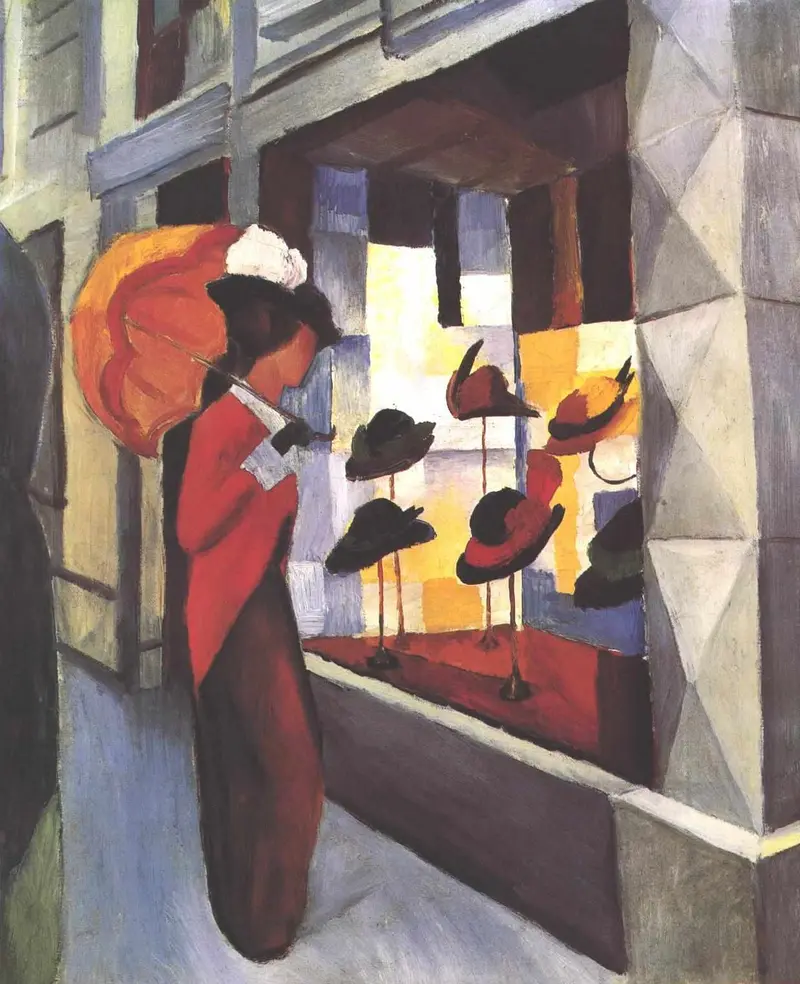
Woman with a Parasol in Front of a Hat Shop
August Macke

Street with Church in Kandern
August Macke
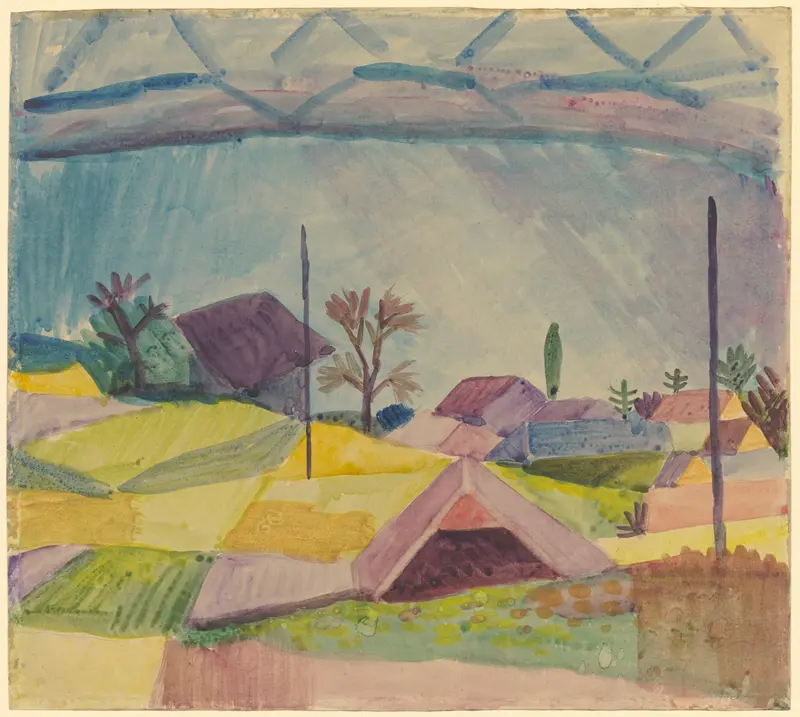
View of Hilterfingen
August Macke

Paar im Nachen
August Macke
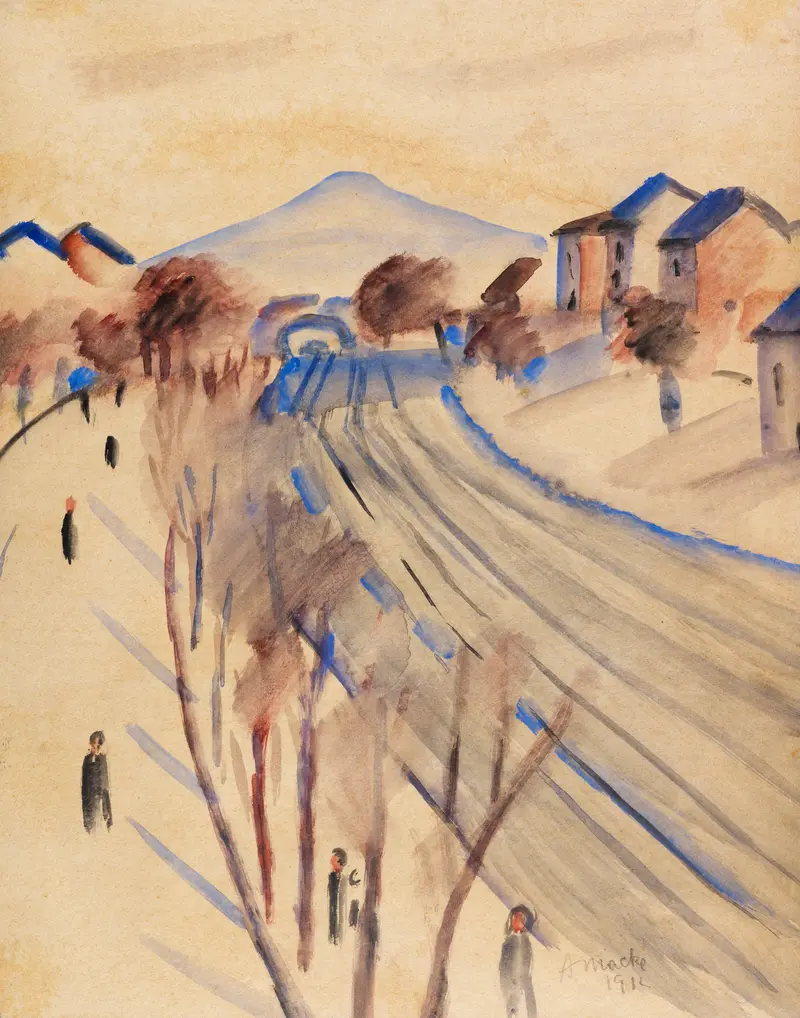
Ölberg mit Bahngleisen II
August Macke
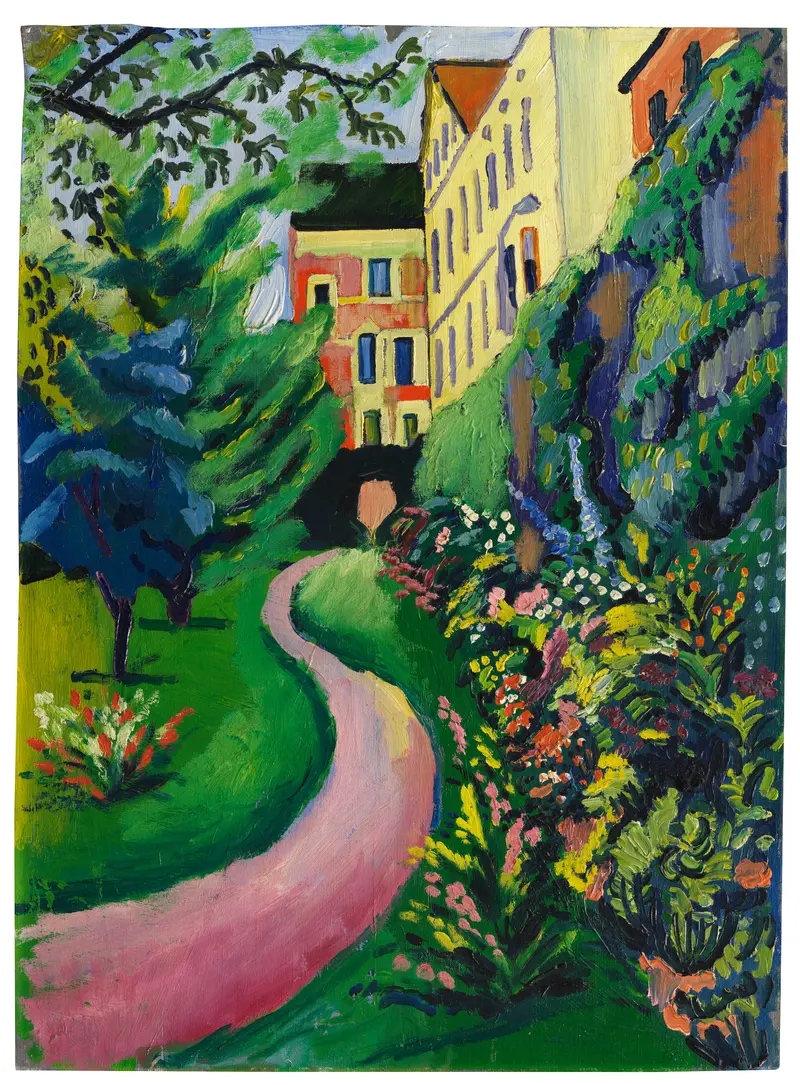
Unser Garten mit blühenden Rabatten
August Macke
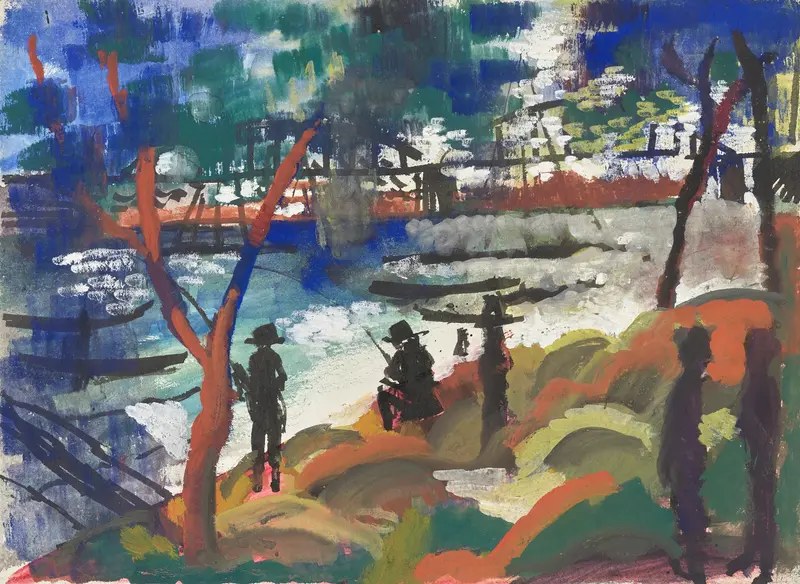
Angler am Fluss
August Macke
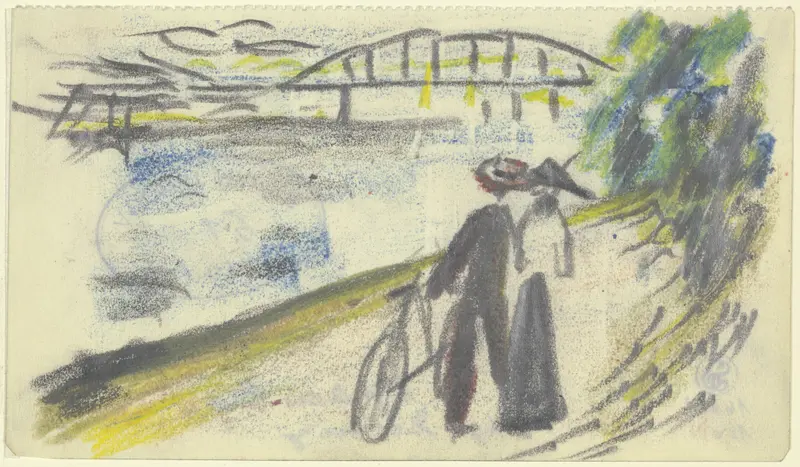
Path at the Rhine
August Macke
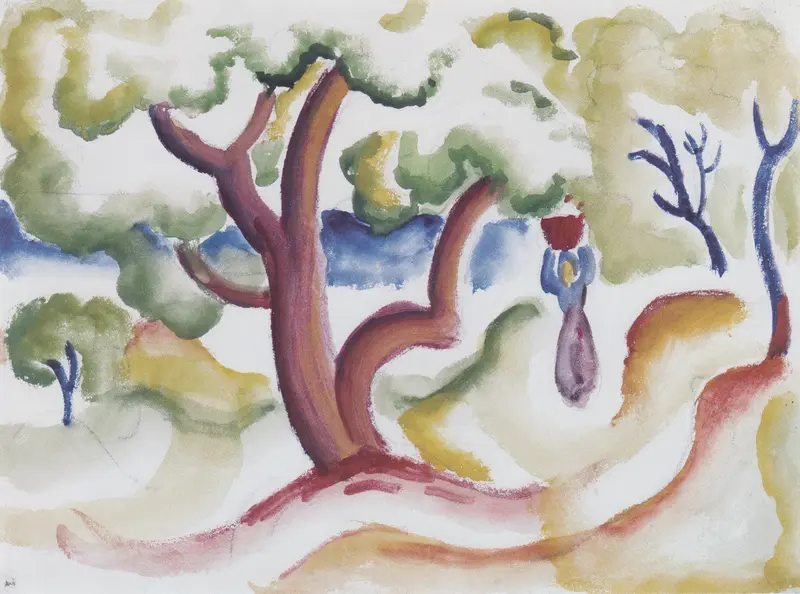
Frau mit Krug unter Bäumen
August Macke
Sonnige Straße mit Hund
August Macke