
Farmhouses — History & Facts
The first thing that catches the eye in Farmhouses by Aoki Shigeru is how the buildings seem to dissolve into their own twilight, as if the land itself is exhaling at the end of a long day. The brushwork is loose, almost dreamlike, and the forms of the farmhouses are half-swallowed by the gathering dusk. Aoki leads the viewer’s gaze across the canvas with strokes that blur the boundary between field and wall, tree and roof, until the scene feels more remembered than observed.
The light, a dusky gold, clings to the rooftops and windows, suggesting warmth and shelter within, while the foreground melts into a green shadow, holding secrets just out of reach. Painted in 1904, this work belongs to a moment in Japanese art when Western techniques were being absorbed and transformed by local artists. Aoki Shigeru was part of this restless generation, experimenting with oil paint and looser, more atmospheric compositions. While Japanese patrons traditionally favored precise, decorative screens or scrolls, the early twentieth century saw a surge of interest in capturing fleeting moods and rural life, often for private collectors or progressive exhibitions.
The history of Farmhouses itself is thinly documented—its presence in the 1963 Kodansha edition of modern Japanese painting is one of the few traces it leaves in the record—but the painting’s quiet ambiguity invites the viewer to linger, searching for the line where memory ends and imagination begins.
More Artworks by Aoki Shigeru
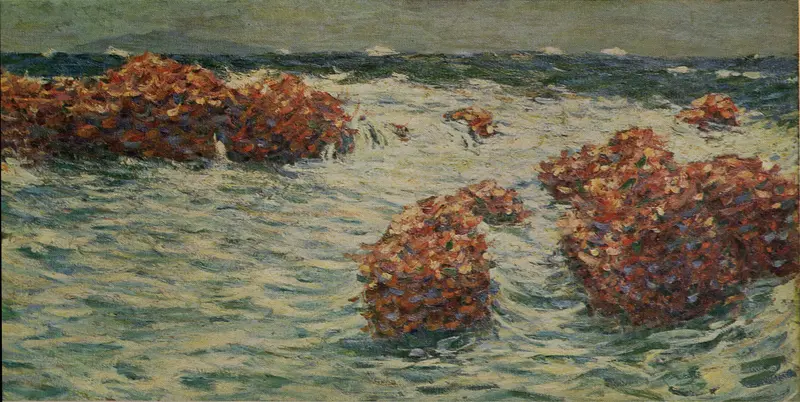
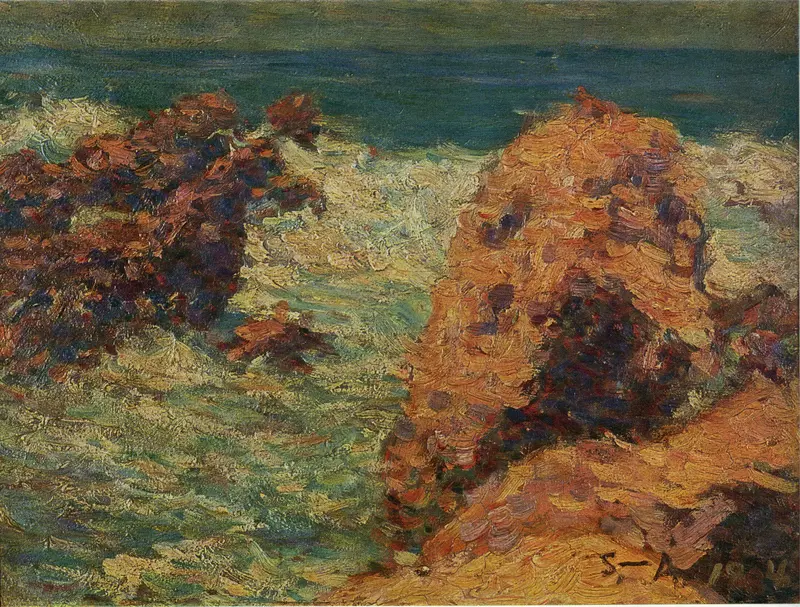
More Landscape Art

The Starry Night
Vincent van Gogh

View of Delft
Johannes Vermeer

Water Lilies
Claude Monet

The Grand Canal, Venice, looking north-west from the Ca' Corner to the Ca' Contarini degli Scrigni, with the campanile of Santa Maria della Carità
Canaletto

Windsor Castle
Canaletto

The Grand Canal looking North-East from the Palazzo Dolfin-Manin to the Rialto Bridge
Canaletto