Fartyg delvis med Nederländsk flagg — History & Facts
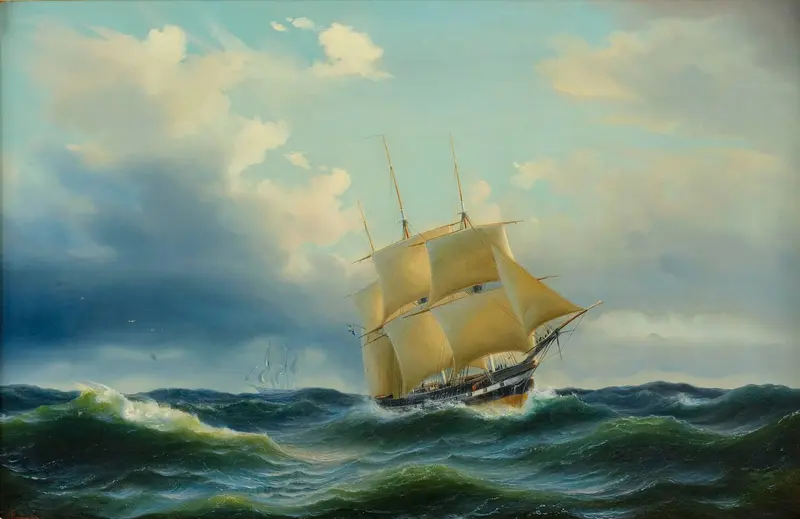
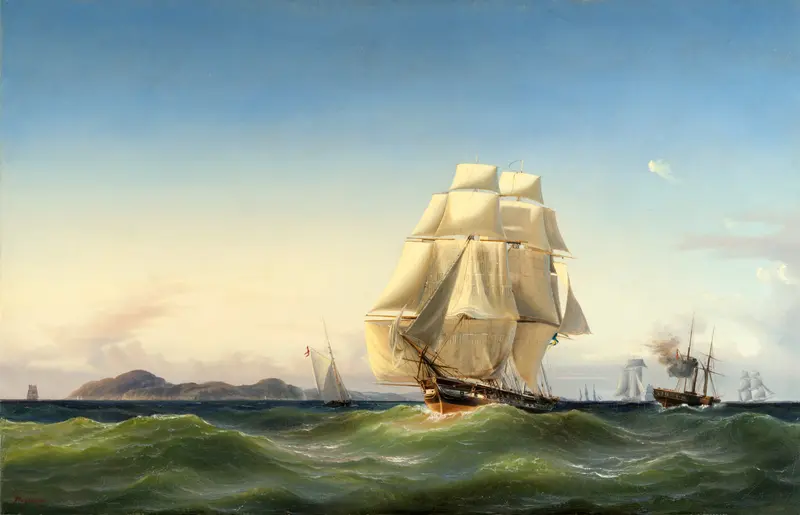
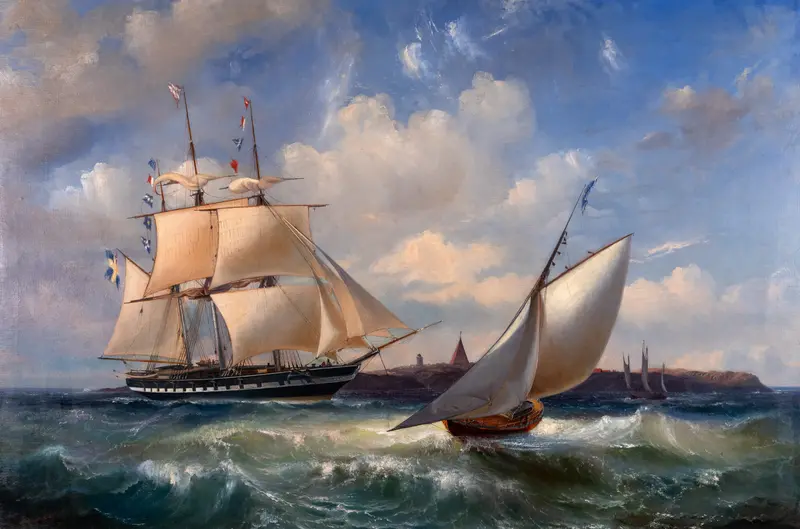
What first catches the eye in Fartyg delvis med Nederländsk flagg is the crisp, wind-filled sail of the nearest vessel, its Dutch tricolor snapping above the restless sea. The artist, Arnold Plagemann, draws us into the scene by giving the ship a forward thrust, the prow cutting through churning water that glimmers with cold light. The sky is vast and pale, its clouds heavy with the moisture of northern air, and the horizon is crowded with a procession of ships—some with flags barely visible, others mere silhouettes against the haze.
The careful placement of birds in the open sky and the gleam on the waves suggest a moment of anticipation, as if the fleet is poised between departure and arrival, the wind and water both guiding and resisting their journey. Painted in 1861, this work belongs to a long tradition of maritime painting that flourished in Northern Europe, where the sea was both highway and livelihood. In the nineteenth century, such scenes were popular with collectors who prized reminders of national pride and the romance of seafaring life, especially as steam and iron began to overtake sail. The Dutch flag here is no mere decoration; it signals identity and allegiance in a world where borders and fortunes were drawn on the water.
Little is recorded about this particular painting beyond its date and its presence in a modern collection, but its style and subject speak to a period when artists like Plagemann balanced nostalgia for the age of sail with the realities of a changing maritime world. The painting invites viewers to linger over the details—the rigging, the play of light, the suggestion of distant adventure—each a testament to the enduring fascination with ships and the open sea.