Seascape — History & Facts
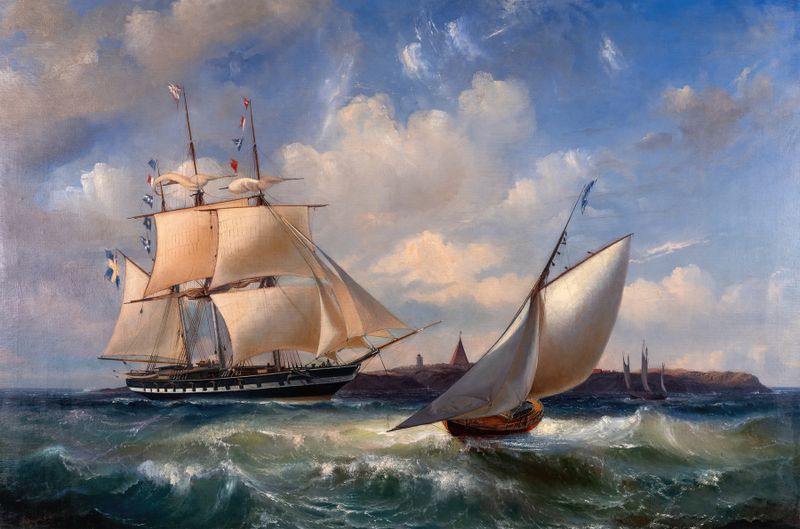
This delicate balance manifests in the ethereal waves of a seascape, where nature’s harmony intertwines with its fragility. Look to the foreground, where the cerulean tides gently lap against the shore, each wave a whisper of calm amidst the turmoil of life. Notice how the light falls upon the water, reflecting a shimmering golden hue that dances like fleeting moments of joy. The nuanced brushstrokes evoke movement and depth, inviting you to feel the ocean's rhythm and the weightlessness of the air above it. Beyond the surface, the painting reveals deeper emotional currents.
The interplay of light and shadow suggests a fleeting beauty that is always on the verge of dissolution. Each cresting wave is a metaphor for life’s transience, while the distant horizon embodies hope and despair, a reminder that serenity is often intertwined with the chaos of existence. In 1851, the artist created this work during a time of personal exploration and a growing interest in capturing the sublime beauty of the natural world. Living in a period when Romanticism was evolving, he sought to depict the emotional depths of landscapes, a reaction against the rigid structures of earlier art movements.
This seascape reflects not only his artistic journey but also the broader shifts in how nature was perceived in the rapidly industrializing world around him.