
Fasszieherhaus on Spittelberg — History & Facts
Could a single brushstroke hold eternity? In Fasszieherhaus on Spittelberg, a haunting stillness reverberates through the layers of paint, embodying the delicate dance between sanity and madness that permeated the early 20th century. Focus on the foreground, where the bold lines of the building draw your eye into the composition. The textured surfaces evoke an almost palpable sense of solidity, contrasting sharply with the swirling colors that seem to pulsate around it. Notice how Graner employs a muted palette of earth tones, punctuated by flashes of vibrant hues, transforming the mundane into something extraordinary.
The light, filtered through a veil of abstraction, casts an ethereal glow, suggesting a world teetering on the edge of the extraordinary. Delve deeper into the interplay of shapes and colors, where chaos and clarity coexist. The building stands as a metaphor for stability within a backdrop of tumultuous energy, reflective of a society grappling with its own madness during wartime. The juxtaposition of the rigid architecture against the fluid, almost frenzied brushwork hints at an underlying tension: the struggle for order amidst chaos, sanity amid the encroaching shadows of despair. In 1915, the artist found himself amidst the upheaval of World War I in Vienna, a city echoing with the clamor of change and uncertainty.
Graner, influenced by the avant-garde movements swirling around him, began to explore the boundaries of expression and abstraction. This work emerged during a period when the very essence of art was being redefined, laying the groundwork for a new understanding of reality—a glimpse into the fragmented psyche of a world at war.
More Artworks by Ernst Graner
Browse all →
The Departure of Emperor Francis Joseph, near the Schweizertor in Hofburg residence
Ernst Graner

Old Albrechtsplatz (today Albertinaplatz) in Vienna with the Philipphof and the Mozart monument
Ernst Graner
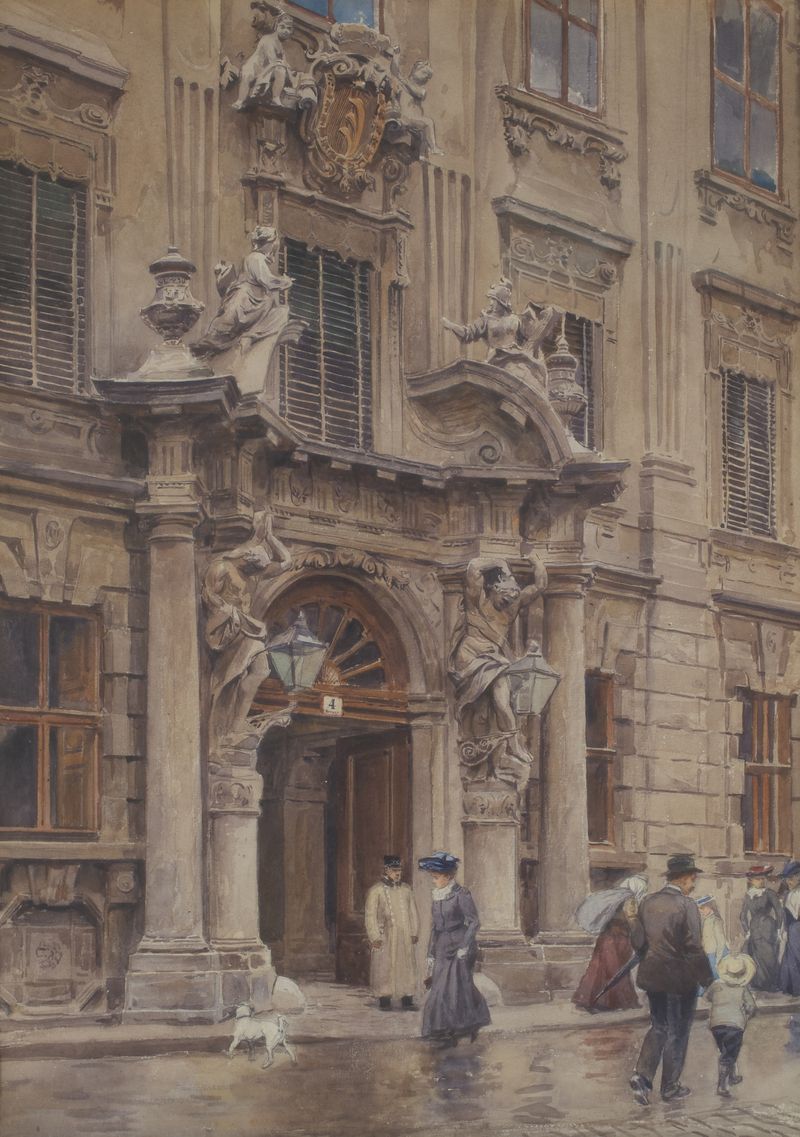
Das Portal Des Palais Kinsky
Ernst Graner
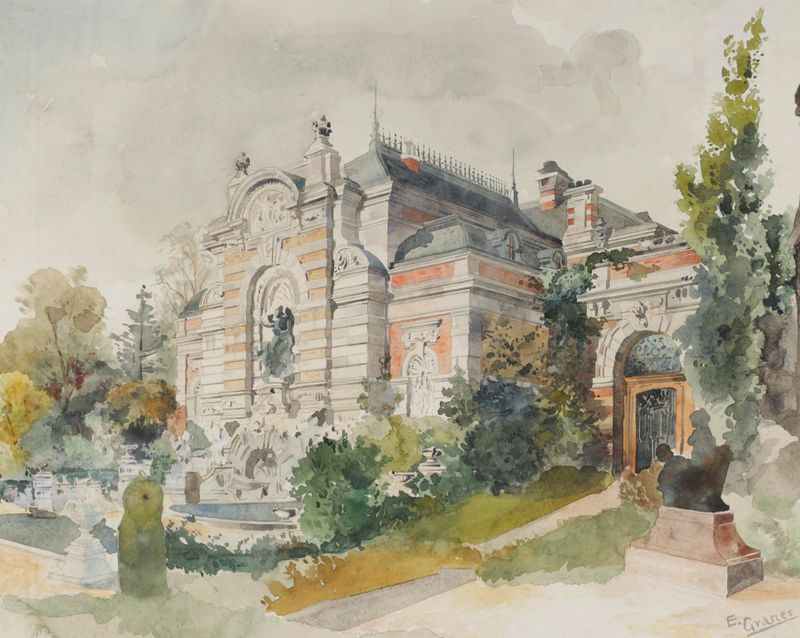
Villa in einem Park
Ernst Graner

Karlskirche
Ernst Graner

Kaiser Franz Joseph überquert den Naschmarkt
Ernst Graner

Palais des Prinzen Eugen in der Himmelpfortgasse
Ernst Graner

Die Schwendergasse In Wien Mit Schwenders Colosseum
Ernst Graner
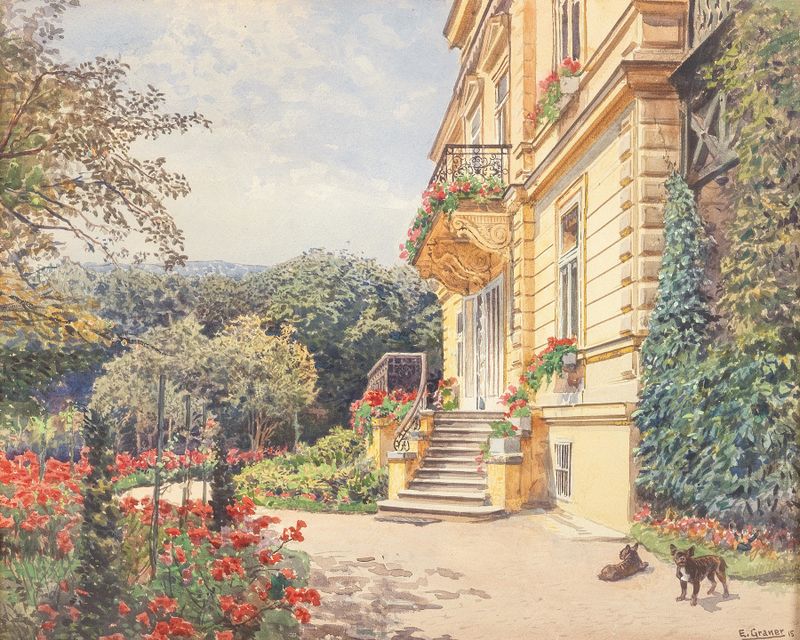
Villa in gepflegtem Garten
Ernst Graner
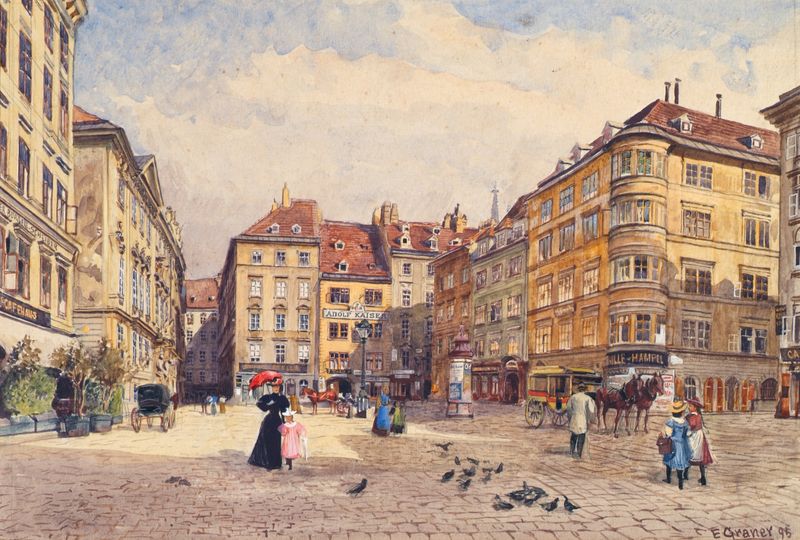
Der Judenplatz In Wien
Ernst Graner
More Architecture Art
Browse all →
The statue of Liberty
Frédéric Auguste Bartholdi

View of Houses in Delft, Known as ‘The Little Street’
Johannes Vermeer

View of Houses in Delft, Known as ‘The Little Street’
Johannes Vermeer

The Cathedral in Rouen. The portal, Grey Weather
Claude Monet

The yellow house
Vincent van Gogh

The Church in Auvers-sur-Oise, View from the Chevet
Vincent van Gogh