
Fern Burners — History & Facts
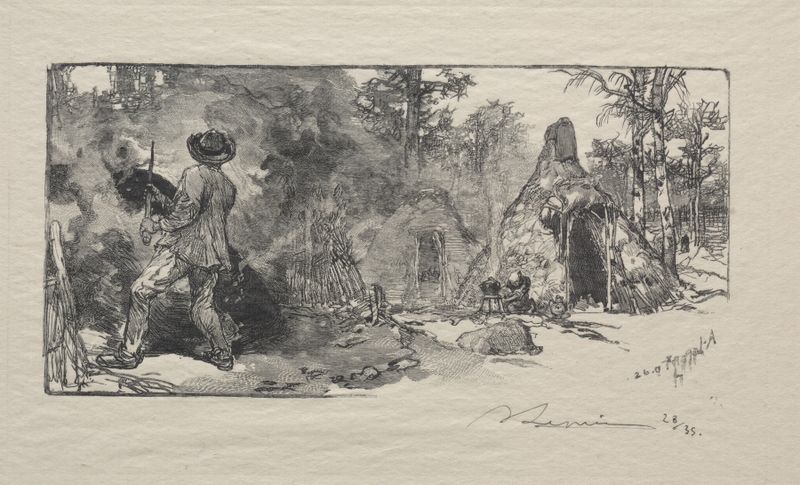
Is this a mirror — or a memory? In the quiet embrace of Fern Burners, the viewer is drawn into a world where the tangible meets the intangible, where emptiness speaks louder than form. The landscape reflects a harmony of absence and presence, inviting contemplation of what lies beneath the surface. Look to the foreground, where figures move amidst the ferns, their forms delicately rendered with a soft, muted palette of greens and browns. The strokes are both textured and fluid, capturing the fleeting nature of their labor.
Notice how the light filters through the foliage, casting a gentle glow that dances across their silhouettes, creating a sense of ethereality. This juxtaposition of shadow and illumination emphasizes the transience of their existence, encouraging the gaze to linger. As you delve deeper, consider the emotional weight of the figures’ isolation within the expansive landscape. Their connection to the earth seems both intimate and distant, symbolizing the duality of human experience—tethered yet yearning for something beyond reach.
The subtle interplay of the vibrant ferns against the muted background evokes a haunting sense of nostalgia, stirring an awareness of the fleeting nature of life and labor, prompting questions of purpose and memory. In 1890, Lepère was living in France, during a period of artistic transition. The Impressionist movement was in full swing, pushing boundaries and redefining perception. Amid this evolution, Lepère explored themes of labor and nature, finding beauty in the mundane yet profound moments of everyday life.
This work represents a pivotal point in his career, as he began to crystallize his unique style, merging Impressionist techniques with a focus on the emotional resonance of his subjects.
More Artworks by Auguste Louis Lepère
Browse all →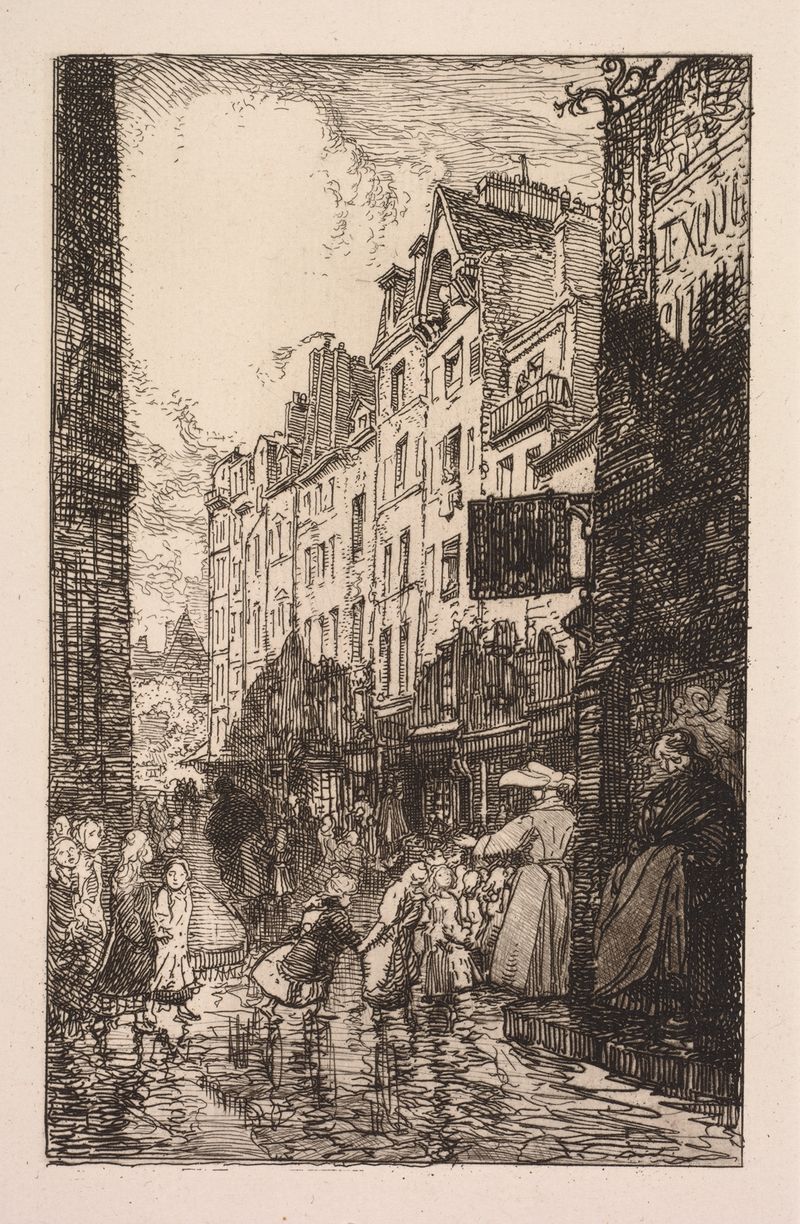
La Rue des Prêtres Saint-Séverin
Auguste Louis Lepère
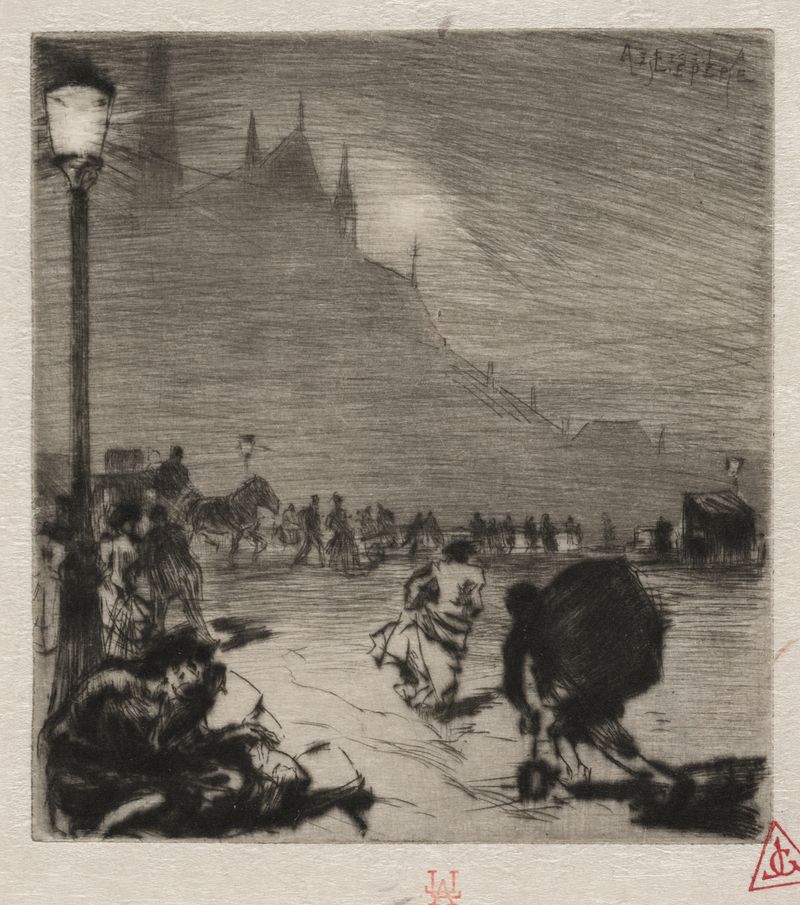
Au Coin du Pont-aux-Doubles
Auguste Louis Lepère
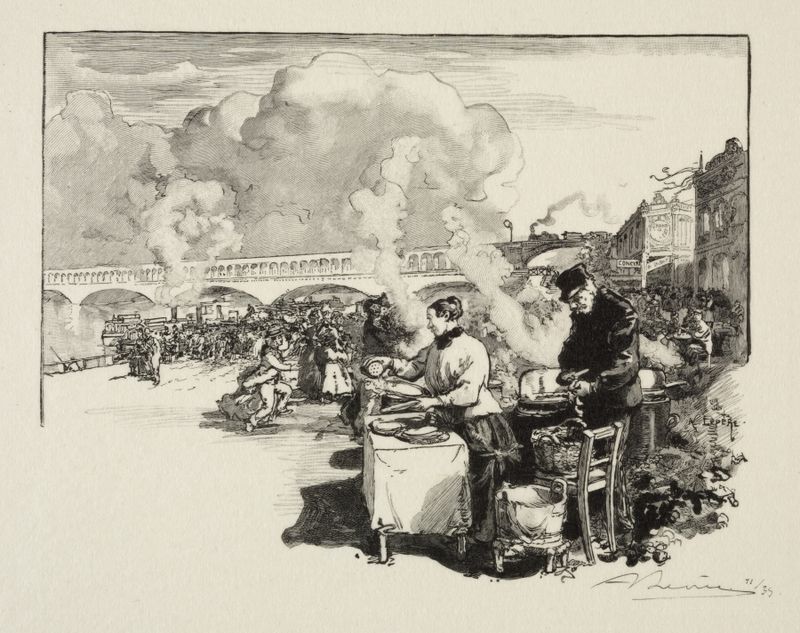
Debarcadère des bateaux-omnibus
Auguste Louis Lepère

La Seine, au quai de la Rapée
Auguste Louis Lepère
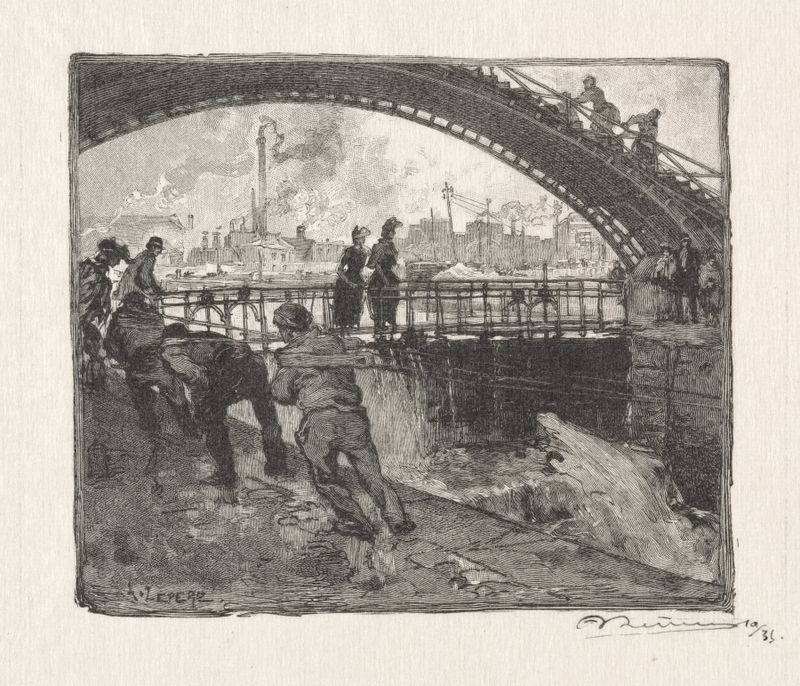
L’Ecluse du Canal St. Martin
Auguste Louis Lepère

Le Boulevard Montmartre, le Soir
Auguste Louis Lepère

Une Chasse au Mont Gérard
Auguste Louis Lepère
Les Charbonniere
Auguste Louis Lepère
Notre Dame vue du Marché aux pommes
Auguste Louis Lepère

Le Palais des Arts Liberaux, Intèrieur
Auguste Louis Lepère





