
Ferry Crossing in Haarlem — History & Facts
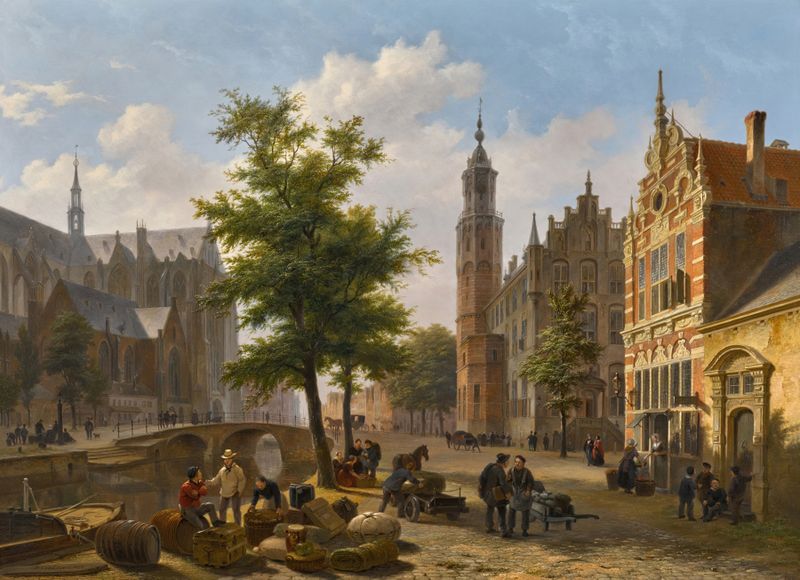
Can beauty exist without sorrow? In Ferry Crossing in Haarlem, a stillness envelops the scene, immersing the viewer in a moment that echoes with unspoken grief. The serene waterways, glistening under a muted sky, hint at a melancholy that lingers just beneath the surface of this picturesque landscape. Focus on the gentle curve of the ferry as it glides across the water, creating a delicate arc that draws the eye to the horizon. The soft palette of blues and greens, punctuated by the earthy tones of the boat and passengers, imbues the composition with a sense of calm.
Notice how the light dances upon the water's surface, illuminating the subtle ripples that seem to whisper secrets of journeys both begun and ended. Yet, it is the details that unveil deeper emotions. The passengers, engrossed in their own thoughts, carry expressions that suggest a shared burden of loss or longing. The distant buildings on the shore, partially shrouded in mist, evoke a sense of separation from the tangible world, emphasizing the fragility of connection.
In this tranquil moment, one cannot escape the haunting contrast between beauty and sorrow, each informing the other. Created during a period of personal introspection, the artist painted this scene in the mid-19th century, a time when the Dutch art world was redefining itself. Van Hove, known for his evocative landscapes, sought to capture not just the physical beauty of his surroundings in Haarlem but also the emotional weight they carried. This painting reflects his keen awareness of life's transience and the interconnectedness of joy and grief.
More Artworks by Bartholomeus Johannes van Hove
Browse all →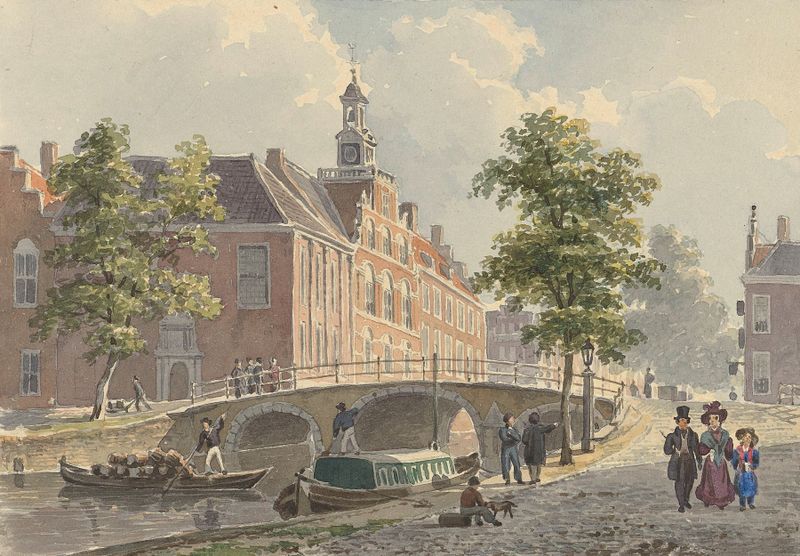
Het Spui te ‘s-Gravenhage, gezien naar het zuiden
Bartholomeus Johannes van Hove
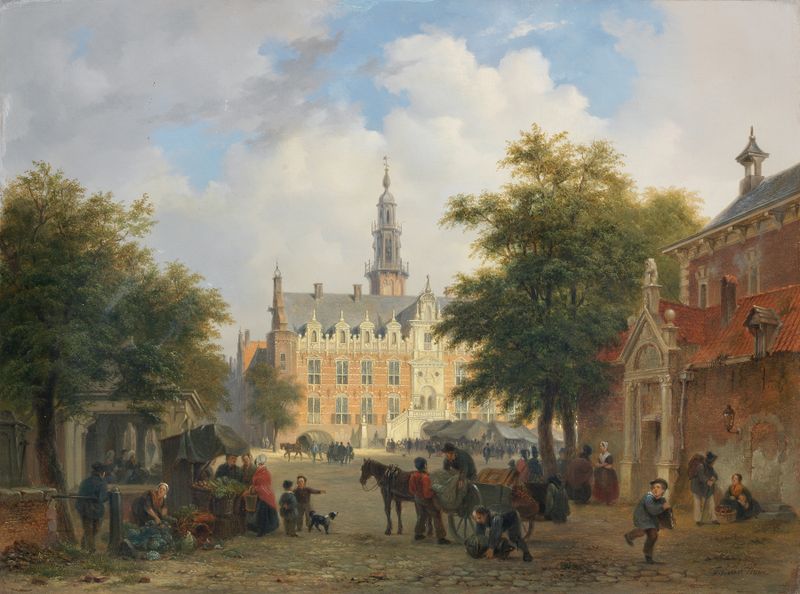
Street scene, Amsterdam
Bartholomeus Johannes van Hove

A Capriccio View Of The Hofvijver, The Hague
Bartholomeus Johannes van Hove
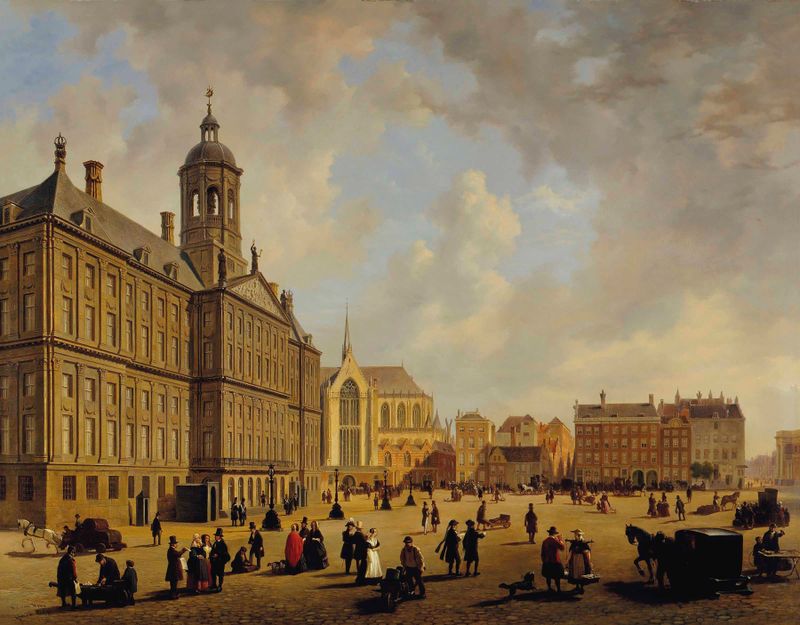
A bustling day in front of the City hall on the Dam Square, the Nieuwe Kerk in the distance, Amsterdam
Bartholomeus Johannes van Hove

Sommerliche Stadtansicht
Bartholomeus Johannes van Hove

Church Interior
Bartholomeus Johannes van Hove
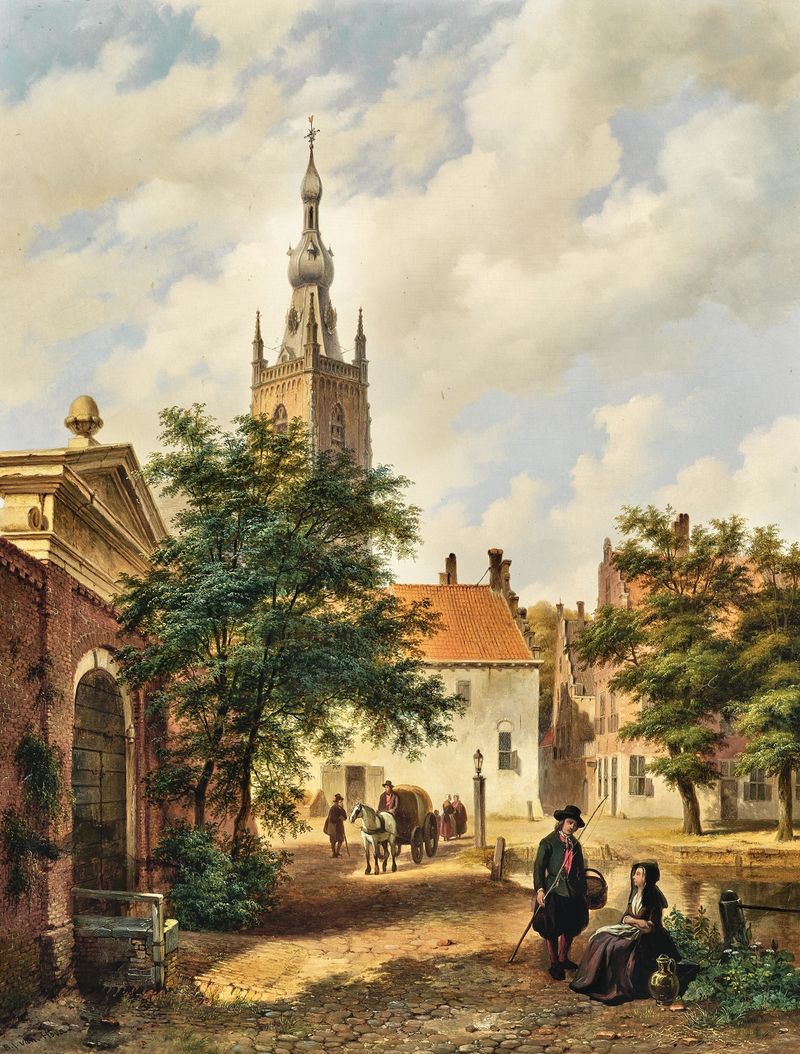
A View of a Village with a Church
Bartholomeus Johannes van Hove

Winterliche Stadtansicht
Bartholomeus Johannes van Hove
A Busy Market Place in a Dutch Town
Bartholomeus Johannes van Hove

View of a Dutch town
Bartholomeus Johannes van Hove





