Figure of a Seated Man — History & Facts
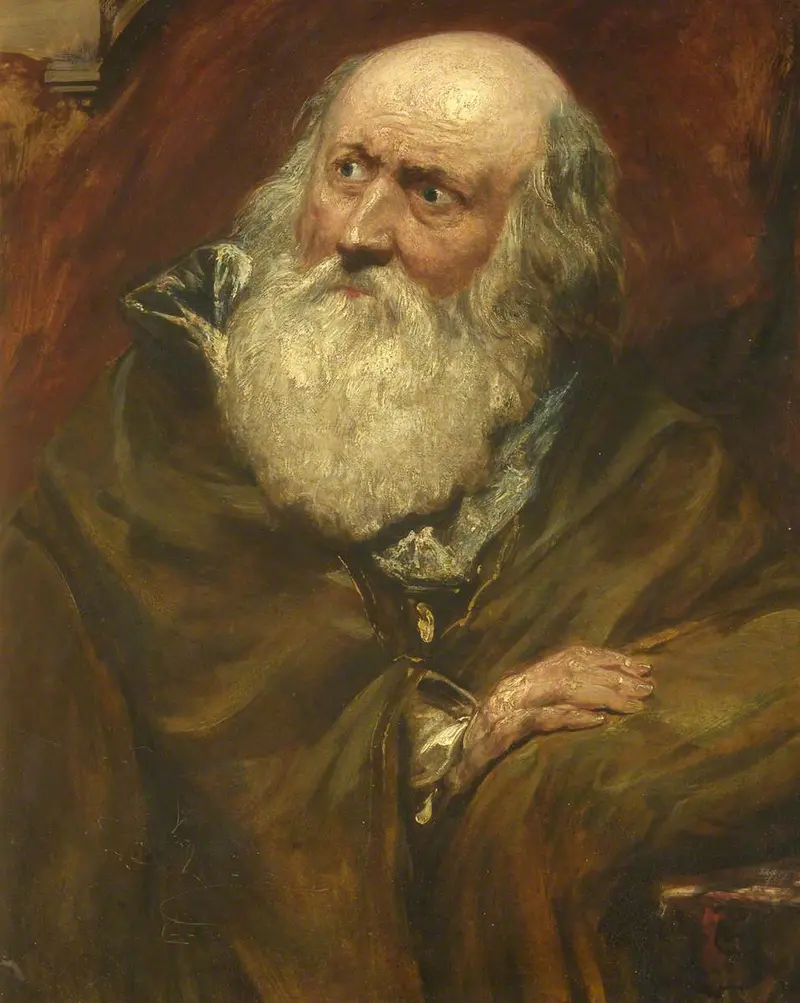
The first thing that grips the viewer in Figure of a Seated Man is the electric tension in the sitter’s pose—a man caught mid-turn, his gaze sharp and wary, as if startled by an unseen presence just outside the frame. The play of light across his bare back carves out muscle and bone with almost sculptural clarity, while the deep, swirling reds and browns around him seem to press in, heightening the sense of isolation. The figure’s hands are drawn protectively to his chest, his body twisted in a way that suggests both vulnerability and latent strength, inviting us to wonder what has just happened, or what is about to. Created in 1830 by William Etty, this work belongs to a world where the academic study of the nude—especially the male nude—was both a technical challenge and a statement of artistic ambition.
In the early nineteenth century, British painters like Etty sought to rival the great continental masters, using the human form to explore drama, emotion, and the limits of paint itself. While history has kept few traces of this particular painting’s journey, its presence in the Art UK collection today is a reminder of the era’s fascination with the expressive power of flesh and gesture. Look again at the man’s face: wary, alive, and utterly present, he holds the viewer in a moment that refuses to resolve.