The Wise and Foolish Virgins — History & Facts
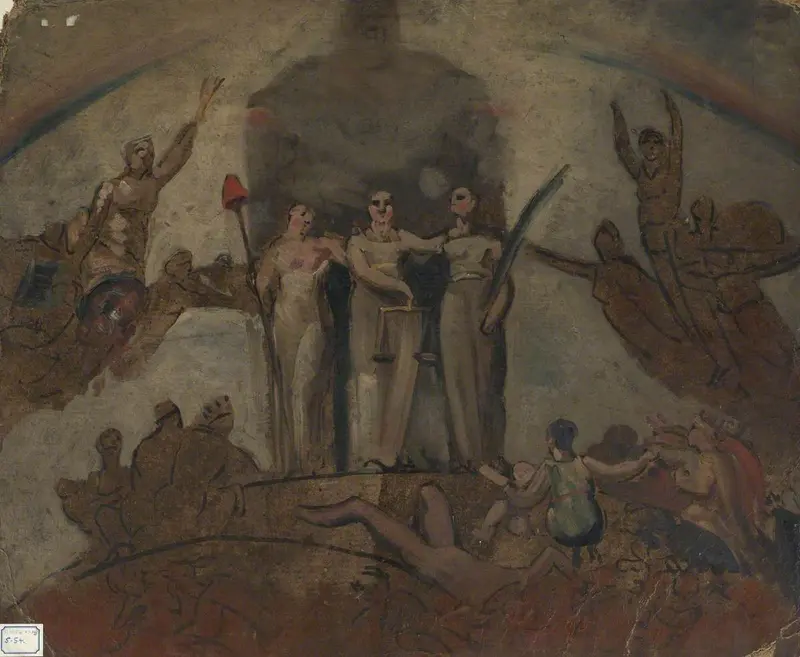
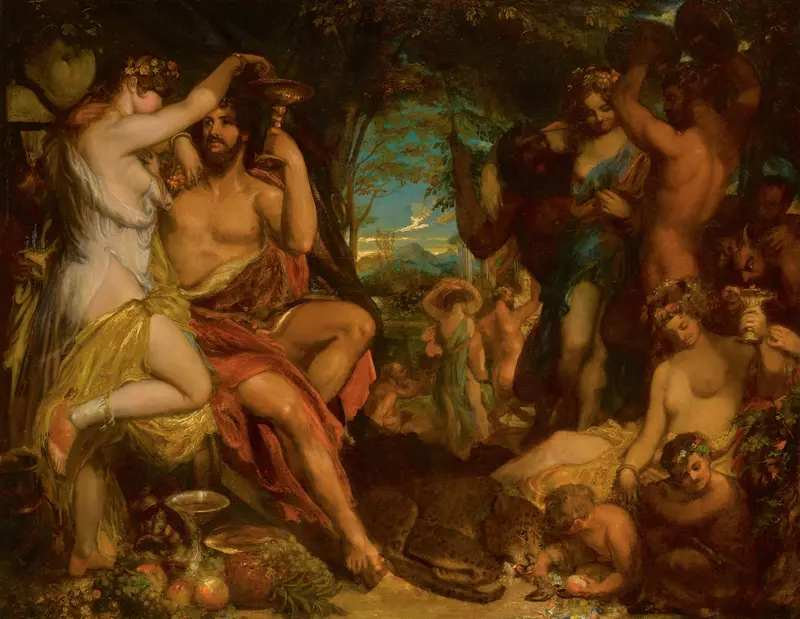
A shaft of golden light cuts through the gloom, drawing the eye to a cluster of figures whose gestures tell of longing and despair. In The Wise and Foolish Virgins, William Etty sets a dramatic stage: some women collapse in anguish, their lamps dark, while others lift their arms upward, faces illuminated by hope or revelation. The sweep of fabric, the tension in every outstretched limb, and the sharp contrast between shadow and radiance all serve to heighten the emotional stakes.
Etty’s palette—rich earths, bruised reds, and the pale shimmer of skin—creates a sense of urgency and separation, as if the very light divides the hopeful from the hopeless. Works like this, rooted in biblical parable and moral allegory, were a familiar sight in nineteenth-century Britain, where artists and patrons alike found in such stories a vehicle for exploring virtue, folly, and fate. William Etty was best known for his sensuous treatment of the human form, often courting controversy for his unapologetic nudes, yet here he channels that same physicality into a scene of spiritual reckoning. The painting belongs to the collection documented by Art UK, but little is recorded of its early history or original purpose.
What remains is the force of the image itself—an invitation to linger over each figure’s fate, and to wonder which side of the threshold we ourselves might stand on.