
Figures in a forest landscape — History & Facts
In the realm of shadow, the interplay of light and dark invites a contemplative journey into the depths of a forest landscape. Look to the left at the tall, serene trees, their trunks draped in gentle green hues that stretch upwards, whispering of life and endurance. Notice how the soft, diffused light filters through the foliage, casting an intricate pattern of shadows on the soft earth below, where figures stand engaged in quiet conversation. The subtle palette of greens, browns, and muted yellows evokes a sense of harmony, coaxing the viewer into the tranquil embrace of nature’s sanctuary. Delve deeper and you’ll uncover layers of emotional tension: the figures' postures hint at an unspoken bond, perhaps a moment of reflection or understanding amidst the surrounding beauty.
The contrast of their delicate forms against the sturdy trees speaks to the fragility of human connection within the immensity of the natural world. Furthermore, the shadows lurking beneath the foliage can provoke a sense of mystery or foreboding, suggesting that even in tranquil settings, complexities may lie just below the surface. In 1790, the artist created this piece during a period marked by both personal and artistic introspection. Living in the Netherlands, Jacob van Strij was immersed in the traditions of romantic landscape painting, influenced by the prevailing Dutch seventeenth-century aesthetics while navigating his own identity within the art world.
This work emerged as he sought to capture not only the physical beauty of the forest but also the emotional resonance of human presence within it.
More Artworks by Jacob van Strij
Browse all →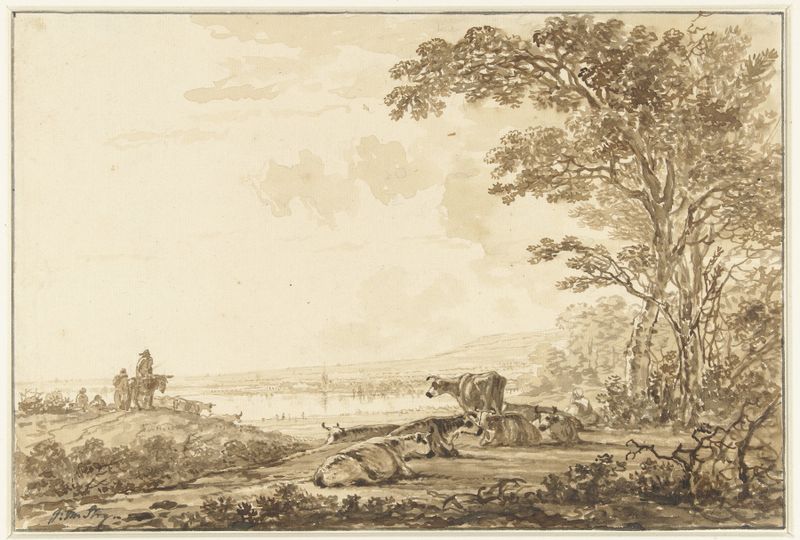
Rivierlandschap met rustend vee
Jacob van Strij
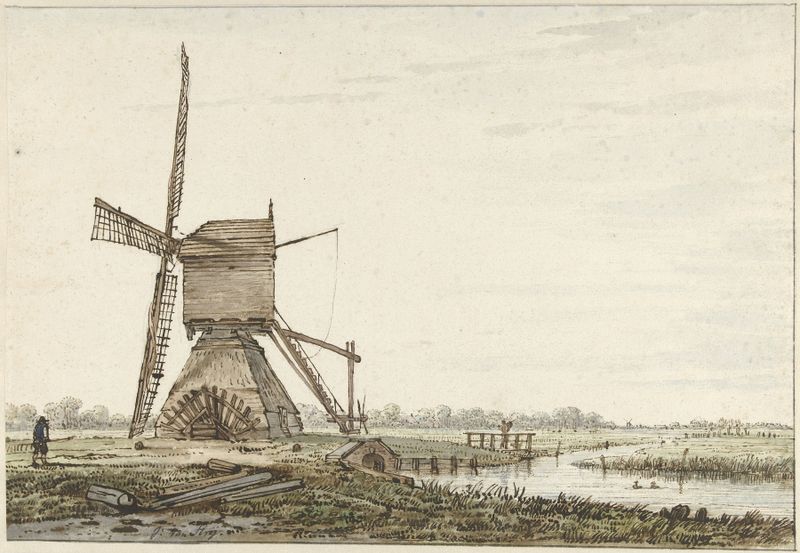
Landschap met poldermolen
Jacob van Strij

Milking Time
Jacob van Strij
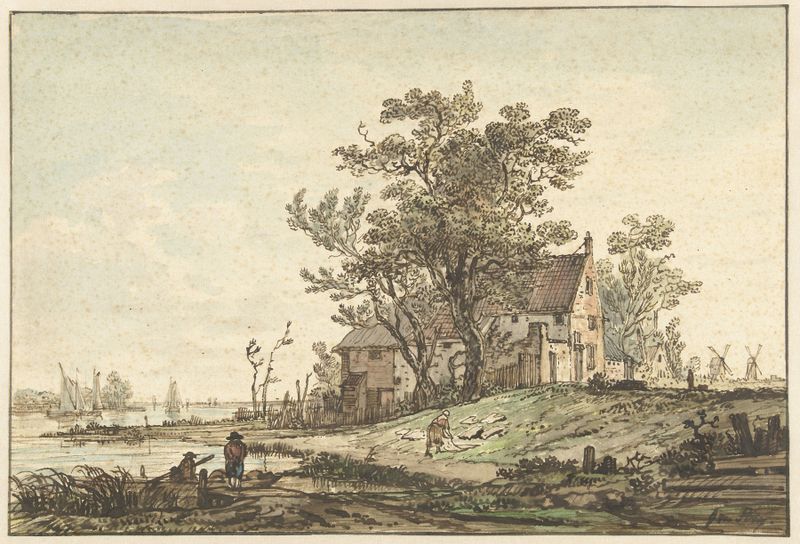
Oude boerderij aan een rivier
Jacob van Strij

Paysage arboré avec figures et maisons au bord du rivage
Jacob van Strij

Landscape with Peasants with their Cattle and Anglers on the Water
Jacob van Strij

Italianisierende Landschaft mit einem Hirten
Jacob van Strij
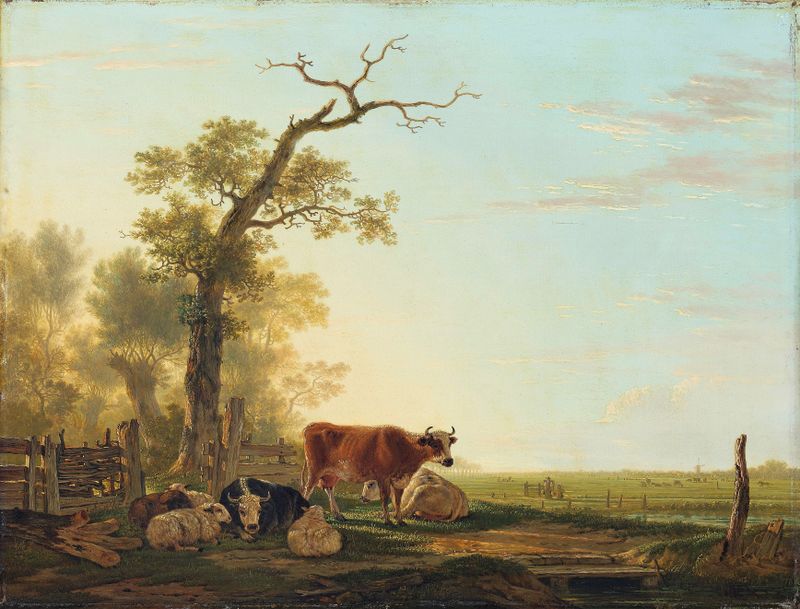
Meadow Landscape with Animals
Jacob van Strij
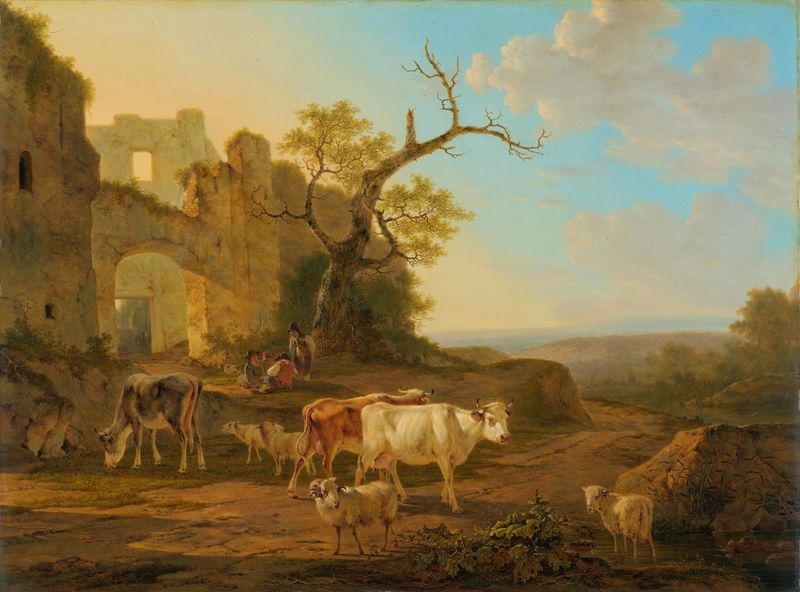
Landscape with Cows near a Ruin
Jacob van Strij
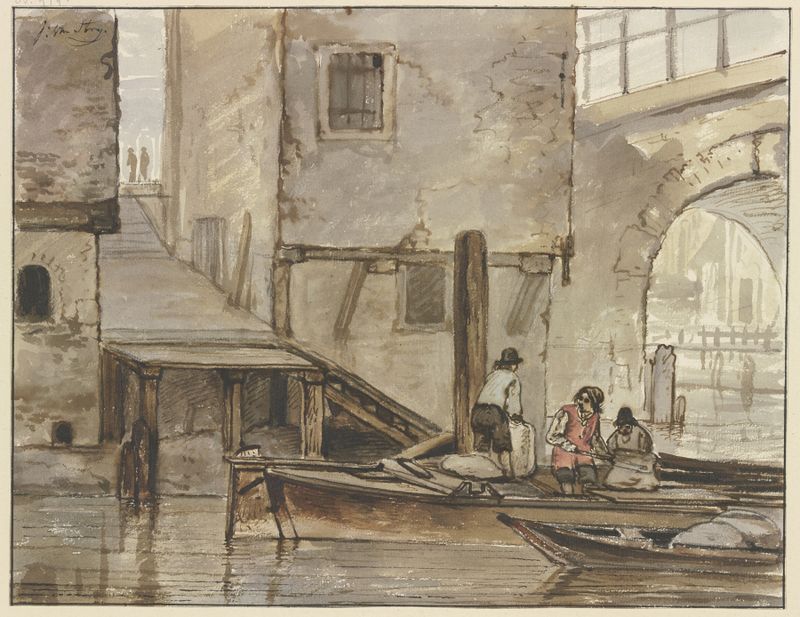
Gracht mit zwei Ruderbooten
Jacob van Strij





