
Paysage arboré avec figures et maisons au bord du rivage — History & Facts
The sense of serenity emanating from Paysage arboré avec figures et maisons au bord du rivage is tinged with a quiet yearning, inviting the viewer to ponder the stories entwined within its tranquil landscape. Look to the right at the gentle curve of the river, where the sun’s golden glow dances upon the water's surface. The soft greens of the foliage contrast beautifully with the warm browns of the houses nestled against the bank, creating a harmonious palette that conveys both calm and nostalgia. Notice how the figures dotting the shore are positioned, each in their own moment, encapsulating a stillness that suggests both solitude and connection amidst nature’s embrace. Delve deeper into the work’s layers—the juxtaposition of the serene landscape against the human presence raises questions of belonging and isolation.
The distant figures, caught in serene contemplation or quiet dialogue, evoke a sense of introspection that resonates with personal stories. The vivid colors may veil the complexities of human emotion, hinting at underlying struggles that thrive in the shadows of beauty. In 1800, Jacob van Strij was grounded in the tradition of Dutch landscape painting, embracing a style that celebrated both nature and the simplicity of daily life. Working in the Netherlands during a time of artistic transition, he navigated the tension between the classical influences of the past and the burgeoning romanticism that would shape future landscapes.
This piece embodies that delicate balance, offering viewers a glimpse into both the artist's world and the timeless allure of serene landscapes.
More Artworks by Jacob van Strij
Browse all →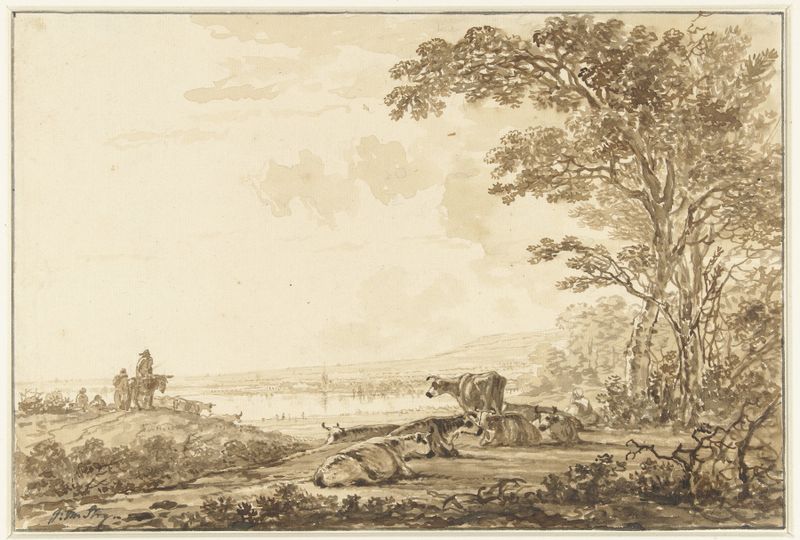
Rivierlandschap met rustend vee
Jacob van Strij
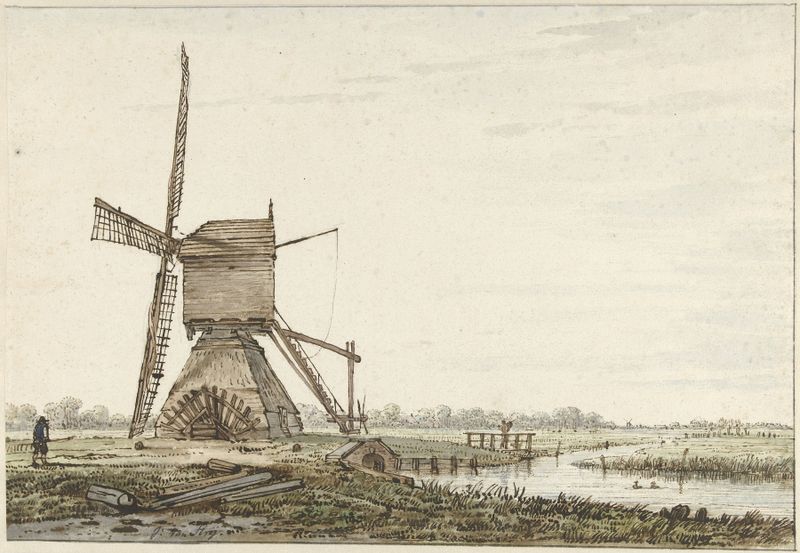
Landschap met poldermolen
Jacob van Strij

Milking Time
Jacob van Strij
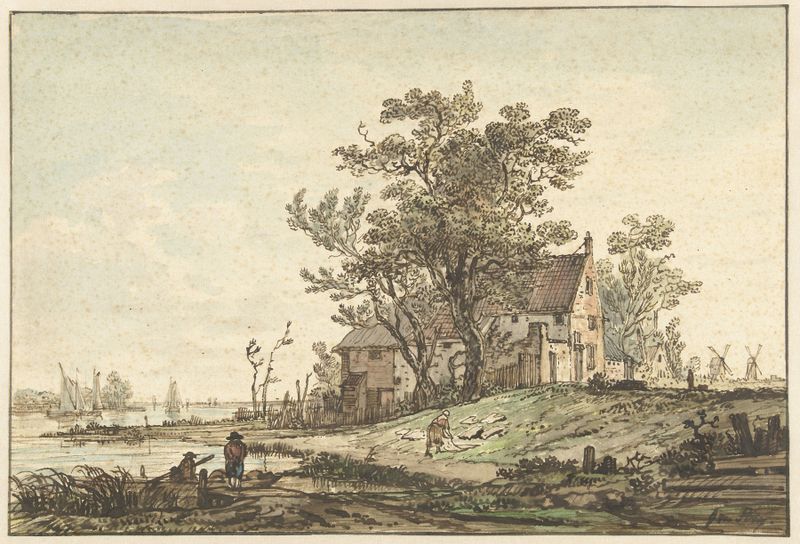
Oude boerderij aan een rivier
Jacob van Strij

Landscape with Peasants with their Cattle and Anglers on the Water
Jacob van Strij

Italianisierende Landschaft mit einem Hirten
Jacob van Strij
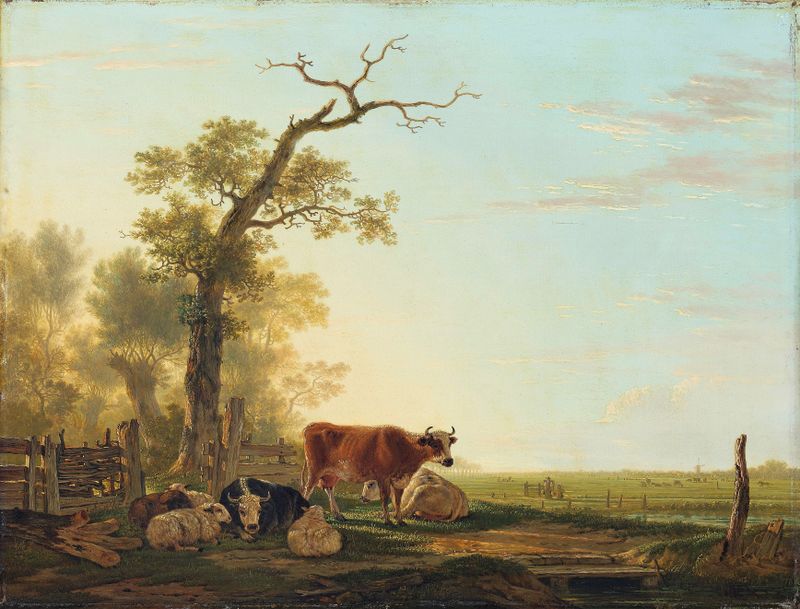
Meadow Landscape with Animals
Jacob van Strij
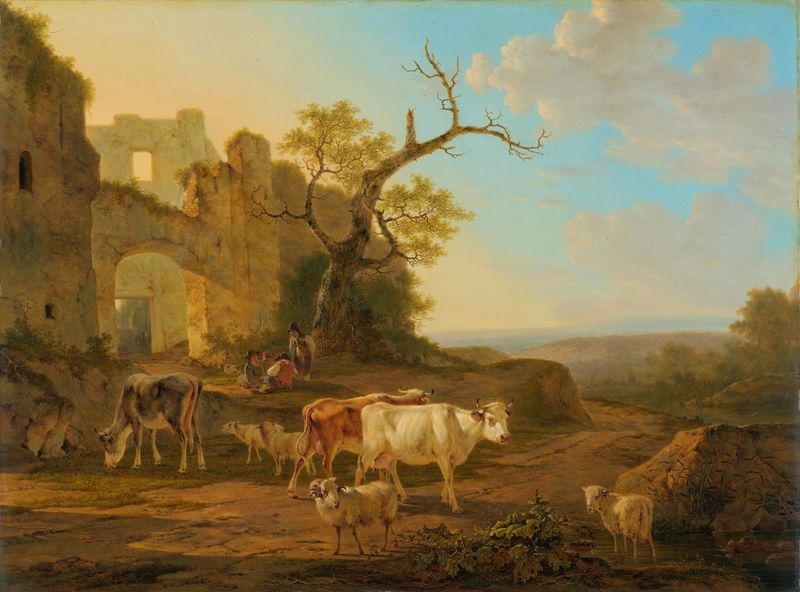
Landscape with Cows near a Ruin
Jacob van Strij
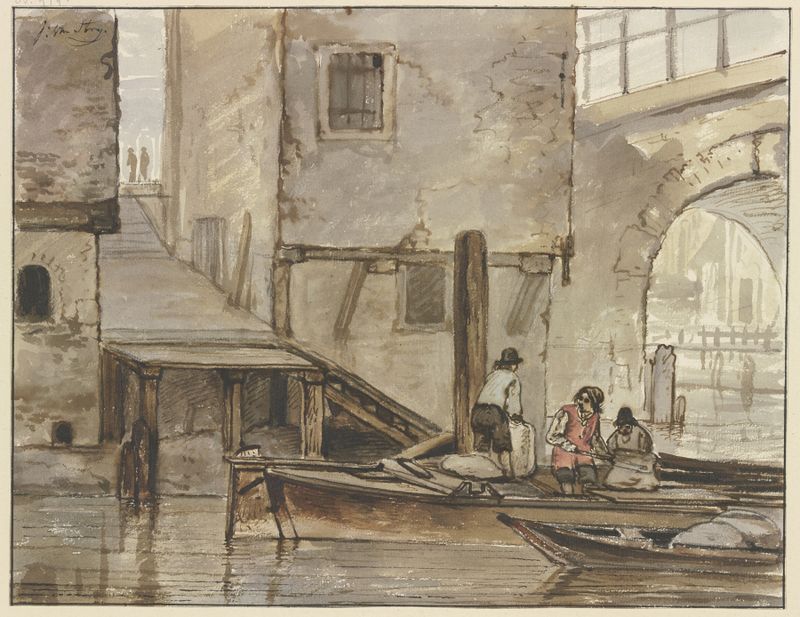
Gracht mit zwei Ruderbooten
Jacob van Strij
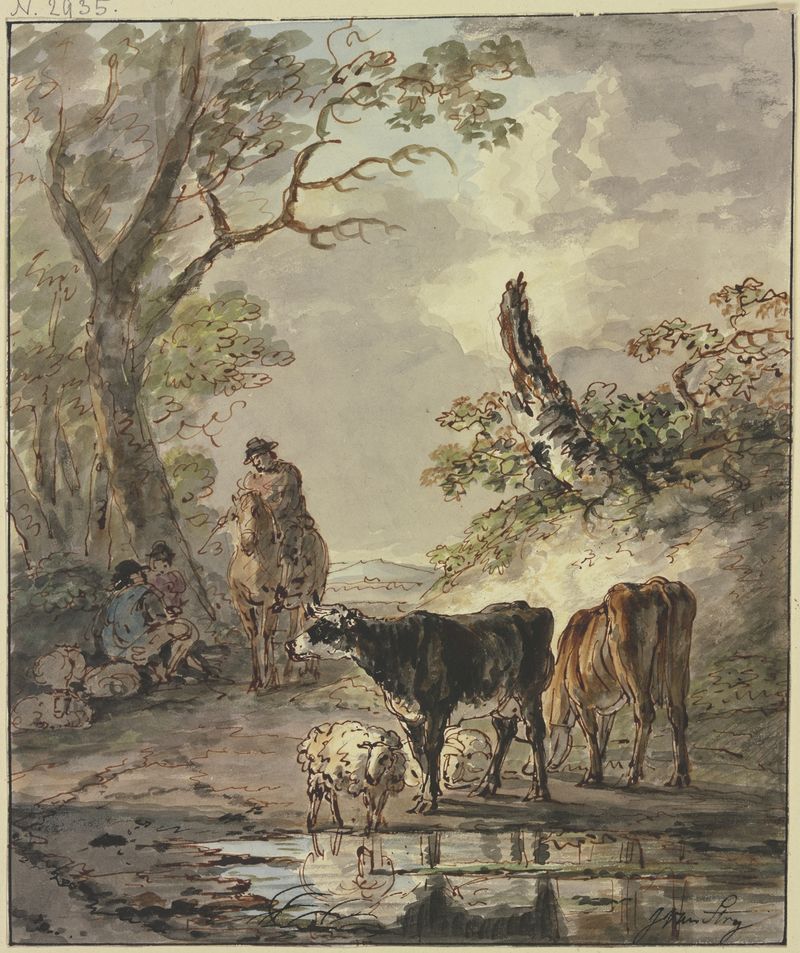
Rastende Hirten an einer Wasserstelle
Jacob van Strij





