
Rivierlandschap met rustend vee — History & Facts
Who listens when art speaks of silence? In the nuanced stillness of Rivierlandschap met rustend vee, the whisper of nature’s melancholy resonates deeply, inviting contemplation and introspection. Look closely at the gentle curve of the river that meanders through the landscape, drawing your eye to the serene forms of cattle resting by its bank. Notice how the muted greens and earthy tones blend seamlessly, each brushstroke echoing the quietude of the scene. The soft light, diffused through a veil of clouds, creates a delicate interplay of shadow and illumination, enhancing the tranquility that envelops the composition. Beneath the surface of this pastoral calm lies an undercurrent of solitude and yearning.
The lone tree stands sentinel, its gnarled branches stretching towards the heavens yet rooted in the earth, embodying a tension between aspiration and confinement. The stillness of the water reflects not just the physical landscape but also the internal landscape of human emotion, conjuring feelings of nostalgia and the weight of time's passage. Each element, from the grazing cattle to the distant hills, urges the viewer to pause and reflect on their own place within the cycle of life. Created between 1766 and 1815, this piece emerged during a period in which Jacob van Strij was seeking to express the profundity of the everyday landscape.
Working in the Netherlands, amidst a flourish of Romantic sentiment, he captured not only the surface beauty of his surroundings but also the deeper emotional currents that flow beneath, offering a tranquil yet poignant glimpse into the heart of nature.
More Artworks by Jacob van Strij
Browse all →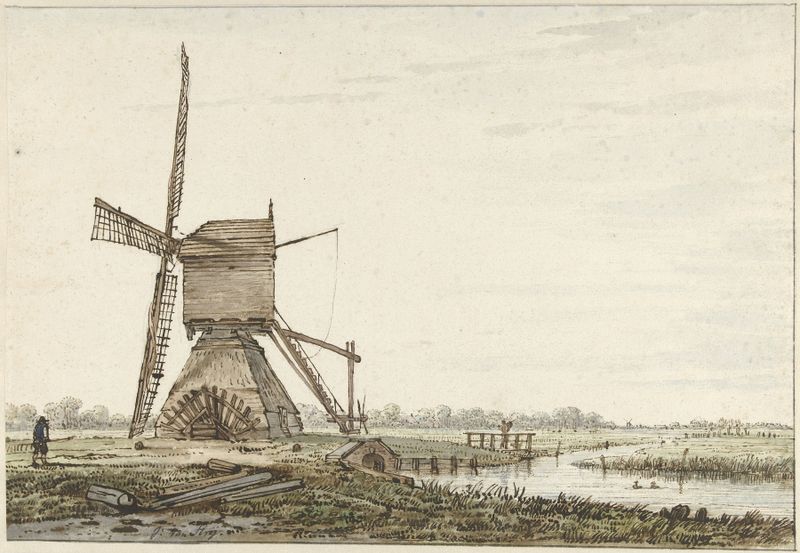
Landschap met poldermolen
Jacob van Strij

Milking Time
Jacob van Strij
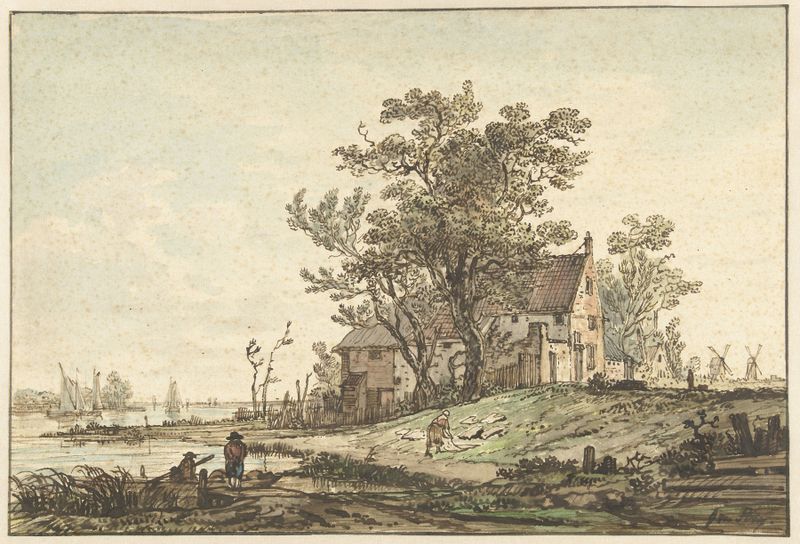
Oude boerderij aan een rivier
Jacob van Strij

Paysage arboré avec figures et maisons au bord du rivage
Jacob van Strij

Landscape with Peasants with their Cattle and Anglers on the Water
Jacob van Strij

Italianisierende Landschaft mit einem Hirten
Jacob van Strij
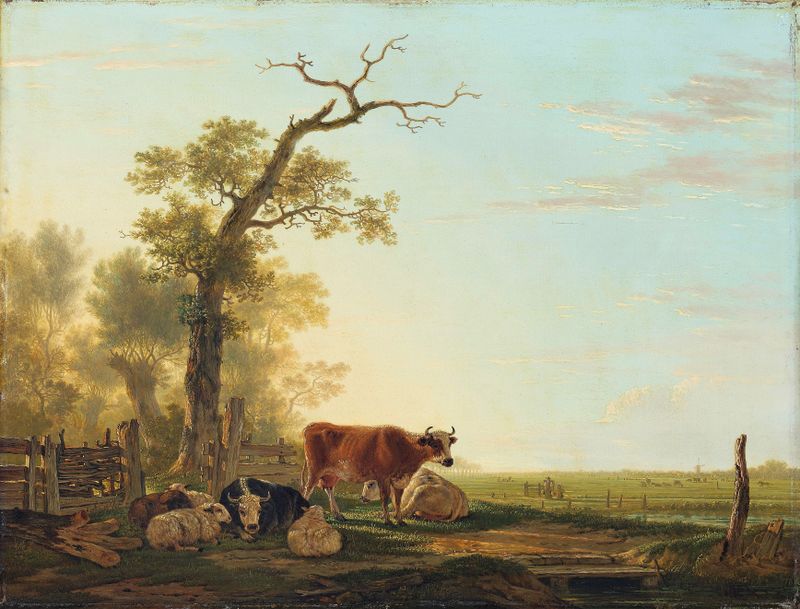
Meadow Landscape with Animals
Jacob van Strij
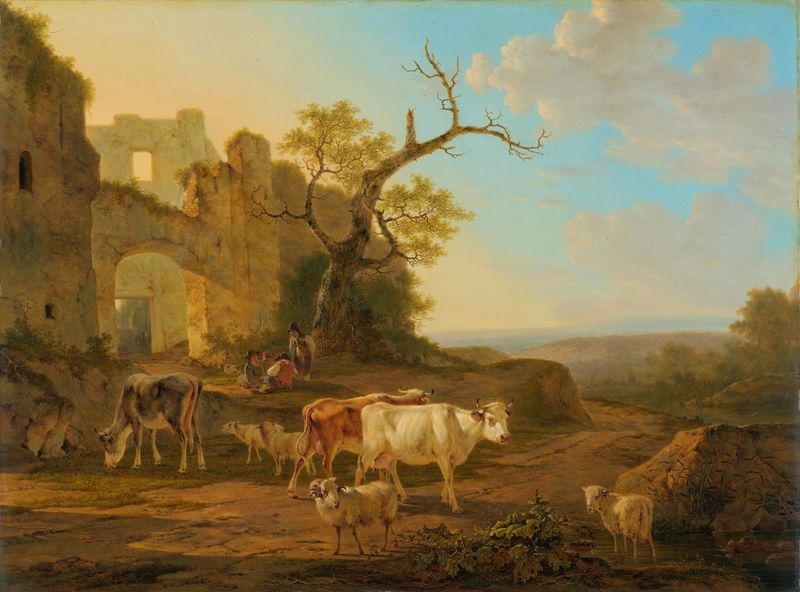
Landscape with Cows near a Ruin
Jacob van Strij
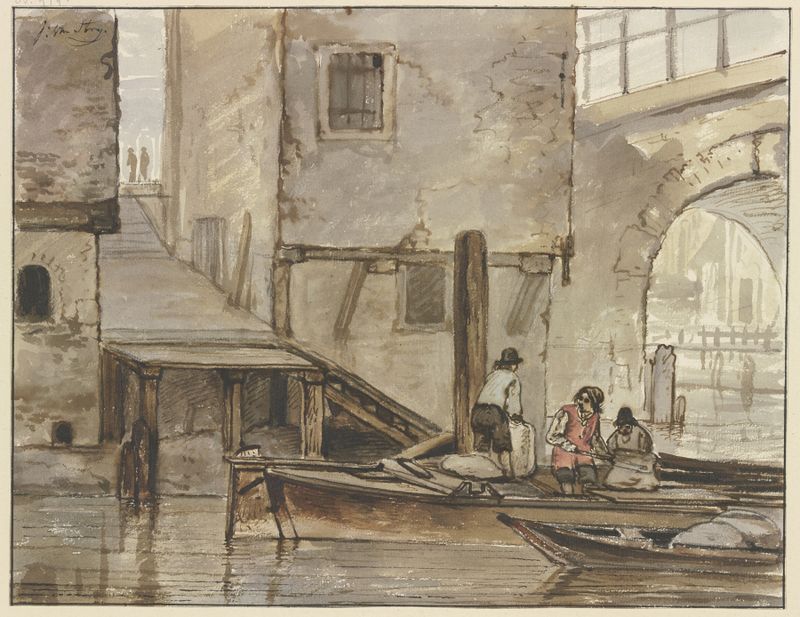
Gracht mit zwei Ruderbooten
Jacob van Strij
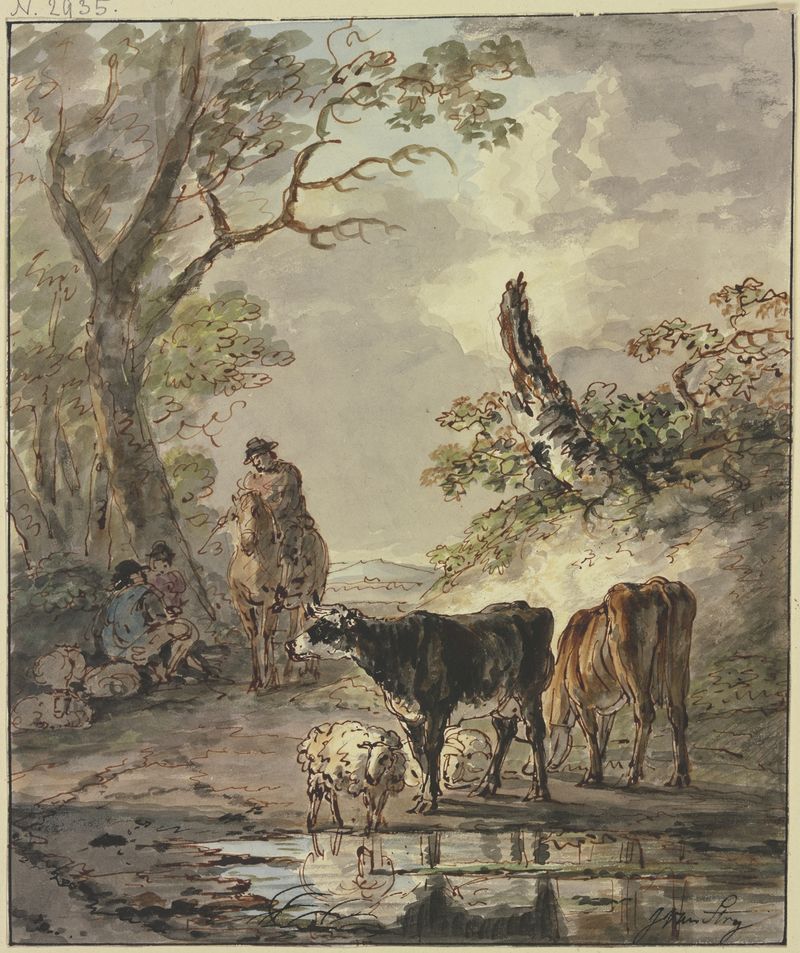
Rastende Hirten an einer Wasserstelle
Jacob van Strij





