
Landschap met poldermolen — History & Facts
In the gentle embrace of a landscape, desire lingers like a soft whisper, beckoning us to pause and reflect. Look to the left at the gracefully turning sails of the poldermolen, where the delicate interplay of shadow and light creates a rhythmic dance upon the water's surface. The lush green fields stretch endlessly under a vast, cloud-dotted sky, inviting the eye to wander deeper into the scene. Van Strij's meticulous brushwork conveys a serene stillness, achieved through soft color gradients that evoke a sense of harmony between nature and human craftsmanship. Yet, beneath the tranquil surface, a subtle tension brews.
The windmill stands as a sentinel of both progress and nostalgia, a reminder of the unending human quest to reclaim and reshape the land. The warm sunlight bathing the landscape contrasts with the cooler tones of the water, hinting at the dichotomy between human aspiration and the inexorable passage of time. Each detail whispers of longing—a desire for permanence in an ever-changing world. Created between 1766 and 1815, this work emerged during a period of transition in the Netherlands, where the effects of industrialization began to reshape rural landscapes.
Jacob van Strij, entrenched in the Dutch tradition of landscape painting, found himself navigating the balance between tradition and modernity. As he infused his canvases with both beauty and introspection, he captured not only the essence of the land but also the collective yearning of a society on the brink of change.
More Artworks by Jacob van Strij
Browse all →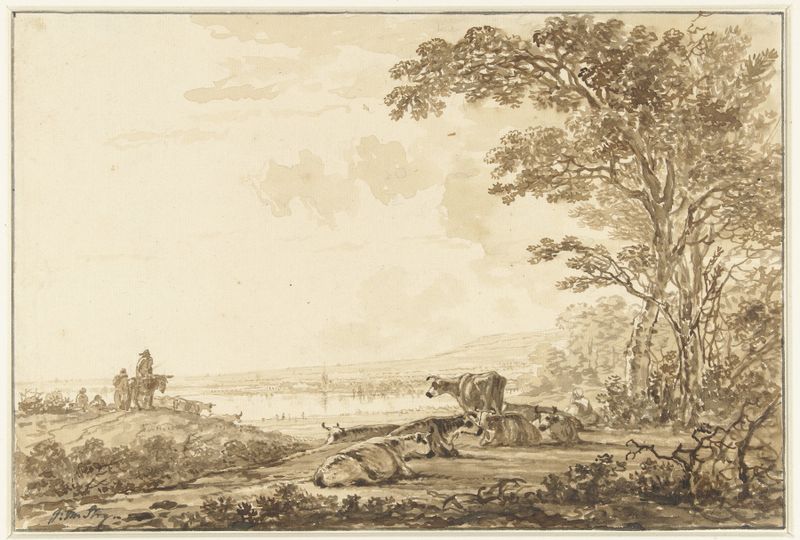
Rivierlandschap met rustend vee
Jacob van Strij

Milking Time
Jacob van Strij
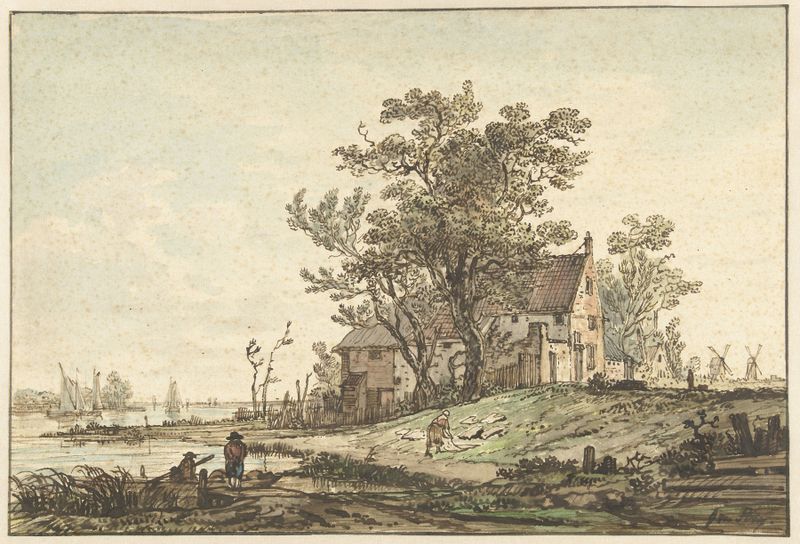
Oude boerderij aan een rivier
Jacob van Strij

Paysage arboré avec figures et maisons au bord du rivage
Jacob van Strij

Landscape with Peasants with their Cattle and Anglers on the Water
Jacob van Strij

Italianisierende Landschaft mit einem Hirten
Jacob van Strij
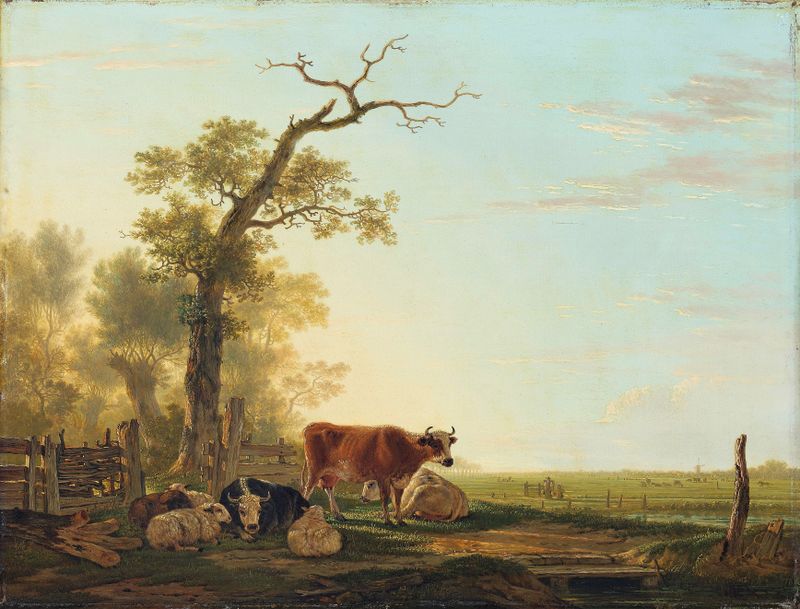
Meadow Landscape with Animals
Jacob van Strij
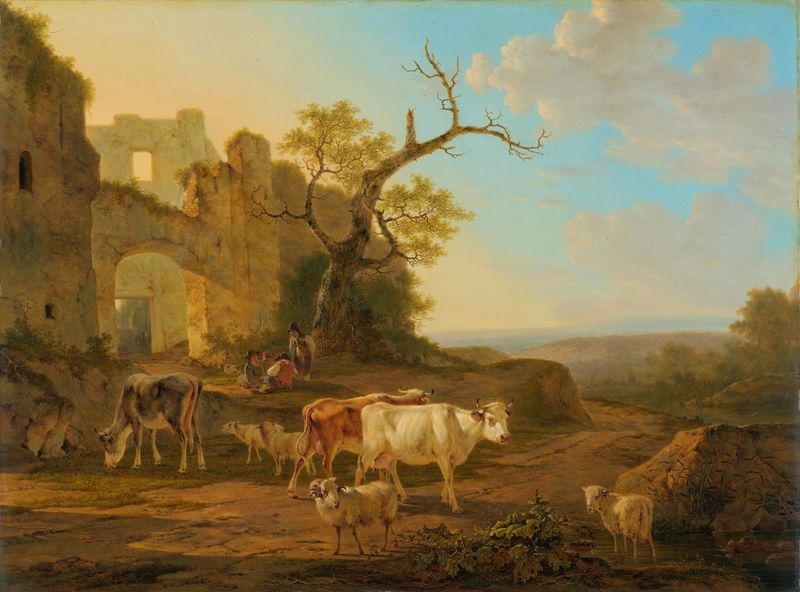
Landscape with Cows near a Ruin
Jacob van Strij
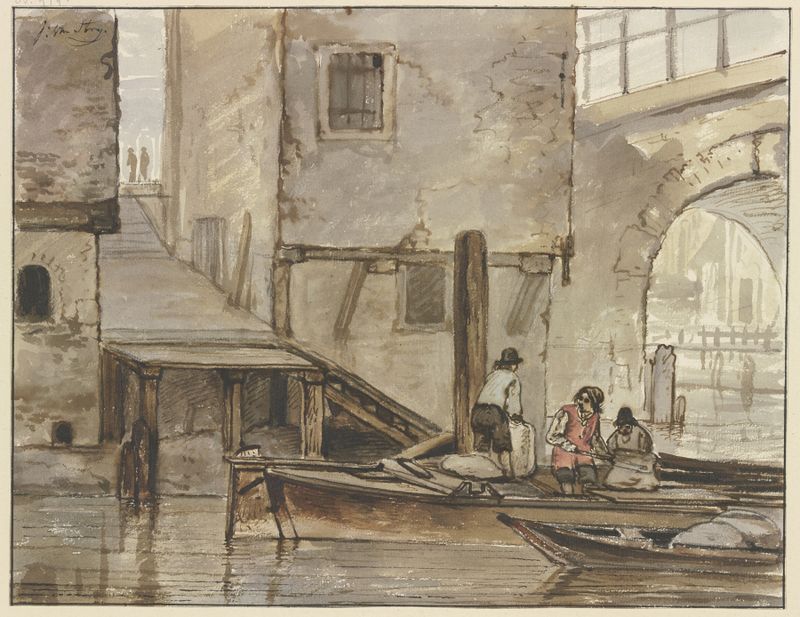
Gracht mit zwei Ruderbooten
Jacob van Strij
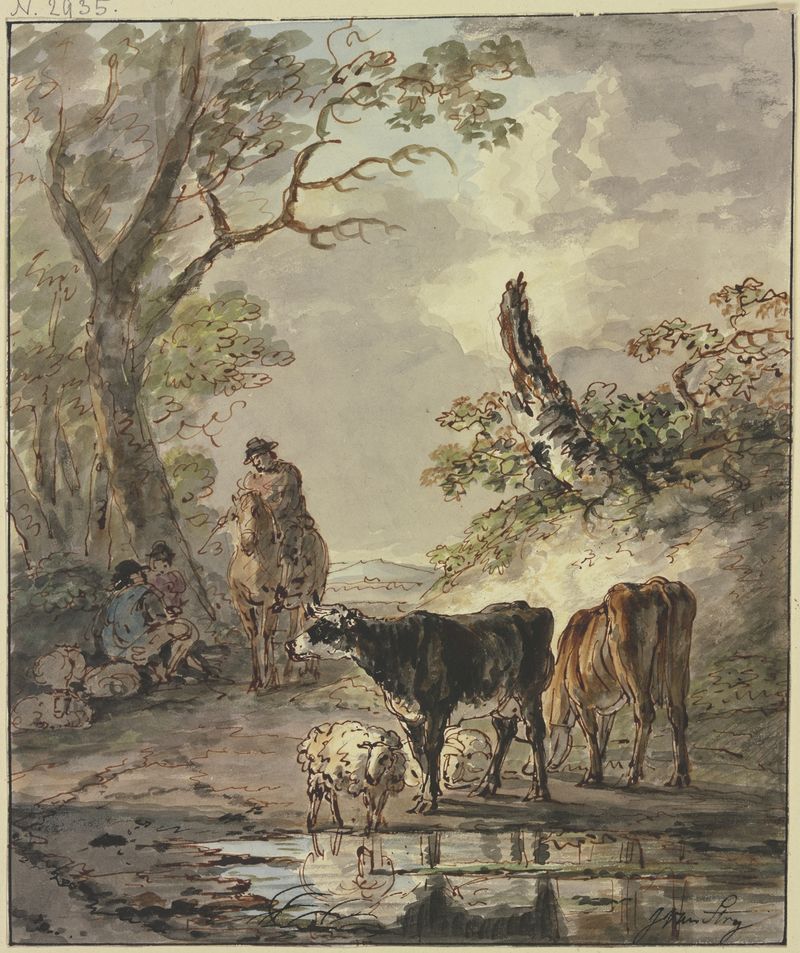
Rastende Hirten an einer Wasserstelle
Jacob van Strij





