
Figures near a Fountain — History & Facts
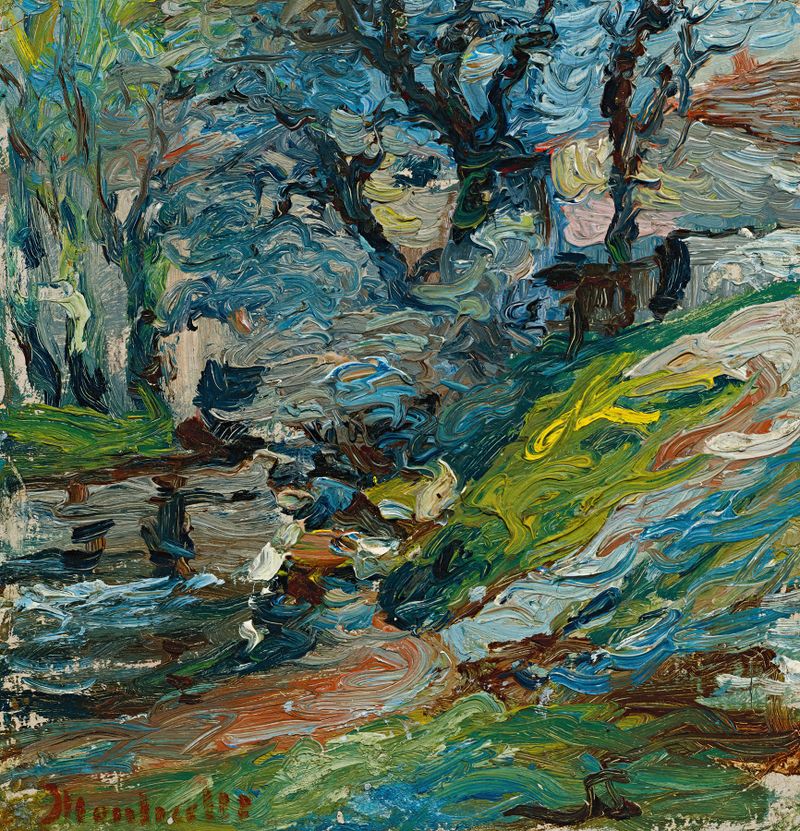
Who listens when art speaks of silence? In Figures near a Fountain, the stillness of the scene echoes with an unvoiced sorrow, inviting viewers to reflect on the absence that permeates the air. Focus your gaze on the figures clustered together, their faces partially obscured by the gentle brushwork that defines Monticelli's technique. Notice how their postures seem to embody a conversation frozen in time. To the left, a woman stands with her back turned, the delicate interplay of colors in her gown contrasting with the deep greens of the surrounding foliage.
The fountain sparkles faintly, its water cascading silently, symbolizing the passage of time and memories lost. Within this tranquil composition lies a deeper emotional tension. The figures, while visually connected, exude a sense of isolation, as if each is trapped in their own reverie. The play of light and shadow around them amplifies this feeling of distance, suggesting a longing to reach out, yet remaining ensnared by unexpressed grief.
The fountain, a traditional symbol of life, paradoxically accents the melancholy; it flows endlessly while the moments shared by the figures fade into oblivion. Created during a fruitful period between 1870 and 1886, this work captures Monticelli's exploration of color and form amidst a burgeoning post-impressionist movement. As he navigated his own artistic evolution in France, the world around him was grappling with change, mirroring the emotional landscapes portrayed in his art. Monticelli’s ability to blend raw emotion with vibrant expressionism shaped his legacy, marking him as a distinctive voice during this transformative era in art history.
More Artworks by Adolphe Monticelli
Browse all →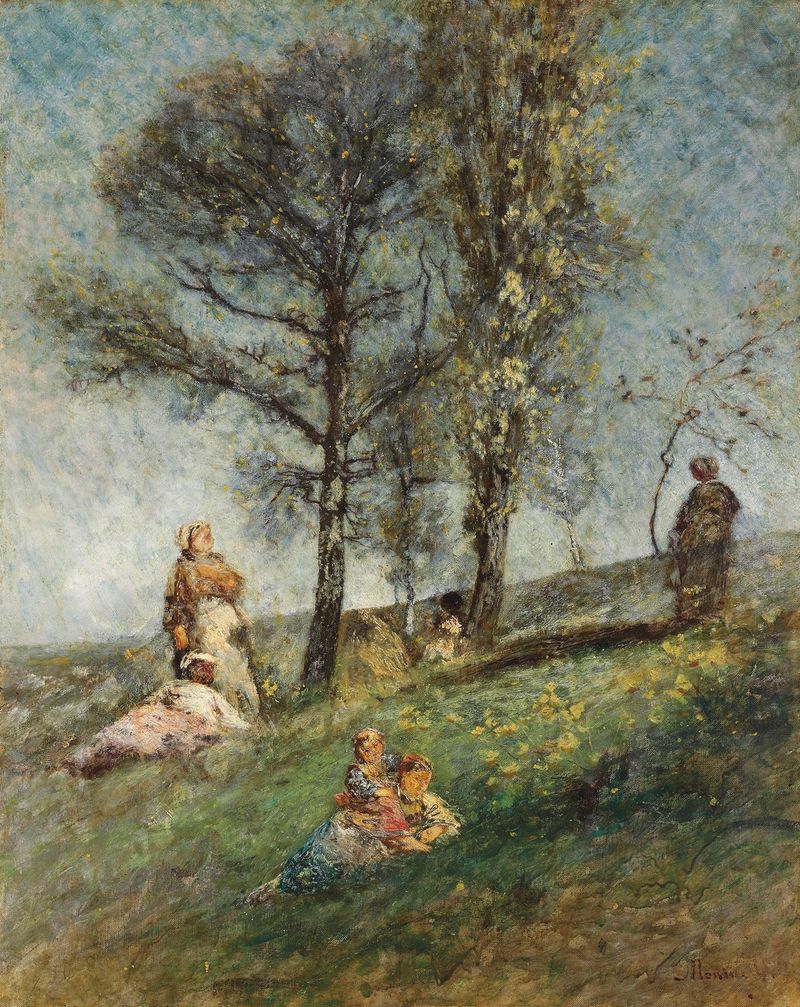
A Young Family Under Trees On A Hill
Adolphe Monticelli
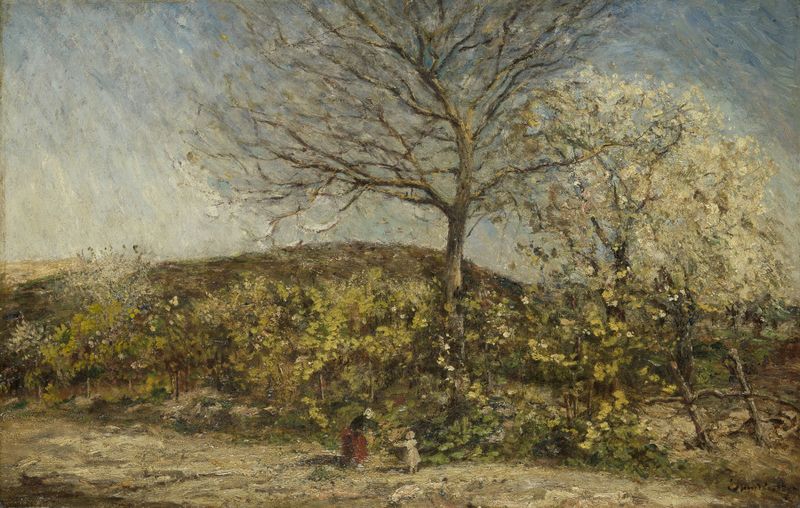
Landschap met bloeiende boomgaard
Adolphe Monticelli

Paysage
Adolphe Monticelli
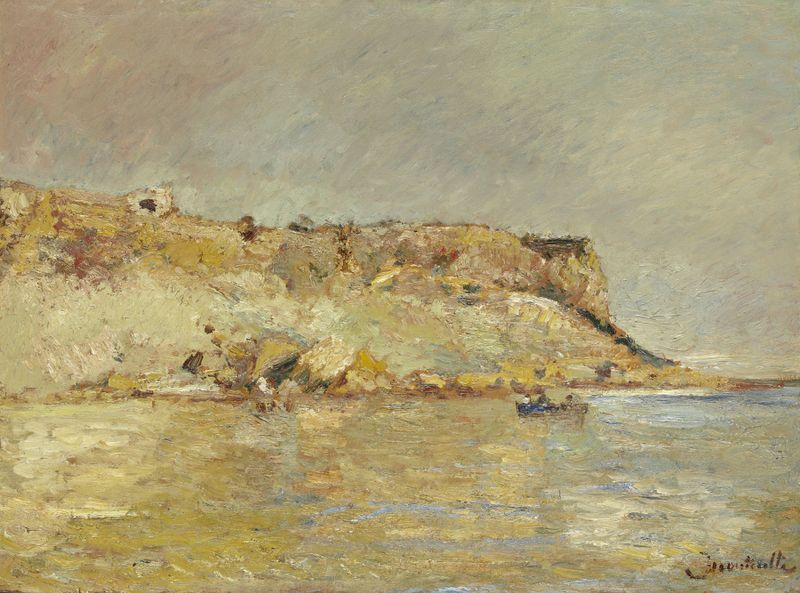
Coastal Mountains
Adolphe Monticelli

Landscape
Adolphe Monticelli

Landscape with Figures
Adolphe Monticelli
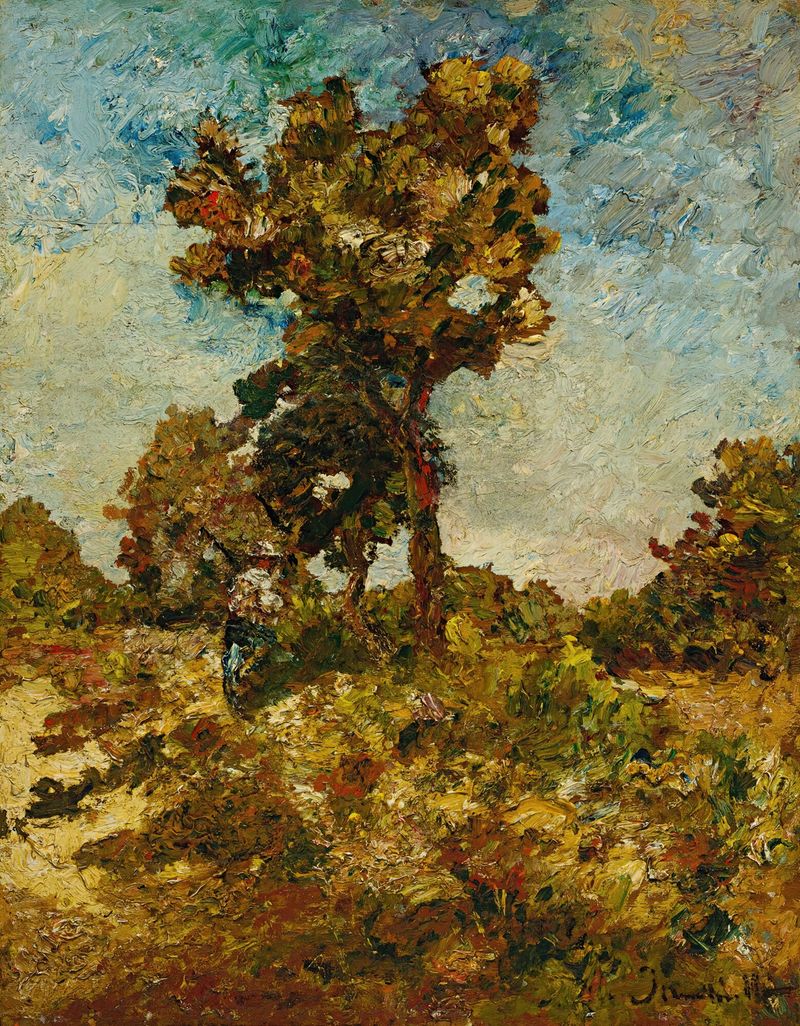
Les Arbres
Adolphe Monticelli

Paysage animé de petits personnages
Adolphe Monticelli
Au Bord De La Rivière, Marseilles
Adolphe Monticelli

Autumn
Adolphe Monticelli





