
Paysage — History & Facts
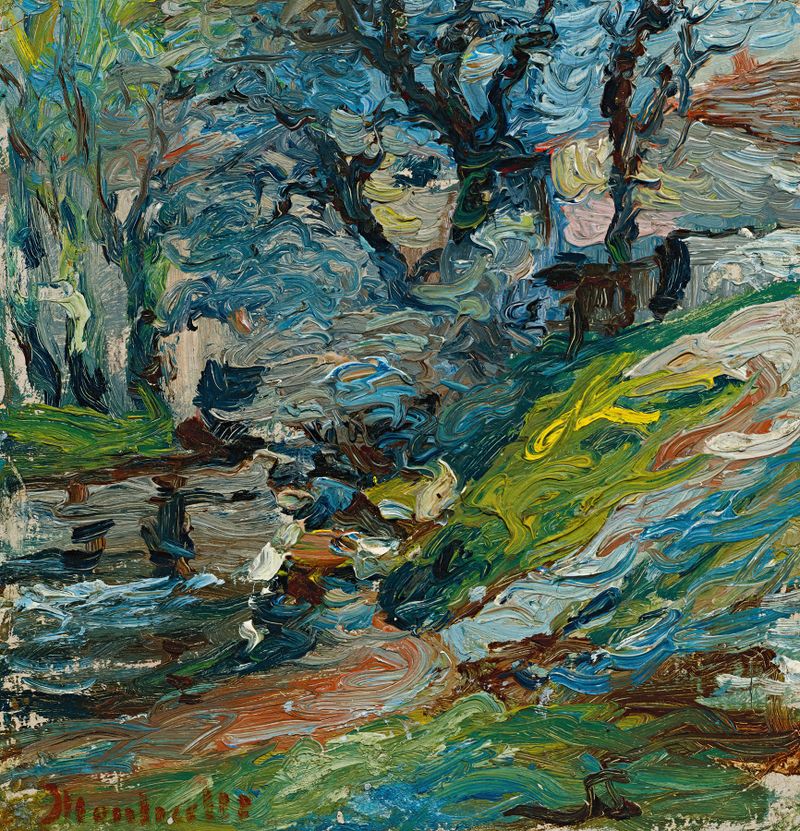
In a world so fragile, the whispers of nature speak volumes, yearning for our attention and reflection. Look to the bottom right where a delicate cascade of blossoms bursts forth, their pastel colors a tender embrace against the soft greens and browns. Notice how Monticelli’s brush strokes vary in texture, from the thick, impassioned swirls that form the foliage to the gentle dabs that outline the flowers, inviting you to engage with their fleeting beauty. The interplay of light and shadow creates a dynamic depth, causing the colors to vibrate with a quiet intensity that evokes the ephemeral nature of the scene. Delve deeper into the layers of this landscape: the distant horizon suggests both distance and longing, a place that feels just out of reach.
The soft blues of the sky meld with the muted earth tones, evoking not only serene beauty but also a sense of fragility, as if the entire scene could dissolve at any moment. The absence of defined figures further amplifies this notion, leaving the viewer to ponder their own presence in this tranquil yet uncertain space. Created in the 19th century, Monticelli painted this piece during a time when the art world was transitioning towards Impressionism, exploring new ways to capture light and emotion. Living in Paris, he was influenced by the vibrant artistic community around him, yet he often remained an enigmatic figure, battling personal struggles and seeking to define his unique voice amidst the burgeoning movements.
This canvas reflects not only his emotional depth but also the complexities of a world caught between reality and abstraction.
More Artworks by Adolphe Monticelli
Browse all →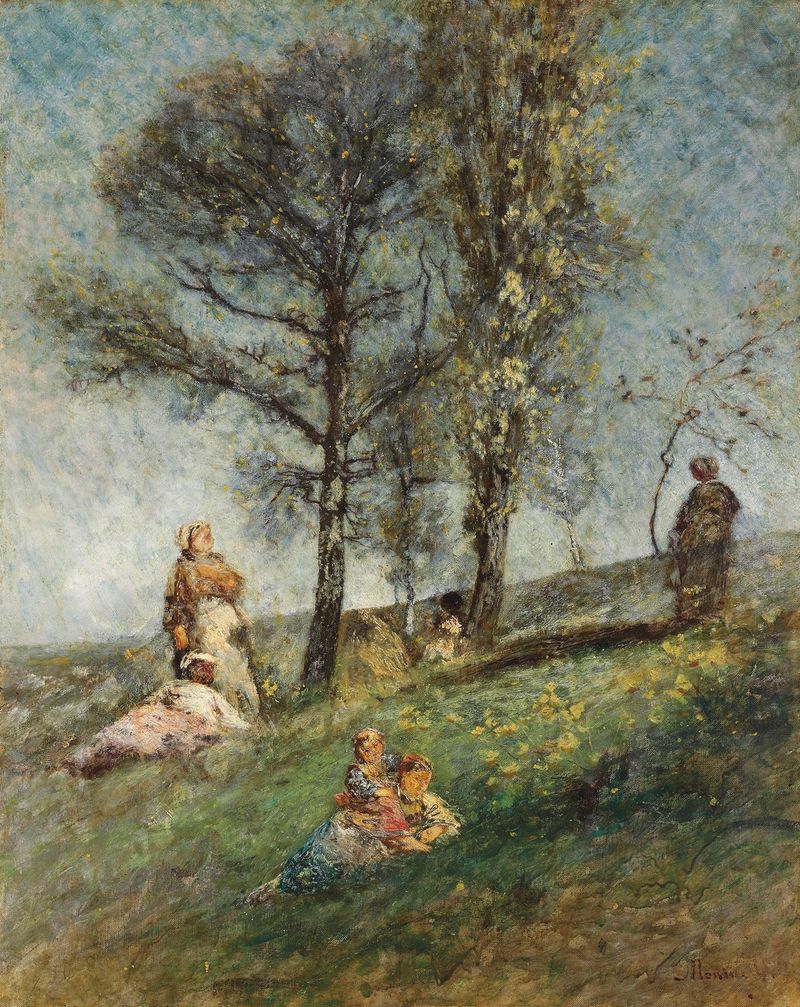
A Young Family Under Trees On A Hill
Adolphe Monticelli
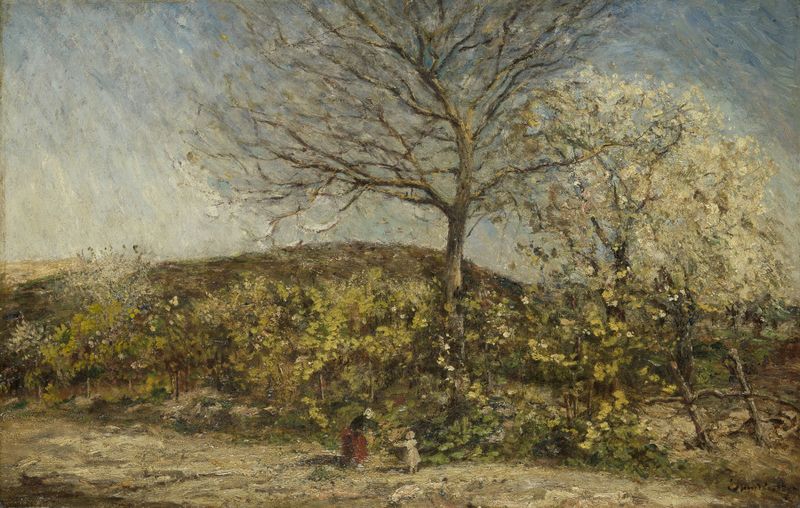
Landschap met bloeiende boomgaard
Adolphe Monticelli
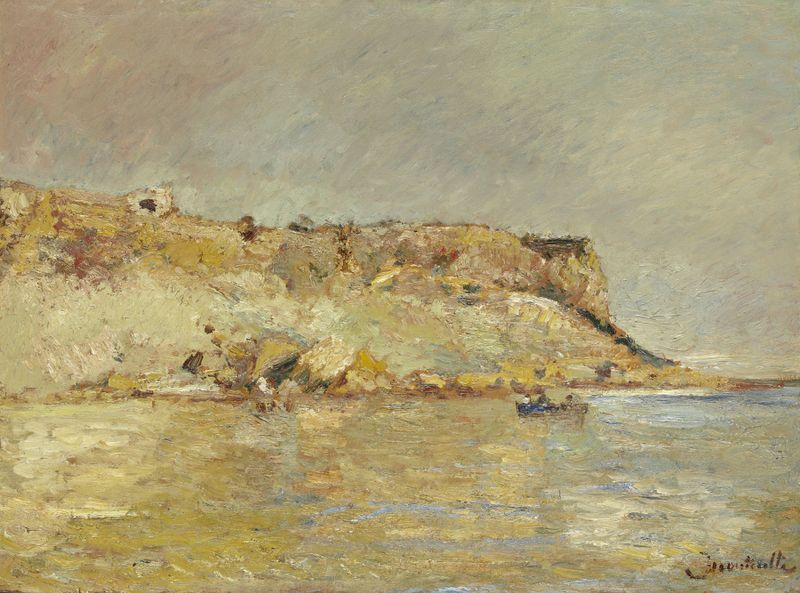
Coastal Mountains
Adolphe Monticelli

Landscape
Adolphe Monticelli

Landscape with Figures
Adolphe Monticelli
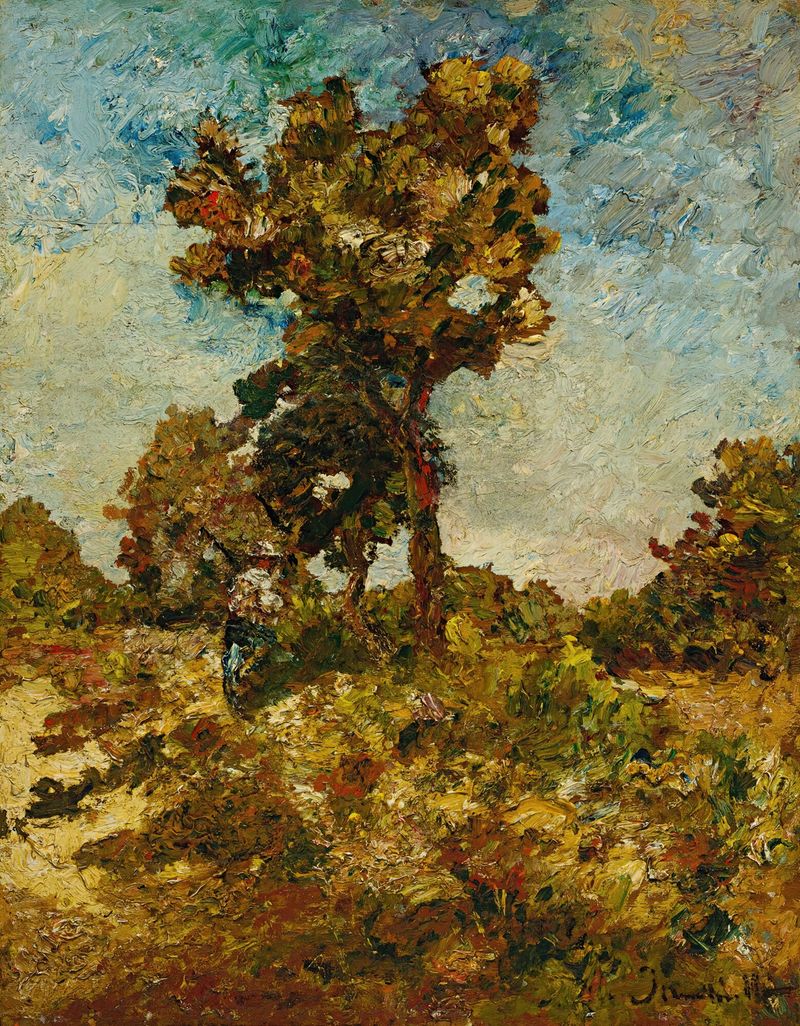
Les Arbres
Adolphe Monticelli

Paysage animé de petits personnages
Adolphe Monticelli
Au Bord De La Rivière, Marseilles
Adolphe Monticelli

Autumn
Adolphe Monticelli

Restaurant Bernard in Estaque
Adolphe Monticelli





