
Finsteraarhorn — History & Facts
Did the painter know this moment would outlive them? In the crisp silence of the Alpine wilderness, a sense of loss hangs in the icy air, as the jagged peaks reach toward an unfathomable sky. Focus on the grand expanse of the mountain, dominating the canvas with its formidable presence. The brushstrokes, layered with precision and intent, reveal the rough texture of the rocky surface, hinting at the struggle it endures against time and elements. Notice how the light dances across the snow-capped summit, illuminating the contours and casting shadows that evoke both majesty and menace.
Each hue—a spectrum of blues and whites—speaks to the fleeting beauty of nature, inviting your gaze deeper into the scene. Yet, beneath the surface grandeur lies an emotional tapestry woven from threads of solitude and longing. The mountain, a silent witness to countless stories, embodies the fragility of existence. The stark contrast between the vivid peaks and the deep valleys reflects the duality of life and loss, reminding us of the inevitable passage of time.
As the viewer, you are drawn into a contemplative space, where the beauty of the landscape also signifies an absence that echoes through the ages. In the early 1900s, while living in Germany, the artist captured Finsteraarhorn at a time when Romanticism still influenced perceptions of nature. He was immersed in a world celebrating the sublime, yet the realities of modernity loomed large. This painting emerged as Compton navigated both personal aspirations and the broader artistic currents, creating a work that transcends its moment to resonate with generations.
More Artworks by Edward Theodore Compton
Browse all →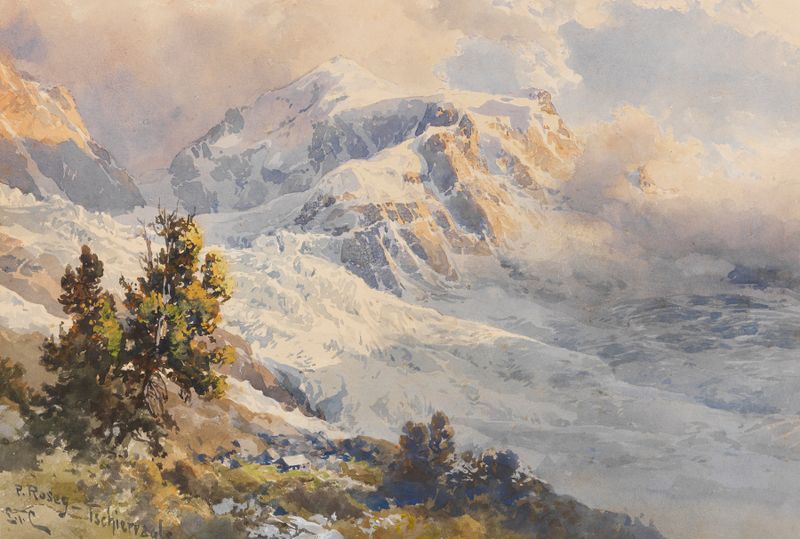
Piz Roseg – Tschiervagletscher
Edward Theodore Compton
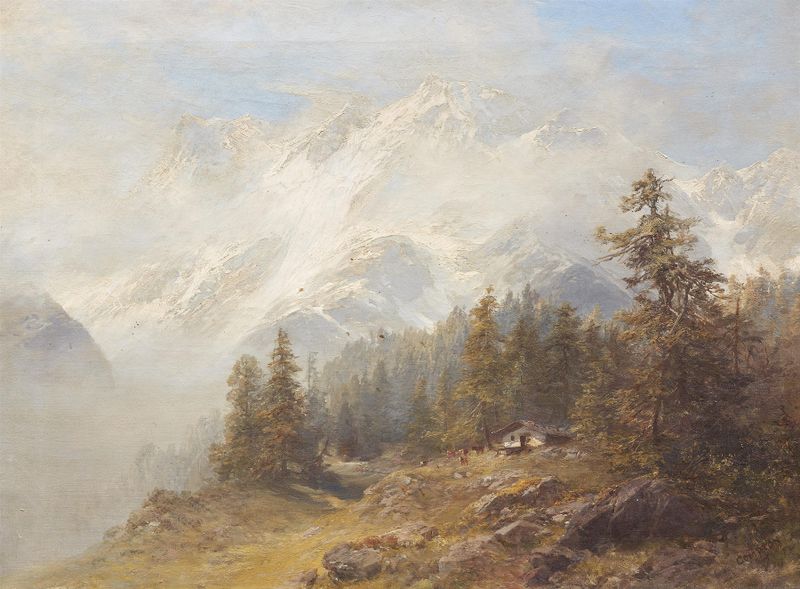
Alpenlandschaft vor schneebedecktem Massiv
Edward Theodore Compton
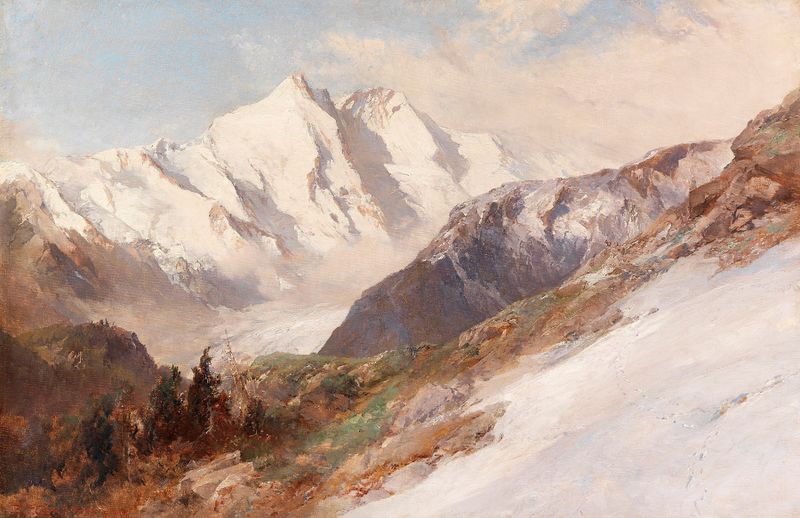
Blick auf die Nordseite des Großglockners
Edward Theodore Compton
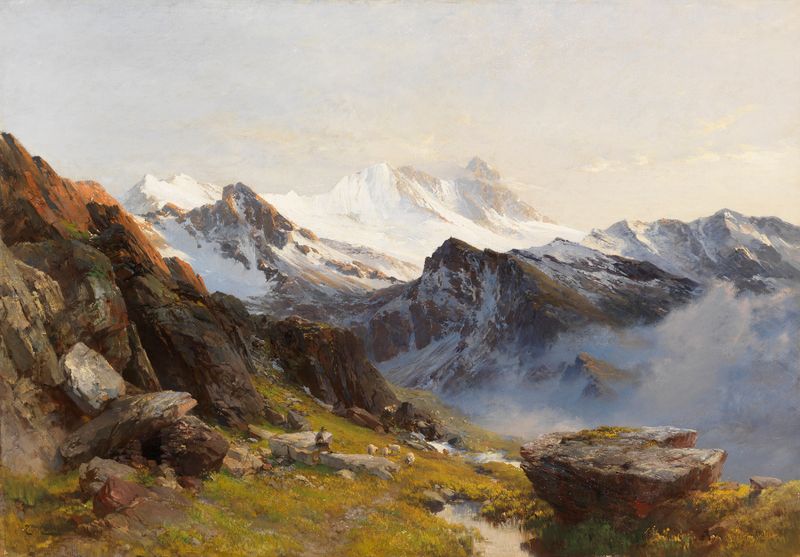
Großglockner von der Prager Hütte aus, früh
Edward Theodore Compton
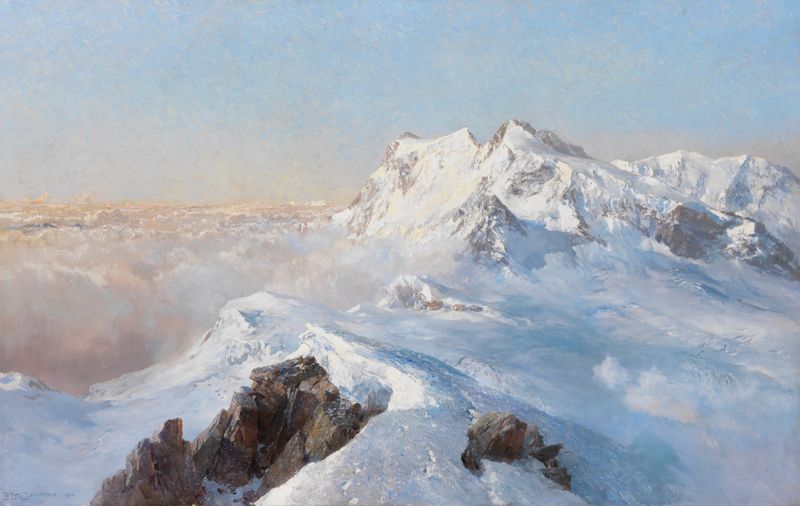
Über dem Nebelmeer (Monte Rosa vom Rimpfischhorn)
Edward Theodore Compton
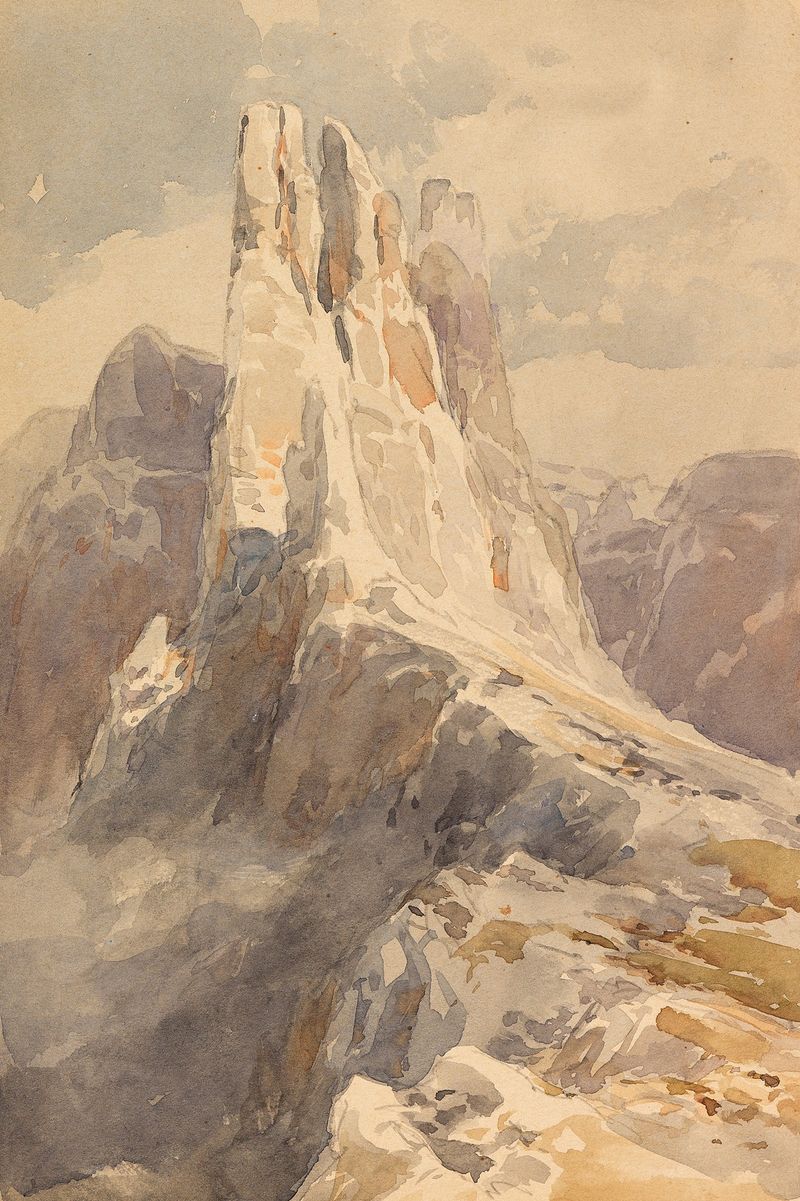
Blick auf die Vajolet-Türme in den Dolomiten
Edward Theodore Compton
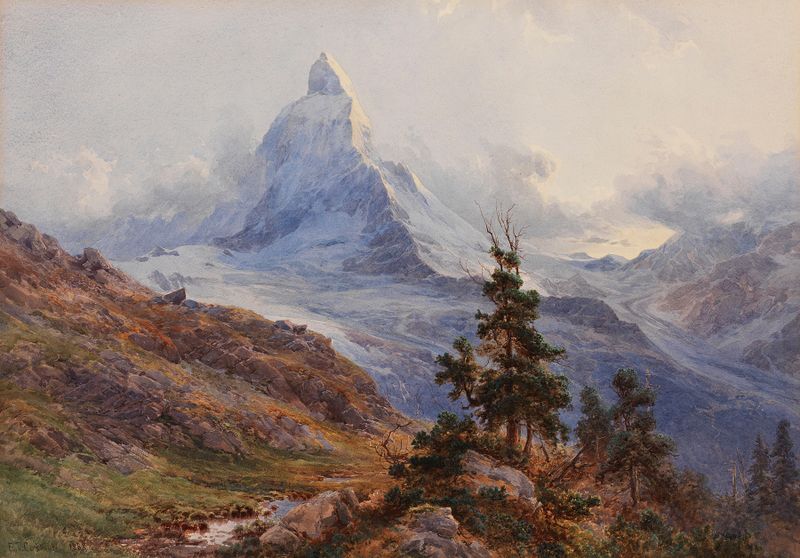
View of the Matterhorn
Edward Theodore Compton
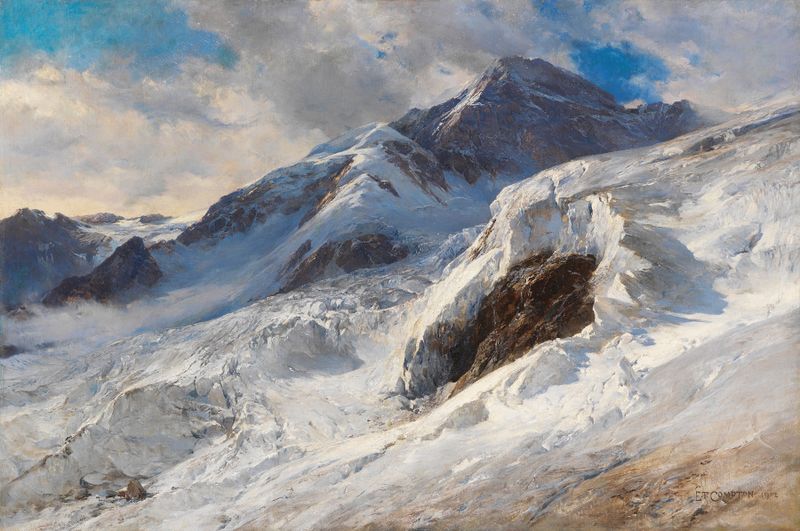
Lyskamm (Monte-Rosa)
Edward Theodore Compton
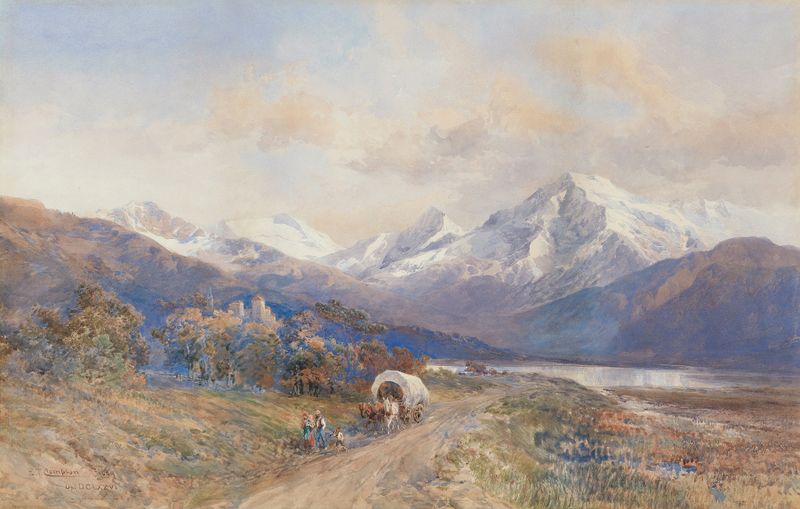
Blick auf den Ortler von St. Valentin
Edward Theodore Compton
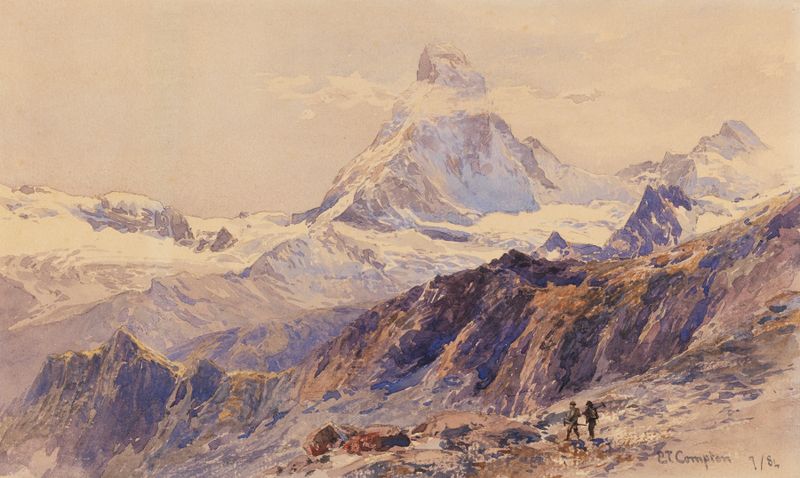
Das Matterhorn von der Triftkumme
Edward Theodore Compton





