
Fischpredigt — History & Facts
In the stillness of a moment, transformation unfolds within the frame, whispering secrets of change and renewal, echoing the profound depths of human experience. Look to the center of the composition, where a figure hunches over, enveloped in the weight of undelivered words. Notice how the muted palette of blues and grays contrasts sharply with the vibrant reds and yellows that pulse from the surrounding elements. The brushwork conveys a sense of urgency, and the positioning of the subjects creates a dynamic tension, drawing the viewer’s gaze across the canvas and inviting them to witness this pivotal moment. As you explore the subtleties, consider the interplay between light and shadow — the former illuminating the face of the central figure, suggesting an awakening, while the latter furls around others like a shroud, hinting at the burdens of unvoiced truths.
The disparity between the figures hints at a broader narrative of hope and despair, evoking a sense of collective transformation that resonates beyond the canvas. In 1951, Oskar Laske was navigating a post-war Europe, grappling with his own artistic identity amid the turmoil of reconstruction. This period was marked by a quest for new forms of expression, as artists sought to capture the complexity of human emotions in a rapidly changing world. Laske's work reflects this urgency, seeking to articulate the delicate balance of silence and confession — a testament to the transformative power of art in times of upheaval.
More Artworks by Oskar Laske
Browse all →
Faschingsumzug am Stock im Eisen Platz
Oskar Laske

Schönbrunn (Winter)
Oskar Laske
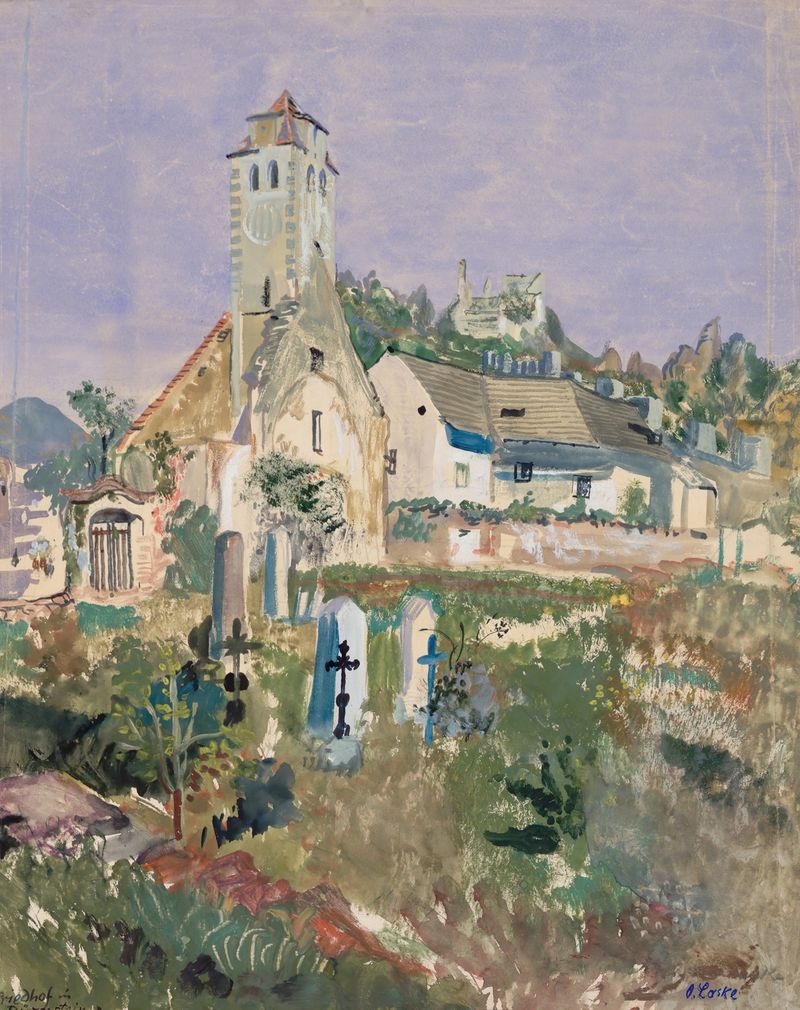
Friedhof in Dürnstein
Oskar Laske

Pratermotiv an der alten Donau
Oskar Laske

Frühjahrsnebel in Niederösterreich
Oskar Laske

Begräbnis des Wiener Bürgermeisters Dr. Karl Lueger
Oskar Laske

Maria Theresien-Denkmal mit Blick gegen das Burgtor
Oskar Laske
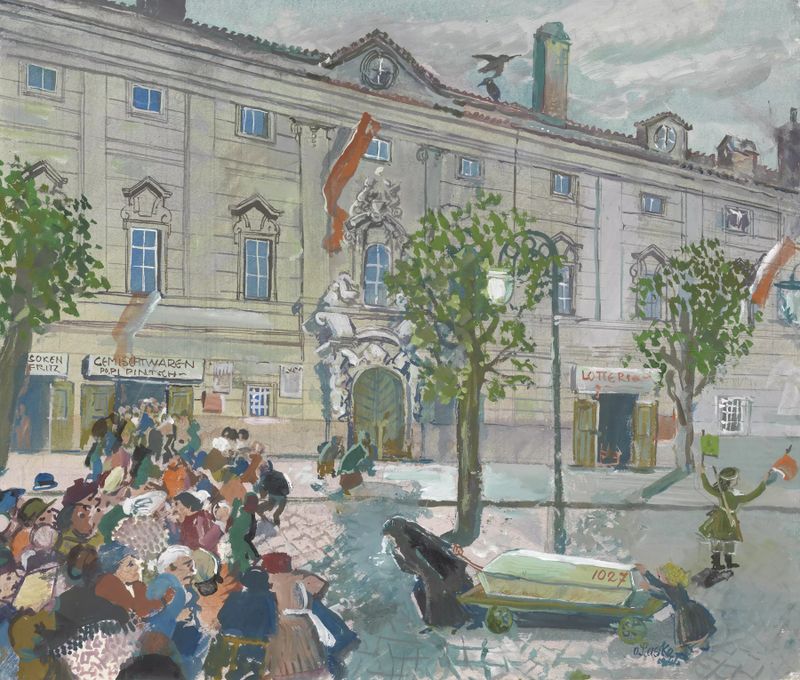
Wiener Straßenbild vom Mai 1945
Oskar Laske

Winterlandschaft in Pressbaum
Oskar Laske

Ansicht von Positano
Oskar Laske
More Religious Art
Browse all →
The Return of the Prodigal Son
Rembrandt van Rijn

The Garden of Earthly Delights
El Bosco

Count Orgaz’ funeral
El Greco

The Hundred Guilder Print: the central piece with Christ preaching, the plate arched
Rembrandt van Rijn

The Descent from the Cross
Rogier van der Weyden

The return of the prodigal son
Rembrandt van Rijn