
Fisherman’s Hut on the Hill–Isle of Man — History & Facts
This sentiment echoes through the serene landscape of a bygone moment, where nature's harmony cradles simplicity. In a world filled with noise, it invites us to seek tranquility in the gentle embrace of our surroundings. Look to the foreground, where a quaint fisherman’s hut rests, harmoniously blending into the rolling hills of the Isle of Man. Notice the soft, muted tones of greens and blues, evoking a sense of calm.
The delicate brushwork creates a textured interplay between light and shadow, illuminating the warmth of the structure against the coolness of the landscape. The sky, a gentle gradient, draws the eye upward, inviting the viewer to explore the vastness that envelops this humble scene. Beneath its surface lies a contrast between man and nature, encapsulated in the solitary hut against the backdrop of expansive hills. This juxtaposition symbolizes both solitude and belonging, portraying a world where human presence does not disrupt the grace of the natural landscape.
Small details, like the wisps of grass and the wavering clouds, remind us of the delicate balance in which we exist — a silent partnership between land and life. In 1889, Julian Alden Weir created this work while living in Connecticut, a period marked by a deepening connection to Impressionism. He sought solace in the landscapes around him, striving to capture fleeting moments of beauty amid the evolving art world. This painting reflects his commitment to conveying emotional depth through the simplicity of everyday life, a testament to a transformative time in his artistic journey.
More Artworks by Julian Alden Weir
Browse all →
My Back Yard no. 1
Julian Alden Weir
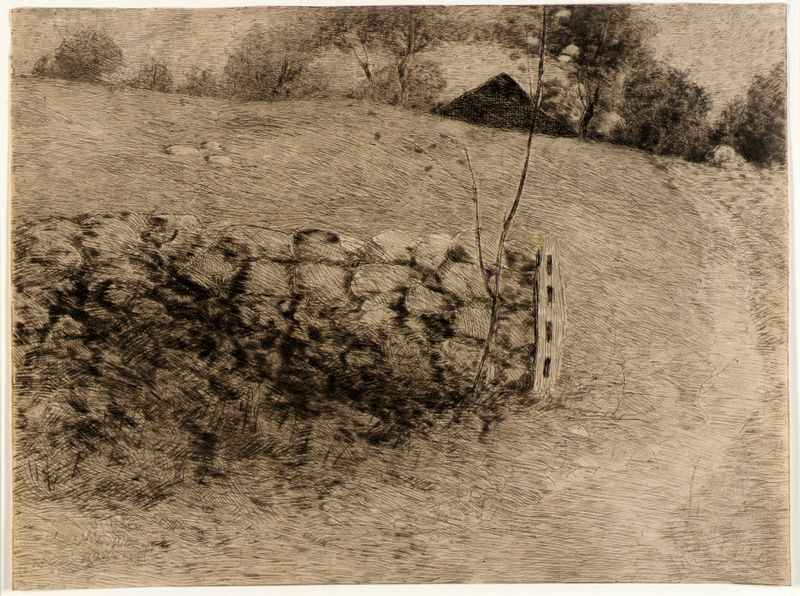
The Barn Lot
Julian Alden Weir

The Webb Farm
Julian Alden Weir
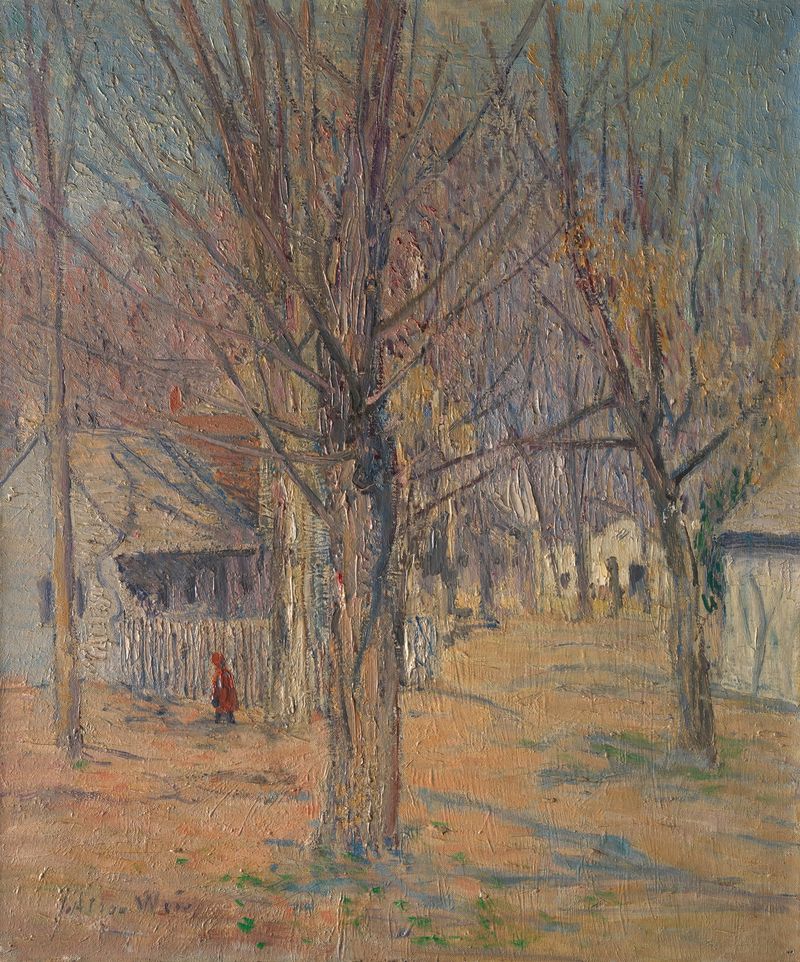
Connecticut Village (Going to School)
Julian Alden Weir

The Stone Bridge
Julian Alden Weir

The Webb Farm 2
Julian Alden Weir
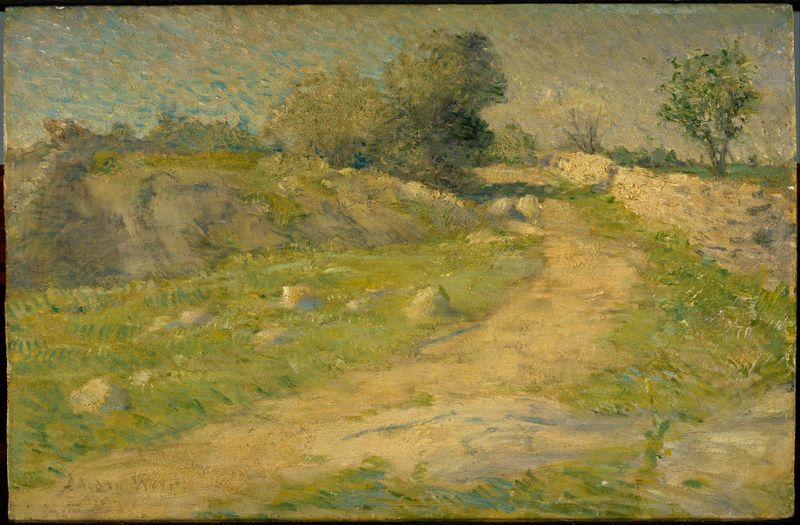
The Lane
Julian Alden Weir
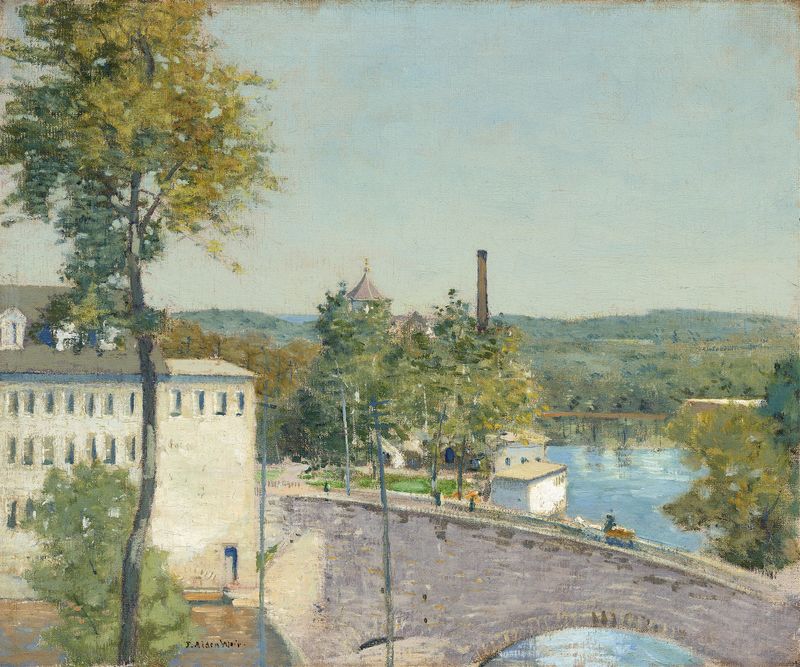
U.S. Thread Company Mills,Willimantic,Connecticut
Julian Alden Weir

Neighboring Farm
Julian Alden Weir

Coon Alley
Julian Alden Weir





