
The Piarist Church in Warsaw — History & Facts
Could a single brushstroke hold eternity? In The Piarist Church in Warsaw, every stroke becomes a testament to transformation, capturing a moment suspended in time and inviting reflection on change and resilience. Look to the center of the canvas, where the grand facade of the church rises against a cloudy sky. The artist employs a blend of soft blues and muted browns, creating a harmonious balance that draws the eye. Notice how the light dances across the building’s intricate details, illuminating the arches and soaring steeple, while shadows emphasize the strength of its structure.
The composition frames the church not just as a physical space but as a living entity, a witness to the passage of time. In the foreground, subtle hints of nature reclaiming its space remind us of the inevitable cycles of life. The tendrils of greenery push against the stoic stone, a nod to both decay and rebirth. This interplay between the enduring architecture and the soft encroachment of the natural world evokes a tension between permanence and ephemeral beauty.
Each detail, whether a crumbling brick or a blossoming flower, narrates a story of resilience amidst transformation. Feliks Jabłczyński painted this work in 1917, amidst a tumultuous period in Poland's history marked by war and political upheaval. Living in Warsaw, the artist was deeply influenced by his surroundings, capturing the essence of his environment during a time when the nation sought its identity. This piece stands as a visual record of both the architectural grandeur and the human spirit's ability to endure, a reflection of Jabłczyński's own artistic journey amidst the chaos of his era.
More Artworks by Feliks Jabłczyński
Browse all →
Villa Borgia in Rome
Feliks Jabłczyński

Mariensztat Street in Warsaw
Feliks Jabłczyński
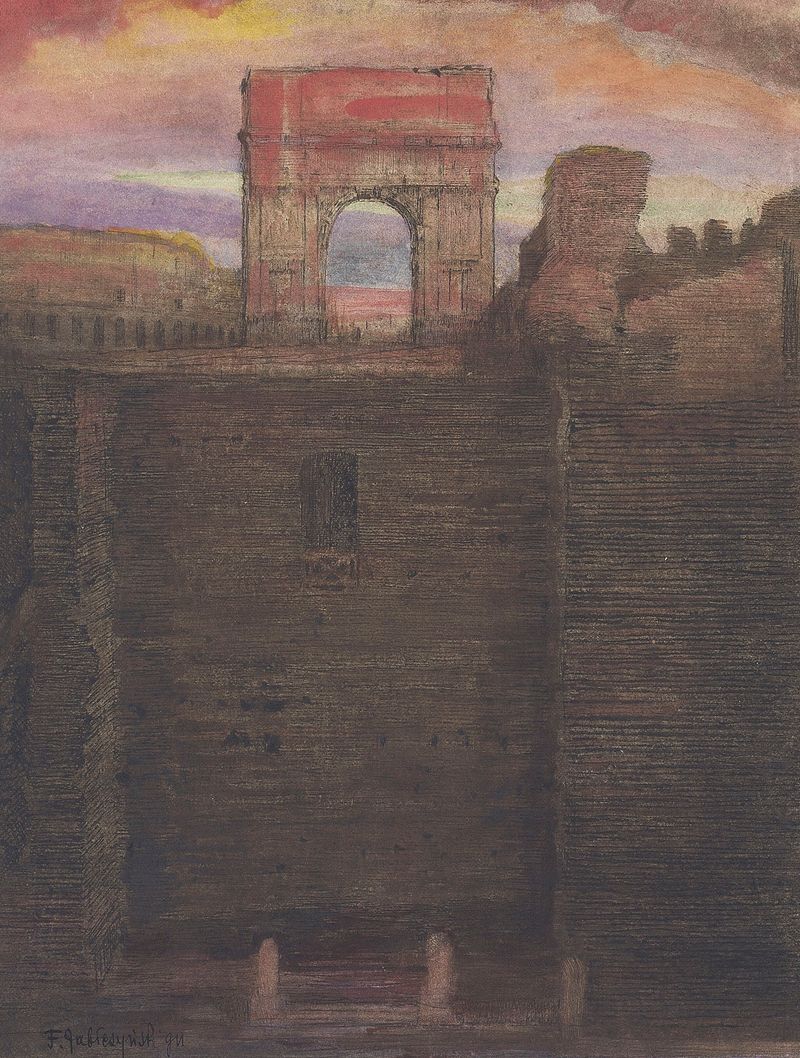
The House of Vestals and the Arch of Titus in the background
Feliks Jabłczyński
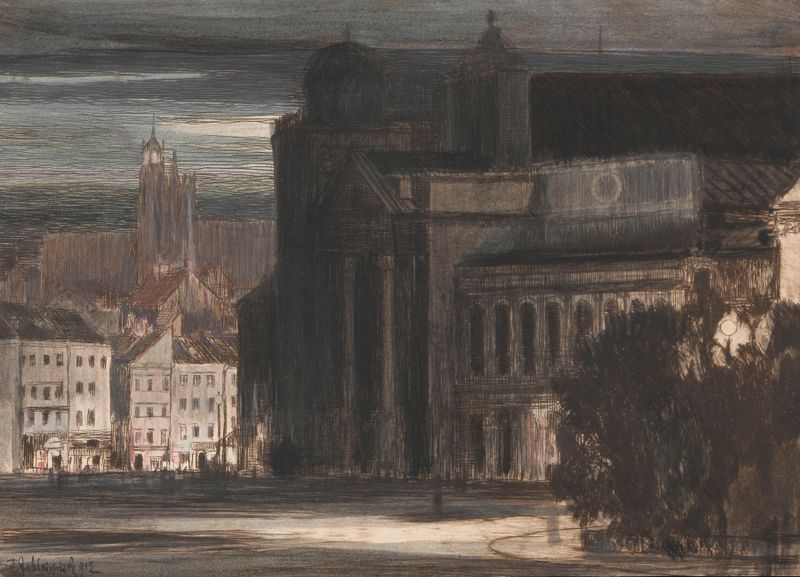
View of the Church of St. Anna and the Castle Square in Warsaw
Feliks Jabłczyński

Kaplica Boimów we Lwowie
Feliks Jabłczyński
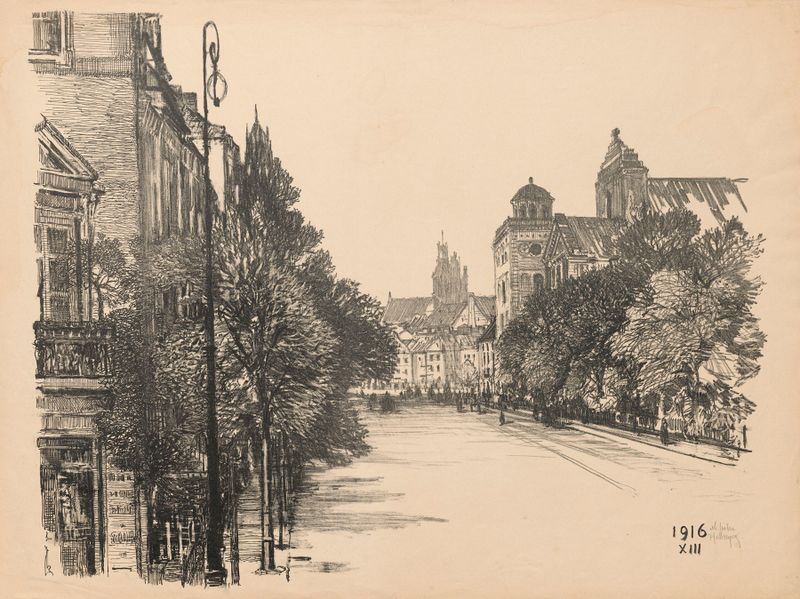
Krakowskie Przedmieście Street
Feliks Jabłczyński
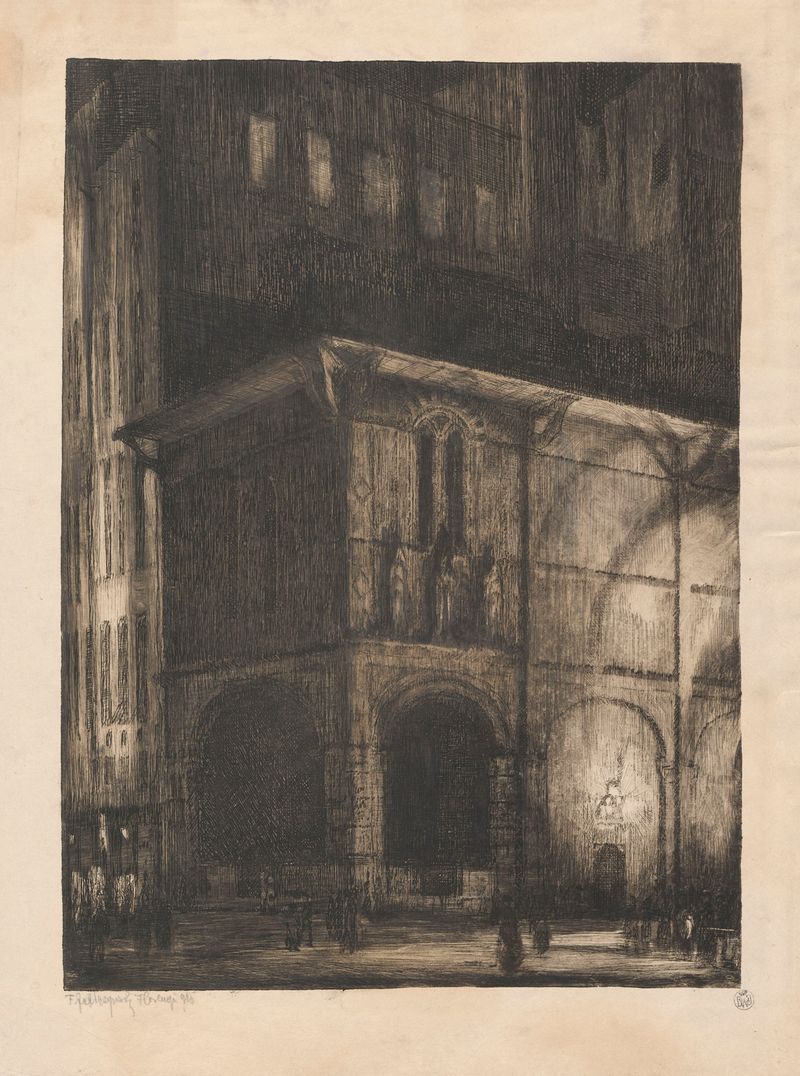
Florence
Feliks Jabłczyński
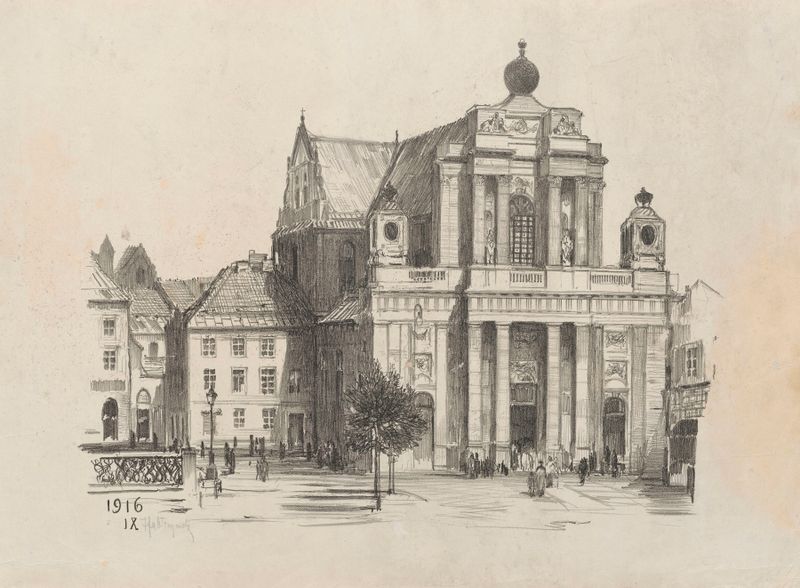
Carmelite Church.
Feliks Jabłczyński

The Visitation Sisters Church
Feliks Jabłczyński
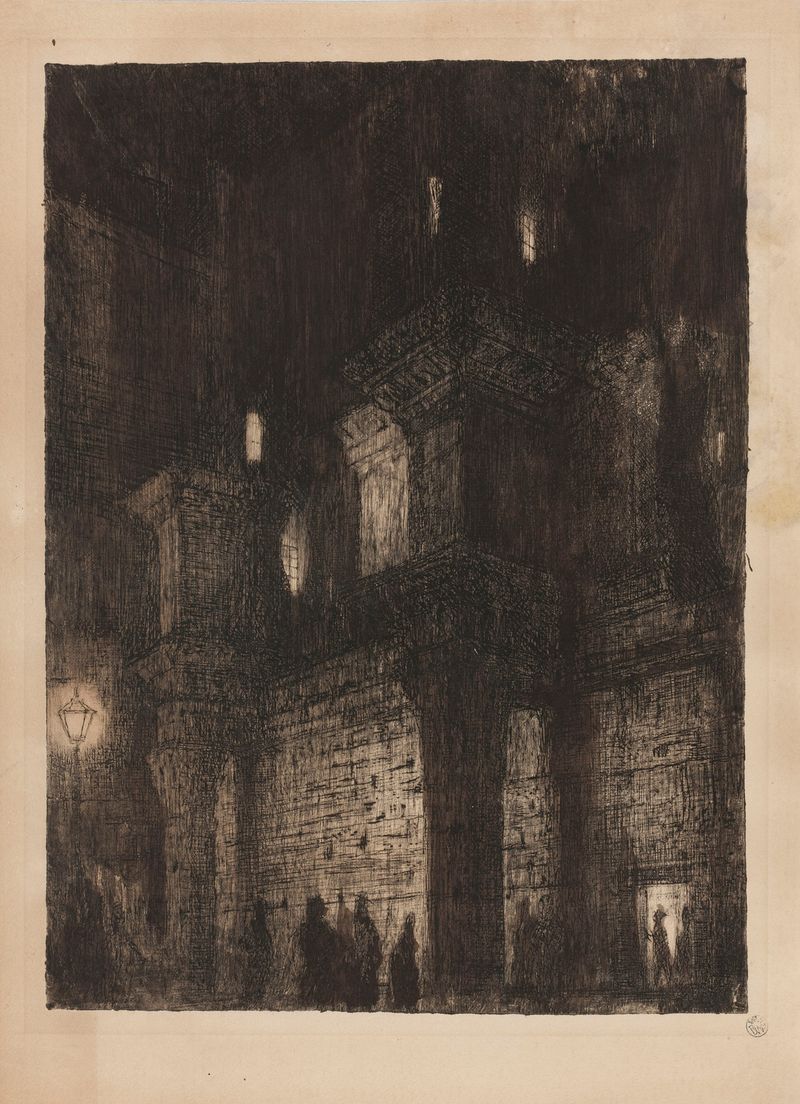
Forum Nervae
Feliks Jabłczyński
More Architecture Art
Browse all →
The statue of Liberty
Frédéric Auguste Bartholdi

View of Houses in Delft, Known as ‘The Little Street’
Johannes Vermeer

View of Houses in Delft, Known as ‘The Little Street’
Johannes Vermeer

The Cathedral in Rouen. The portal, Grey Weather
Claude Monet

The yellow house
Vincent van Gogh

The Church in Auvers-sur-Oise, View from the Chevet
Vincent van Gogh