
Fontainebleau — History & Facts
Could beauty survive in a century of chaos? This question hangs in the air like a fragile promise, echoing through the crisp lines and gentle contours of the painting. Look to the foreground, where the sweeping curves of the architecture draw your eye into a harmonious embrace. Notice how the interplay of light and shadow dances across the surfaces, creating a subtle rhythm that invites contemplation. The palette, rich with earthy tones and soft pastels, breathes life into the scene, reflecting a serene juxtaposition between human ingenuity and the natural world surrounding it.
Each brushstroke tells a story of balance, beckoning the viewer to linger in its quiet majesty. Delve deeper, and you’ll uncover a rich tapestry of emotional tension. The rhythmic patterns of the trees stand sentinel, suggesting resilience against the tempest of history, while the transparent glass of the structure hints at vulnerability. Here, nature and architecture coalesce, revealing the artist's reverence for both.
The scene speaks of nostalgia and a longing for harmony, where every detail—whether the delicate leaves or the sturdy bricks—echoes a silent hope for a future unscathed by turmoil. In 1949, as the world emerged from the shadows of war, the artist sought solace in the beauty of form and space while working in America. This period was marked by a burgeoning architectural movement that celebrated optimism and innovation, reflecting his desire to create a sanctuary amidst societal upheaval. Lundy's vision of Fontainebleau is a testament to this ethos, crystallizing a moment in time when art could offer a refuge and inspire awe.
More Artworks by Victor Alfred Lundy
Browse all →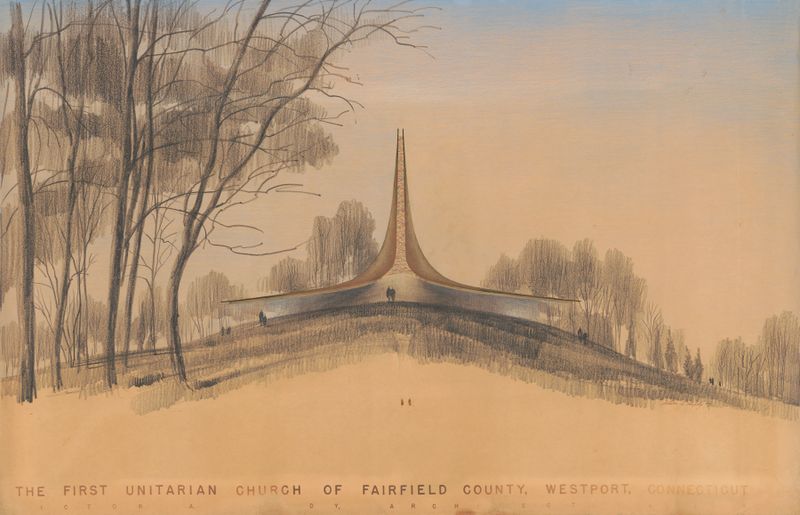
First Unitarian Church, Westport, Connecticut, Exterior
Victor Alfred Lundy

Residence for Mr. and Mrs. Ben Heller, East Hampton, Long Island, New York, Beach site
Victor Alfred Lundy
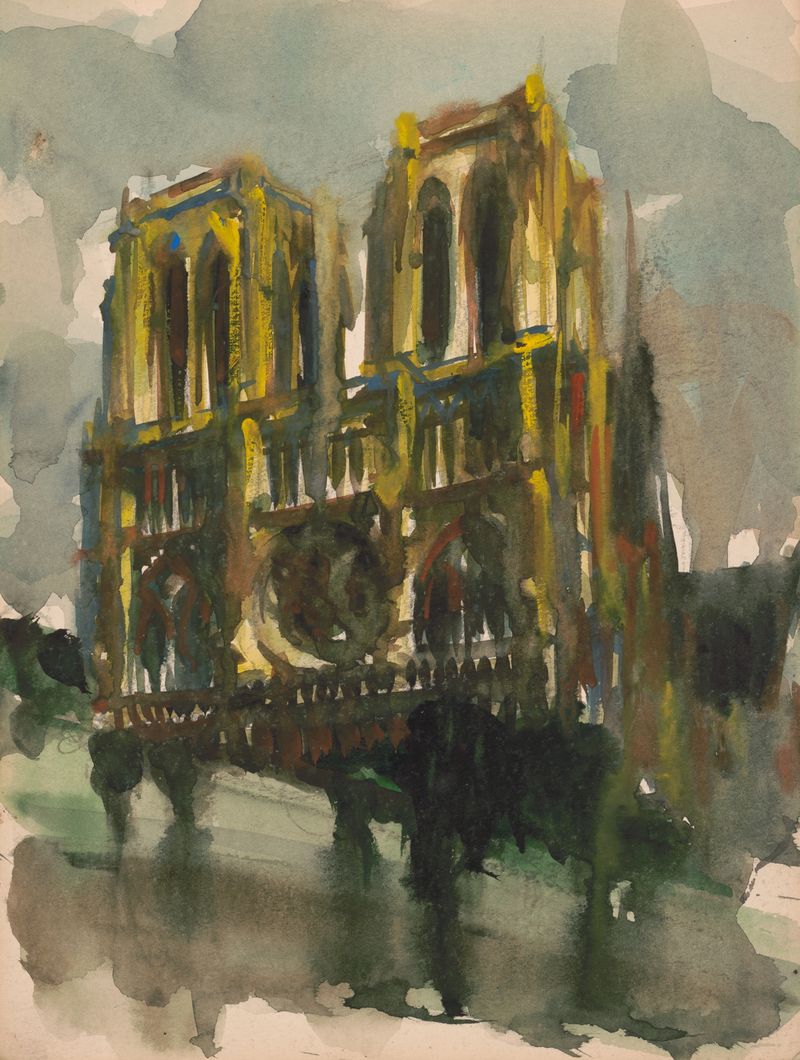
Notre Dame, Paris
Victor Alfred Lundy

Church on plaza, Mexico
Victor Alfred Lundy

Rue Saint Julien le Pauvre, Paris 5e
Victor Alfred Lundy
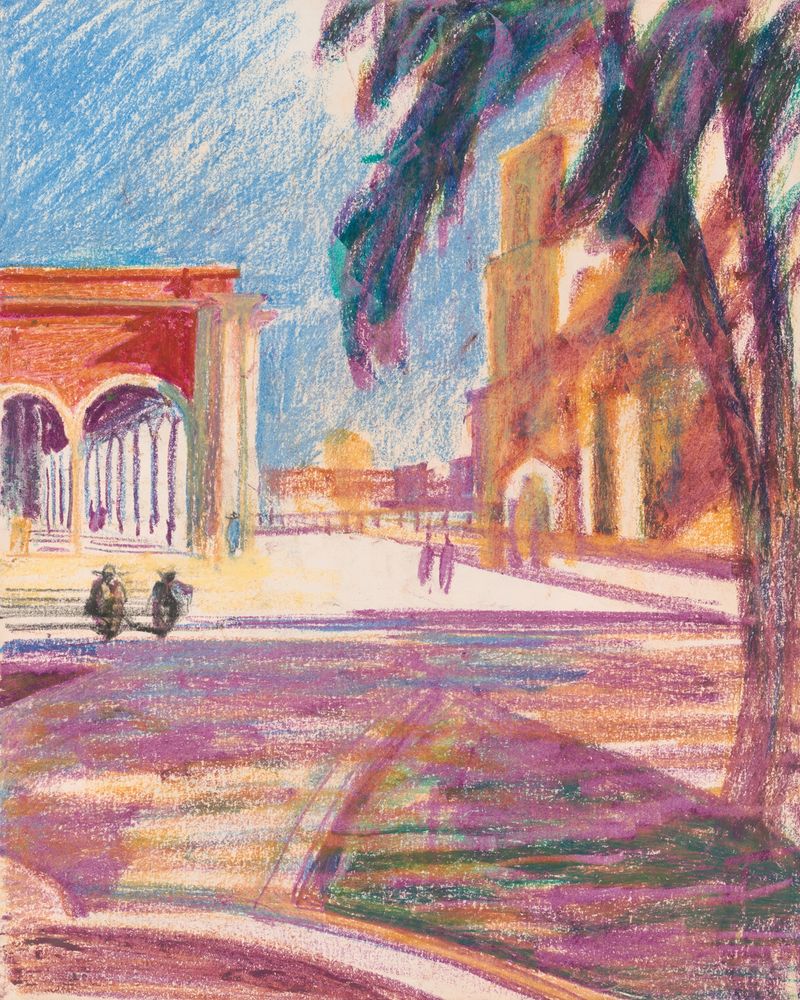
Plaza, Nochistlá́n, Mexico
Victor Alfred Lundy

Temple of Luxor
Victor Alfred Lundy

Trevi Fountain, Rome, Italy
Victor Alfred Lundy
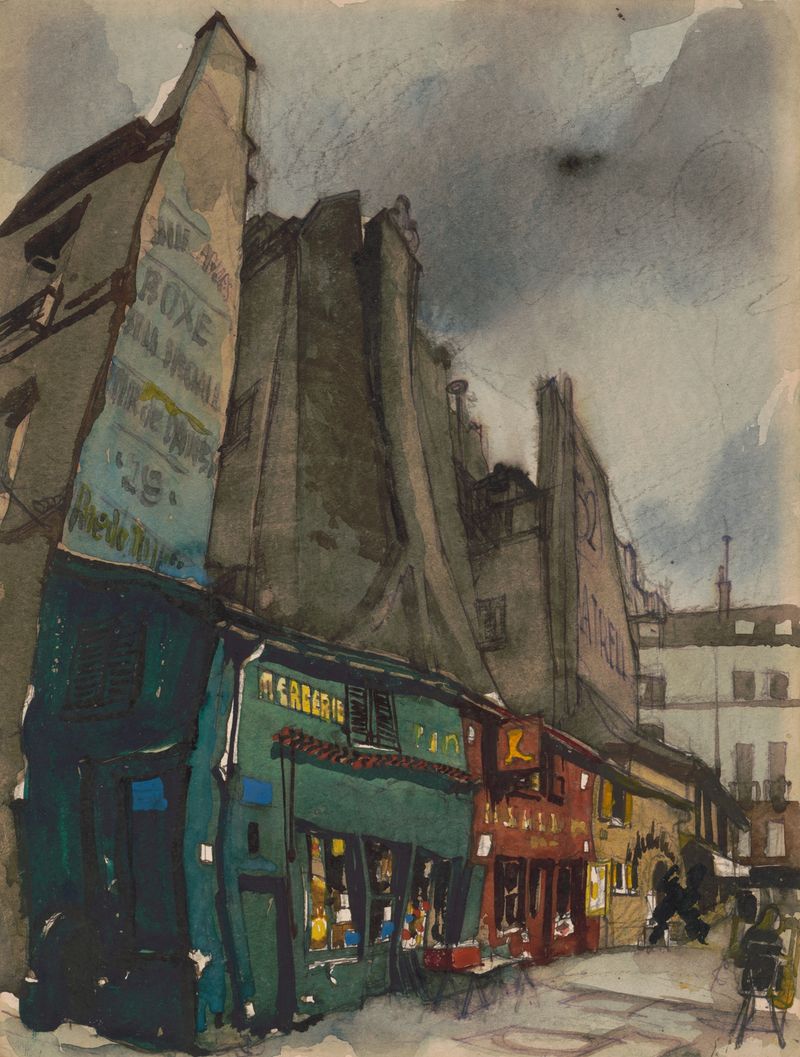
Place St. André des Arts, Paris between Rue Suger & Rue St. André des Arts
Victor Alfred Lundy
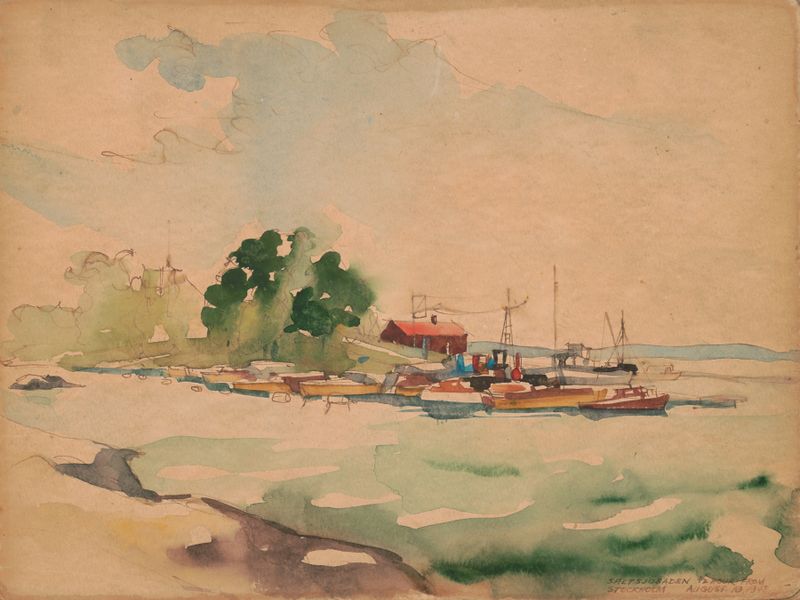
Saltsjöbaden, Half hour from Stockholm
Victor Alfred Lundy
More Architecture Art
Browse all →
The statue of Liberty
Frédéric Auguste Bartholdi

View of Houses in Delft, Known as ‘The Little Street’
Johannes Vermeer

View of Houses in Delft, Known as ‘The Little Street’
Johannes Vermeer

The Cathedral in Rouen. The portal, Grey Weather
Claude Monet

The yellow house
Vincent van Gogh

The Church in Auvers-sur-Oise, View from the Chevet
Vincent van Gogh