
Forbin's Attempt Against Scotland, 13 March — History & Facts
A dense forest of masts and billowing sails dominates the horizon, each ship locked in silent formation across a restless sea. The eye is drawn first to the central cluster, where a flash of cannon smoke blooms from the side of a grand vessel, its rigging taut and flags snapping in the wind. The artist, Abraham Salm, has chosen a palette of muted sepia and grey, lending the scene a sense of distance and memory, as if the viewer has stumbled upon a faded page from a maritime chronicle.
The careful rendering of each hull and the disciplined geometry of the fleet suggest not chaos, but a tense choreography—every angle and pennant a signal, every shadow a clue to the unfolding action. The low horizon grants the sky an imposing presence, dwarfing the ships and hinting at the scale of ambition and peril at sea. Painted in the early eighteenth century, Forbin's Attempt Against Scotland, 13 March belongs to a tradition of naval painting that flourished in the age of sail, when such works served as both commemoration and propaganda. Maritime scenes like this were often commissioned by admirals, merchants, or patriotic societies eager to record moments of national significance or naval prowess.
The genre was shaped by the technical demands of ship portraiture and the appetite for drama among collectors, with artists striving to balance accuracy and spectacle. Though little is recorded about this particular work beyond its presence in the Art UK collection and its date, its meticulous detail and grand scale invite the viewer to imagine the stakes and stories behind each vessel, and to linger over the restless energy of the painted sea.
More Artworks by Abraham Salm
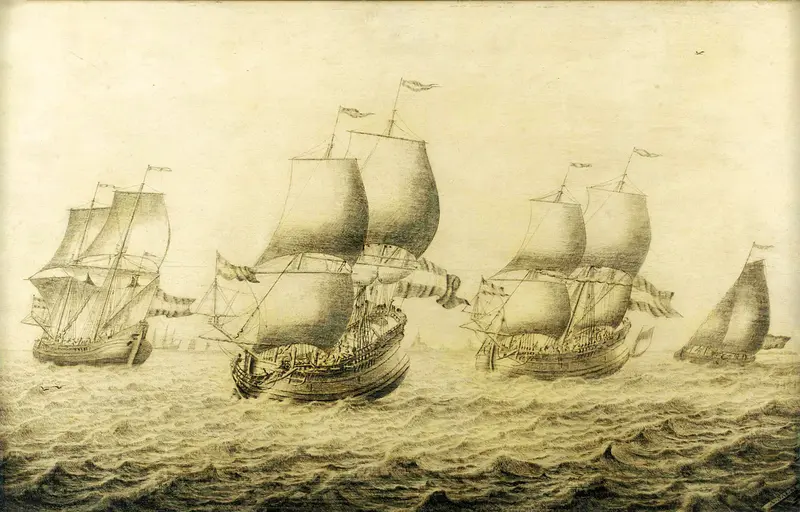
A Fleet of Whalers
Abraham Salm
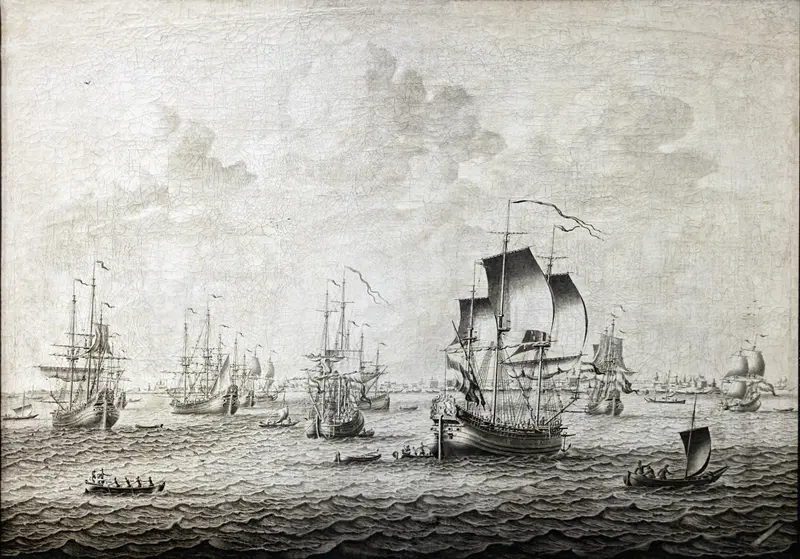
Marine with calm Sea
Abraham Salm
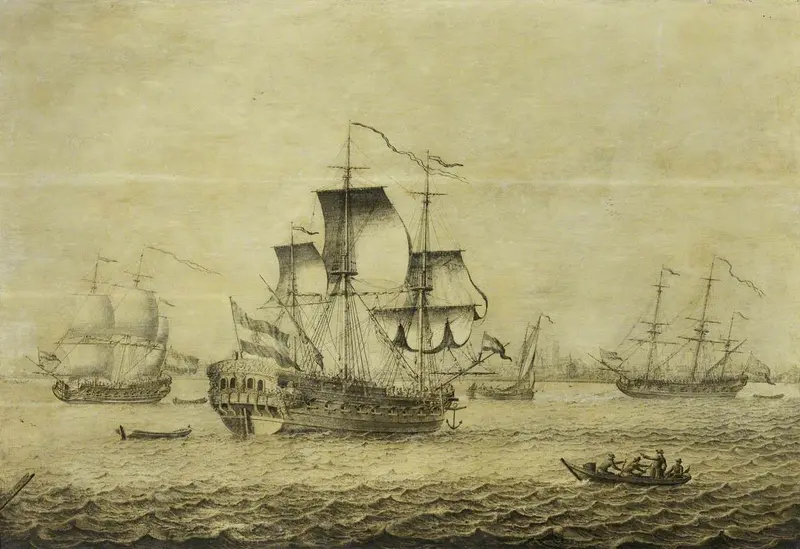
A Dutch frigate off Rotterdam
Abraham Salm

A DUTCH MAN-OF-WAR WITH A FLOTILLA OF FISHING BOATS AND OTHER SHIPS: A PENSCHILDERIJ
Abraham Salm
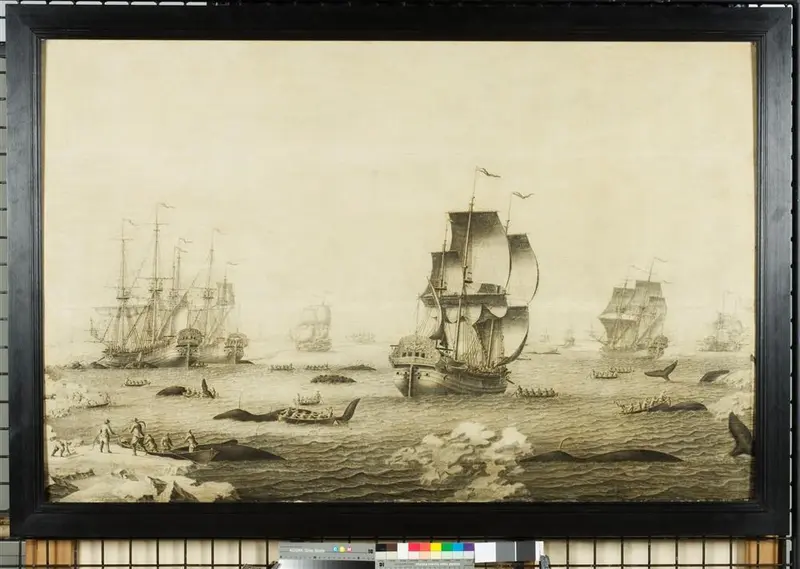
Adriaen Cornelisz (van der) Salm Walvisvaarders in bedrijf P1293 Maritime Museum Rotterdam
Abraham Salm
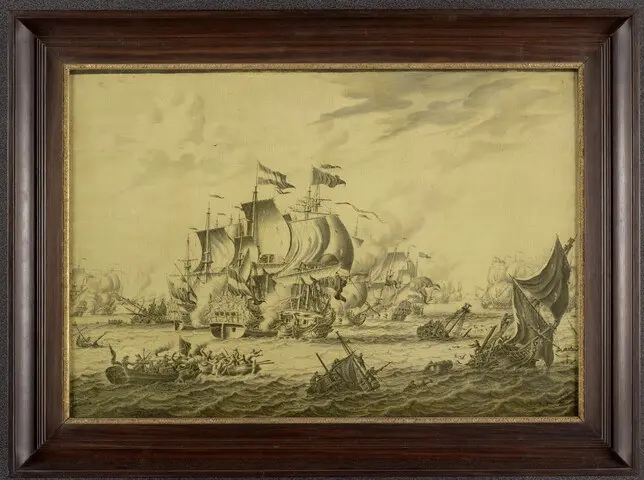
Adriaen Cornelisz. van Salm Een zeegevecht tussen Nederlandse, Engelse, en Franse oorlogsschepen A.2766 Het Scheepvaartmuseum
Abraham Salm
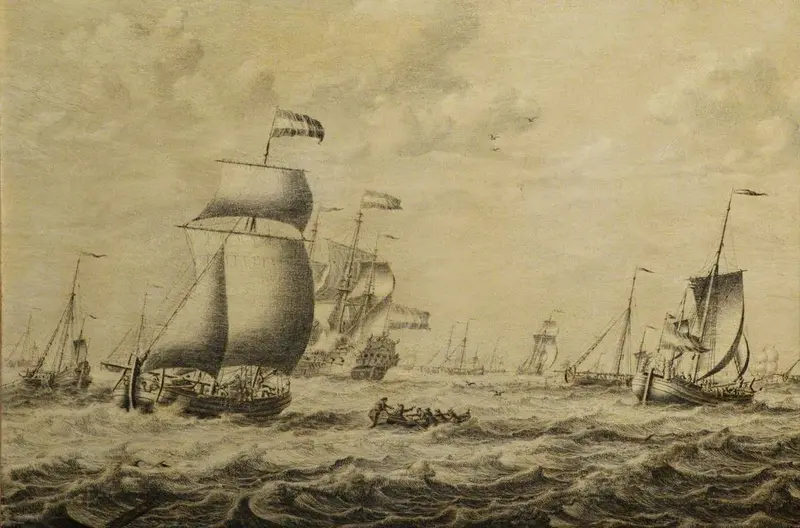
Dutch herring fishery
Abraham Salm
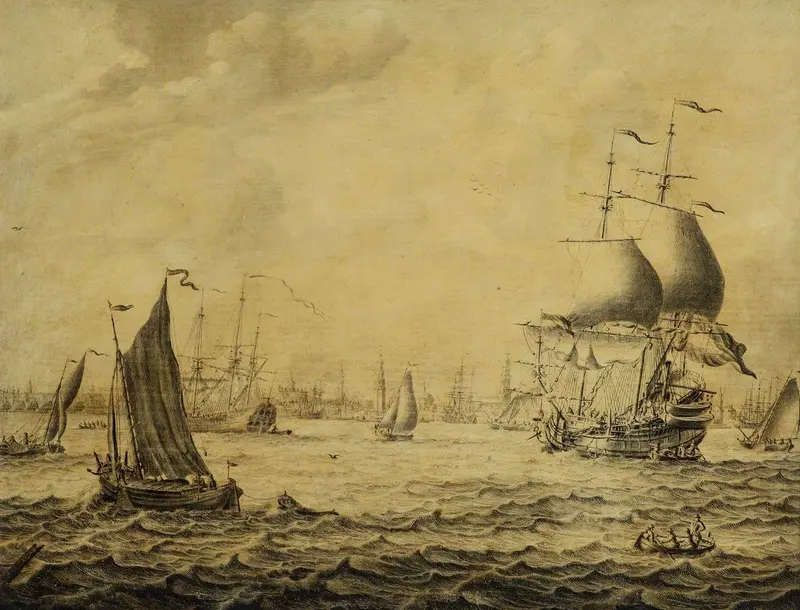
Dutch merchantmen and small craft in a roadstead
Abraham Salm

Abraham van Salm Een walvisvaarder en twee fluitschepen A.4152 Het Scheepvaartmuseum
Abraham Salm
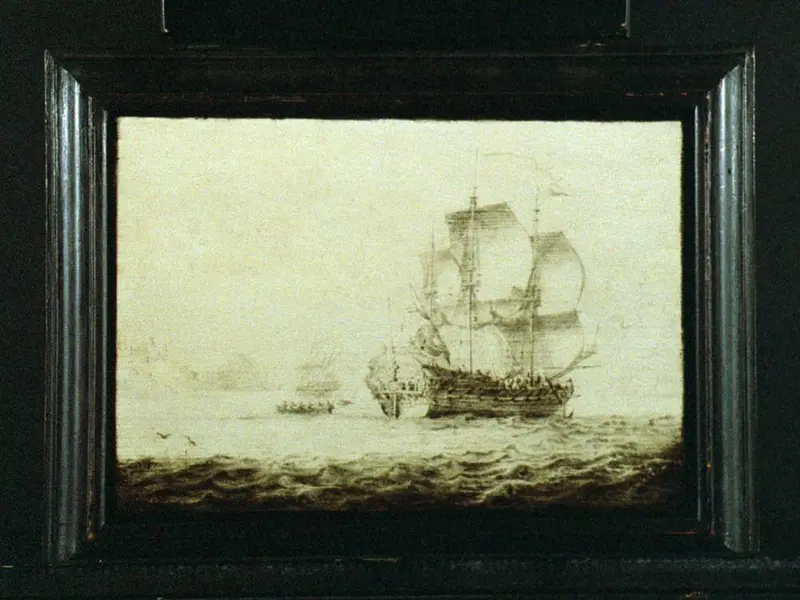
Adriaen Cornelisz (van der) Salm Frans oorlogsfregat P1224 Maritime Museum Rotterdam
Abraham Salm





