
Abraham van Salm Een walvisvaarder en twee fluitschepen A.4152 Het Scheepvaartmuseum — History & Facts
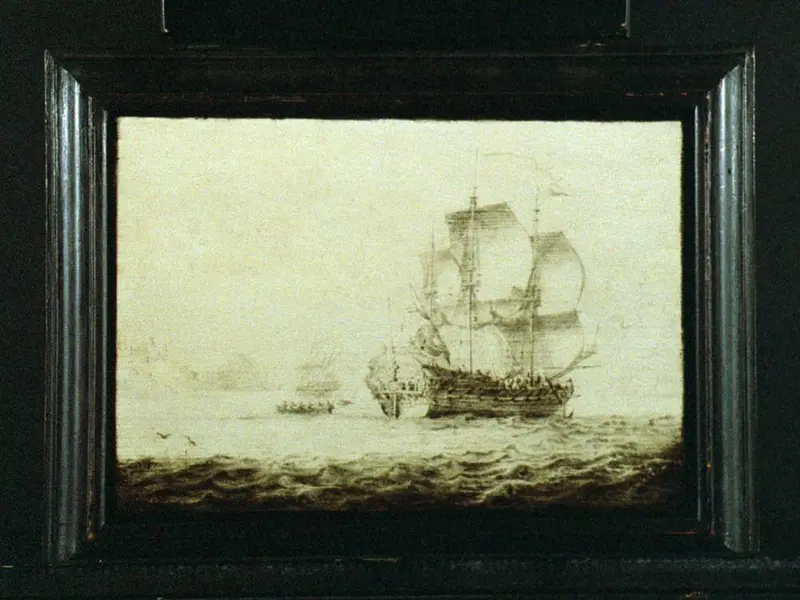
What first catches the eye in Een walvisvaarder en twee fluitschepen by Abraham Salm is the sense of movement—three great ships, sails taut and flags streaming, ride the restless sea with a quiet confidence. The low horizon gives the sky a vast, almost weightless presence, making the ships themselves seem both sturdy and fragile as they cut through the churning water. The artist draws your gaze to the lead vessel, its rigging crisply rendered, its hull braced against the waves, while the others recede into a haze of mist and distance.
Every line of the sails and every ripple in the water is a signal: this is a world of navigation and ambition, where the fortunes of men depend on wind, wood, and the skill of the crew. The muted palette, all soft greys and browns, sets a mood of quiet resolve rather than drama, inviting the viewer to linger on the details. Painted between 1700 and 1704, this work belongs to a period when Dutch maritime painting was both a celebration and a record of the Republic’s global reach. Scenes like this were often commissioned by shipowners or maritime guilds, eager to commemorate their vessels and the hazardous voyages that brought wealth—and risk—to the Netherlands.
The presence of both a whaling ship and two fluyts hints at the complex web of trade, industry, and exploration that defined the era. Now part of the collection at Het Scheepvaartmuseum, the painting stands as a quiet witness to an age when Dutch ships were among the most familiar sights on the world’s oceans. Look again at the ships’ proud silhouettes, and imagine the stories of those who sailed them.
More Artworks by Abraham Salm
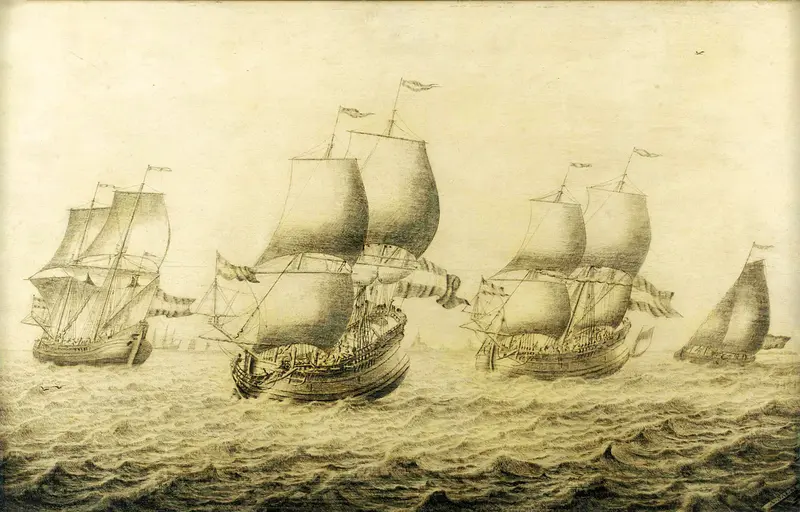
A Fleet of Whalers
Abraham Salm
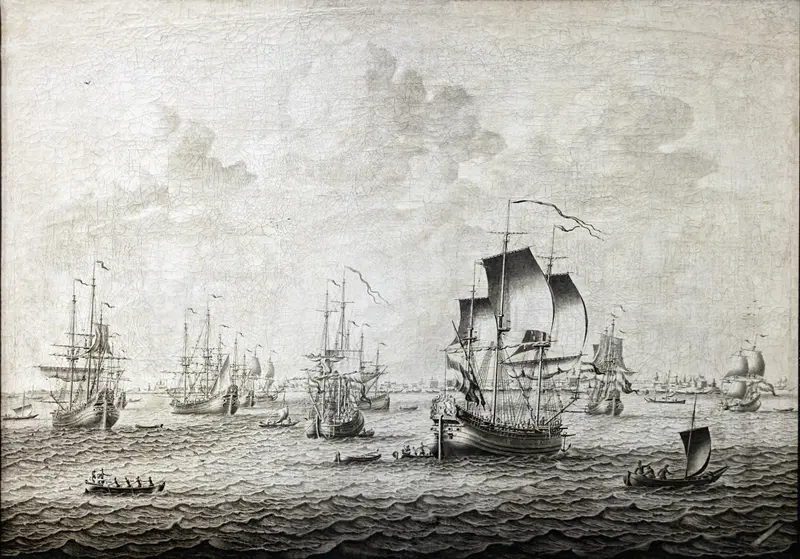
Marine with calm Sea
Abraham Salm
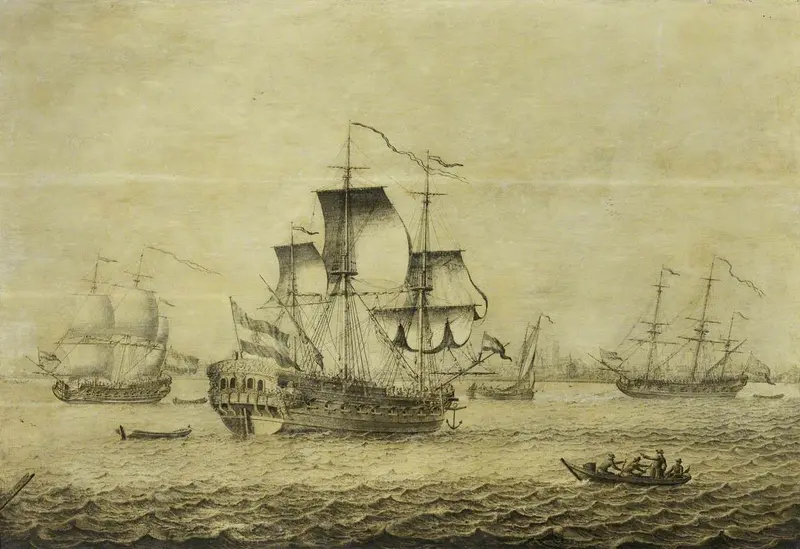
A Dutch frigate off Rotterdam
Abraham Salm

A DUTCH MAN-OF-WAR WITH A FLOTILLA OF FISHING BOATS AND OTHER SHIPS: A PENSCHILDERIJ
Abraham Salm
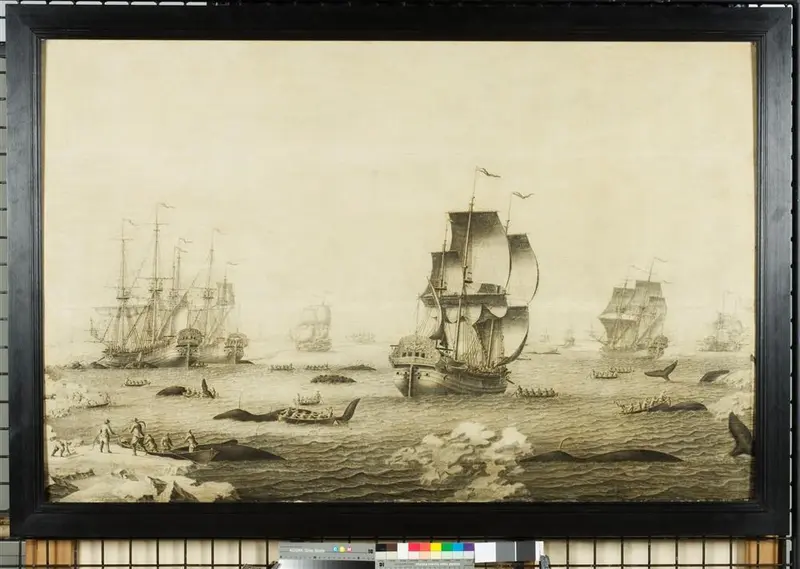
Adriaen Cornelisz (van der) Salm Walvisvaarders in bedrijf P1293 Maritime Museum Rotterdam
Abraham Salm
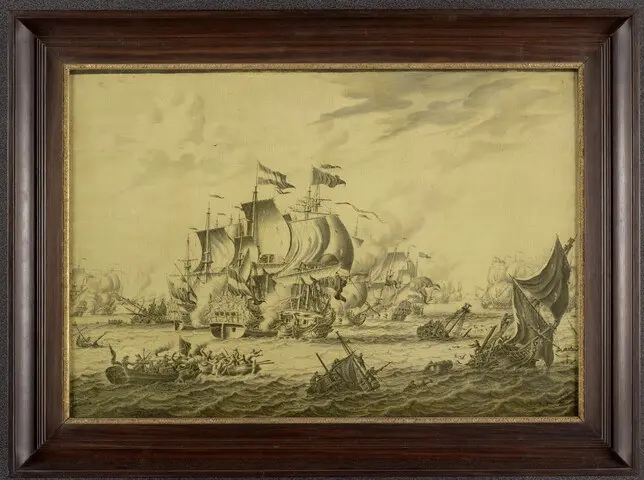
Adriaen Cornelisz. van Salm Een zeegevecht tussen Nederlandse, Engelse, en Franse oorlogsschepen A.2766 Het Scheepvaartmuseum
Abraham Salm
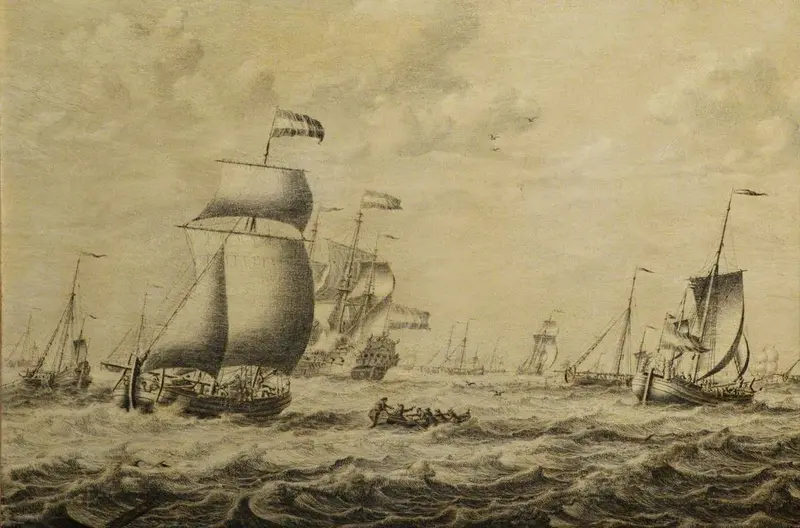
Dutch herring fishery
Abraham Salm
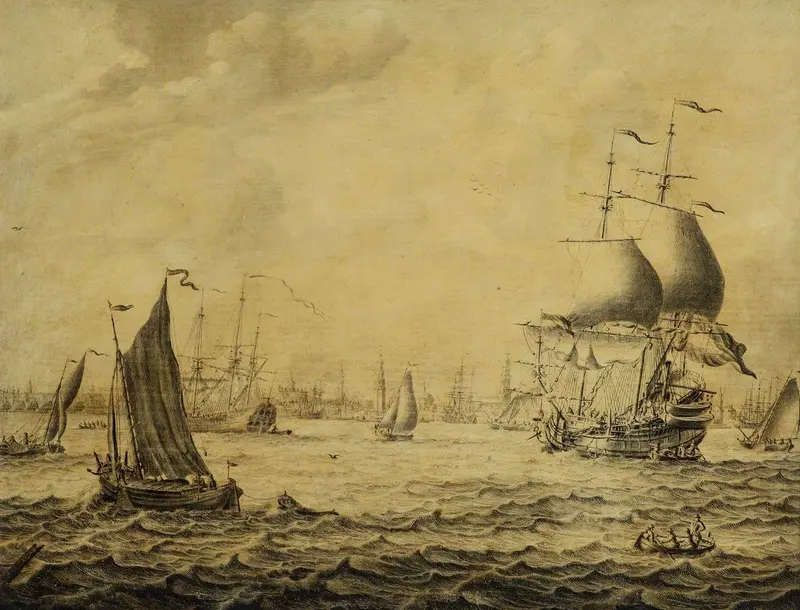
Dutch merchantmen and small craft in a roadstead
Abraham Salm
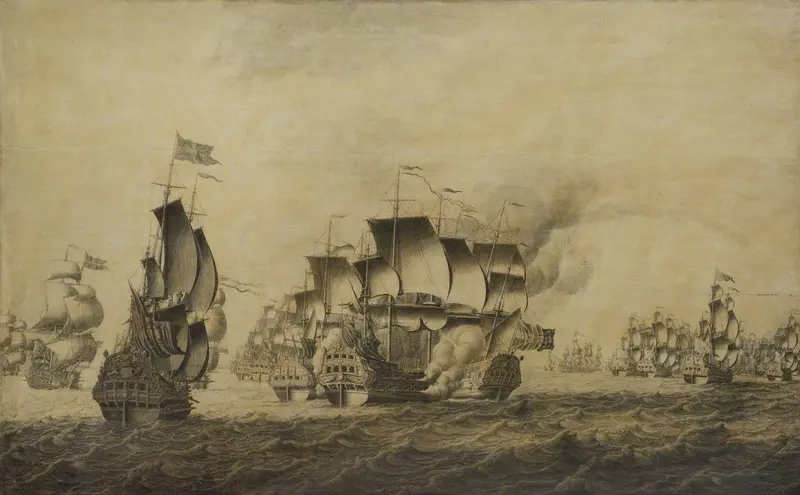
Forbin's Attempt Against Scotland, 13 March
Abraham Salm
Adriaen Cornelisz (van der) Salm Frans oorlogsfregat P1224 Maritime Museum Rotterdam
Abraham Salm





