
A Fleet of Whalers — History & Facts
What first catches the eye in A Fleet of Whalers is the sense of coordinated movement, as if the ships are caught mid-maneuver, their sails billowing in unison across a restless sea. The artist, Abraham Salm, has chosen a restrained grisaille palette, stripping away color to focus attention on the play of light and shadow over the ships’ hulls and the churning water beneath them. Each vessel is rendered with meticulous care, flags streaming and decks crowded with tiny figures, suggesting both the scale of the operation and the human labor that powered it.
The low horizon line gives the sky an expansive emptiness, making the ships appear even more purposeful as they cut through the waves. The eye is drawn from the foreground’s textured water up to the intricate rigging and, finally, to the fluttering pennants at the top of each mast—a visual path that reinforces the sense of forward momentum. Works like this, produced in the late seventeenth century, belong to a period when Dutch maritime power was at its height and whaling was both an industry and a symbol of national pride. Paintings and drawings of whaling fleets were often commissioned by shipping companies, merchants, or even the captains themselves, eager to commemorate successful voyages or to advertise their prowess.
The choice of grisaille—a technique using only shades of gray—was sometimes favored for its clarity and documentary quality, suitable for display in offices or guild halls. While little is recorded about the specific journey of this particular work, now held in the collection at the Royal Museums Greenwich, its careful detail and formal composition speak to the era’s fascination with the organization and might of the Dutch fleet. The longer you look, the more the image reveals about the ambitions and anxieties of a seafaring age.
More Artworks by Abraham Salm
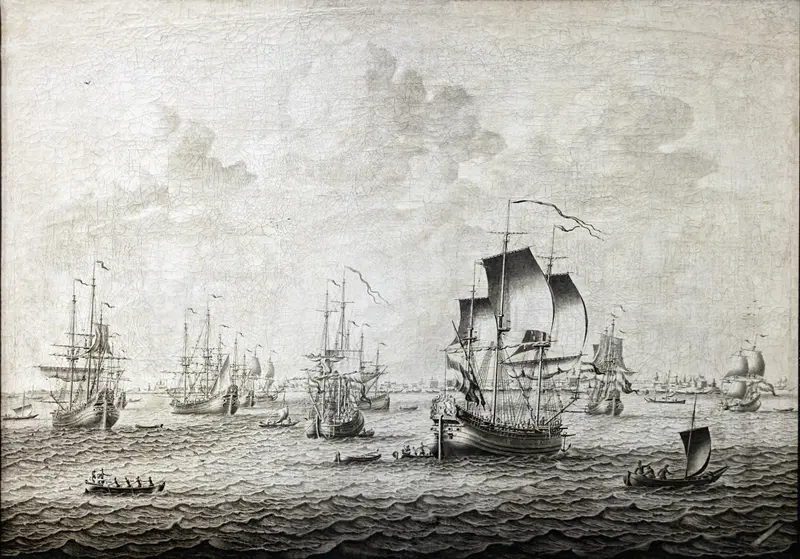
Marine with calm Sea
Abraham Salm
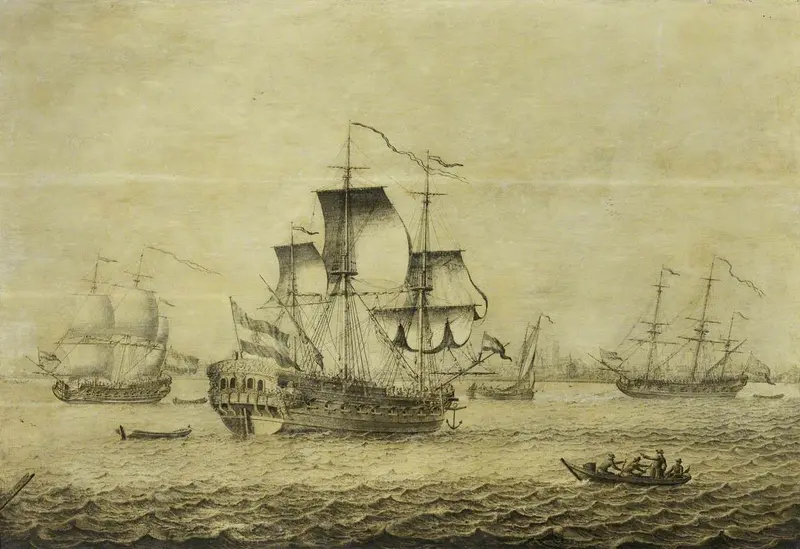
A Dutch frigate off Rotterdam
Abraham Salm

A DUTCH MAN-OF-WAR WITH A FLOTILLA OF FISHING BOATS AND OTHER SHIPS: A PENSCHILDERIJ
Abraham Salm
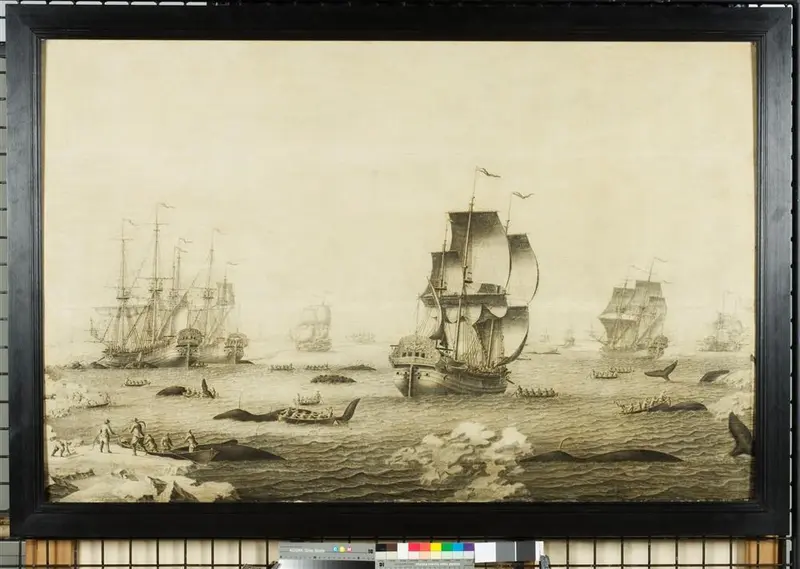
Adriaen Cornelisz (van der) Salm Walvisvaarders in bedrijf P1293 Maritime Museum Rotterdam
Abraham Salm
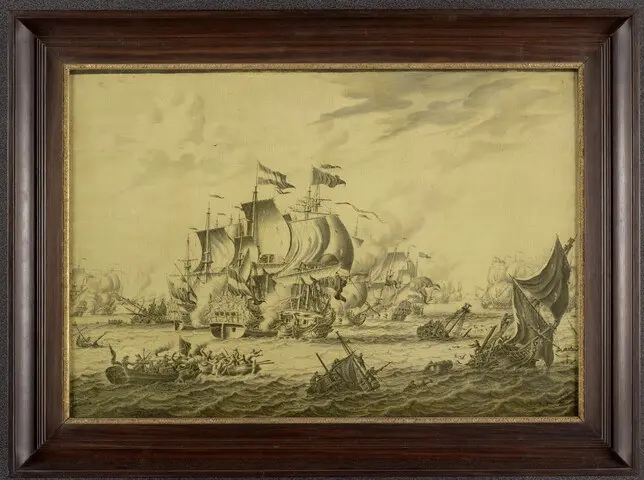
Adriaen Cornelisz. van Salm Een zeegevecht tussen Nederlandse, Engelse, en Franse oorlogsschepen A.2766 Het Scheepvaartmuseum
Abraham Salm
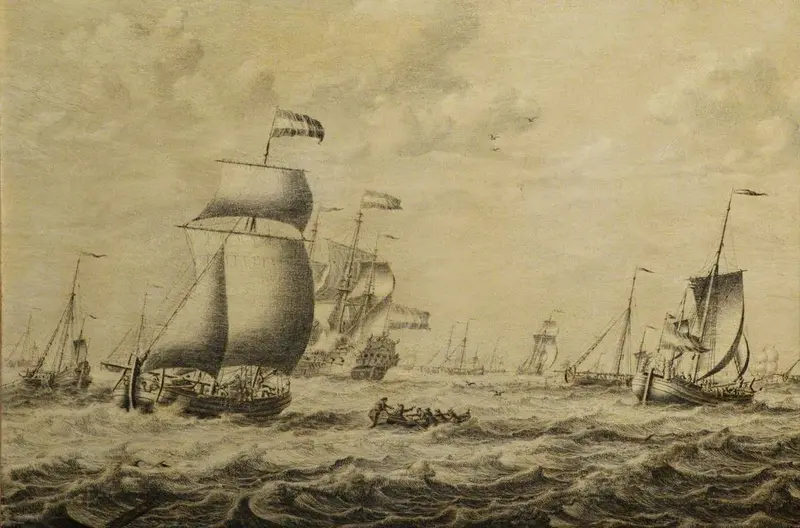
Dutch herring fishery
Abraham Salm
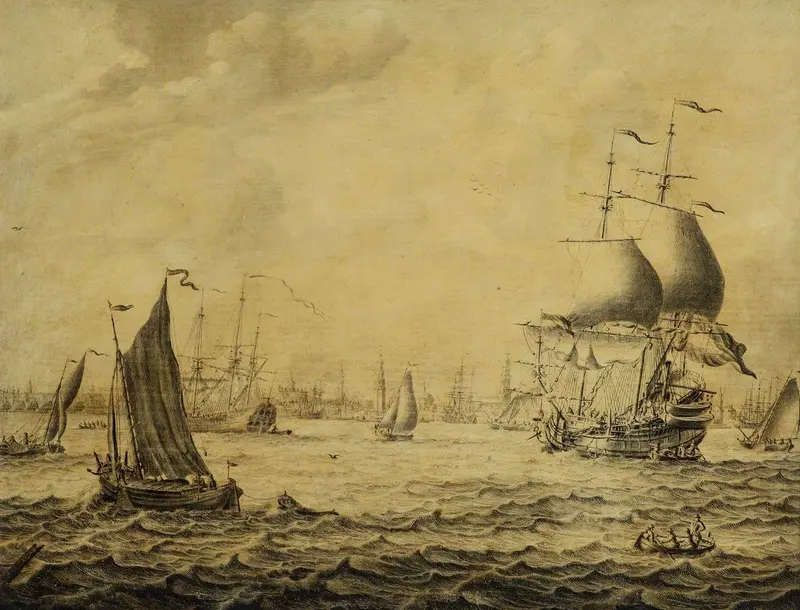
Dutch merchantmen and small craft in a roadstead
Abraham Salm
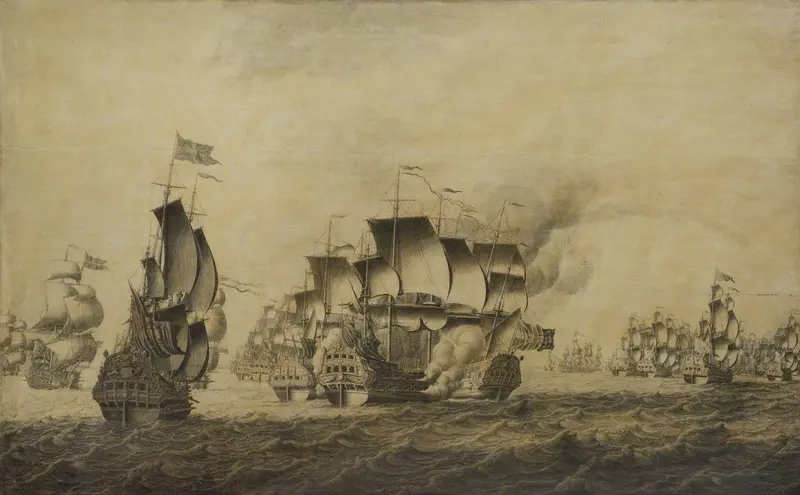
Forbin's Attempt Against Scotland, 13 March
Abraham Salm

Abraham van Salm Een walvisvaarder en twee fluitschepen A.4152 Het Scheepvaartmuseum
Abraham Salm
Adriaen Cornelisz (van der) Salm Frans oorlogsfregat P1224 Maritime Museum Rotterdam
Abraham Salm





