
Fort Napoleon — History & Facts
Could beauty survive in a century of chaos? In Fort Napoleon, James Ensor elegantly reveals the tension between tranquility and tumult, capturing the essence of serenity amidst a world teetering on the brink. Look to the left at the towering fortress, its weathered stone rising against a backdrop of brooding sky. The muted palette—soft greens, grays, and flickers of rust—invites the eye to wander, while the gentle strokes convey a sense of timelessness. Notice how the light dances delicately across the surface, illuminating the fort's contours and casting long shadows that hint at hidden stories beneath the stillness.
This juxtaposition of structure and surrounding nature creates a dialogue between permanence and decay. Deeper in this canvas lies a reflection on isolation. The solitary presence of the fort, juxtaposed with the expansive landscape, symbolizes resilience in the face of adversity. The swirling clouds above seem to echo the unrest of the outside world, while the stillness of the foreground prompts introspection.
Each brushstroke whispers of forgotten histories, urging the viewer to consider what remains even when chaos looms. In 1876, while creating this piece, Ensor was immersed in the vibrant but turbulent art scene of Belgium, where he was beginning to carve out his unique voice. Influenced by the tensions of modernity and tradition, he sought to explore themes of beauty, memory, and the ephemeral. It was a time of upheaval, yet Ensor's choice to depict a fortified bastion suggests a yearning for stability and reflection amid the surrounding uncertainty.
More Artworks by James Ensor
Browse all →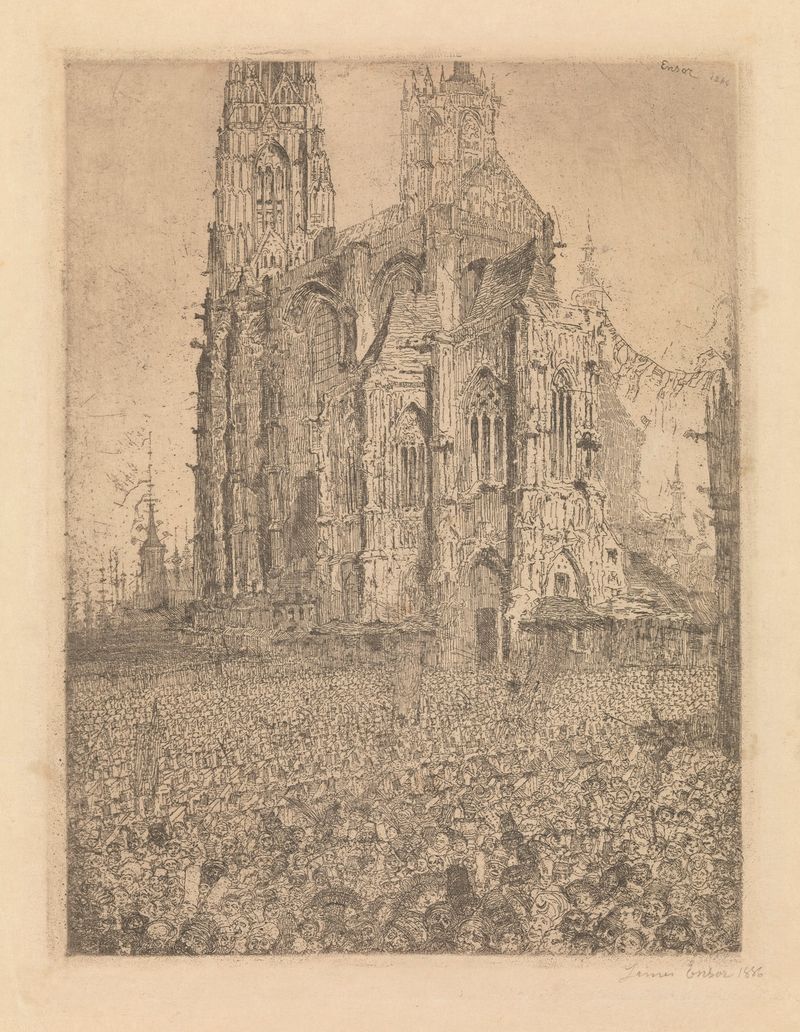
The Cathedral
James Ensor
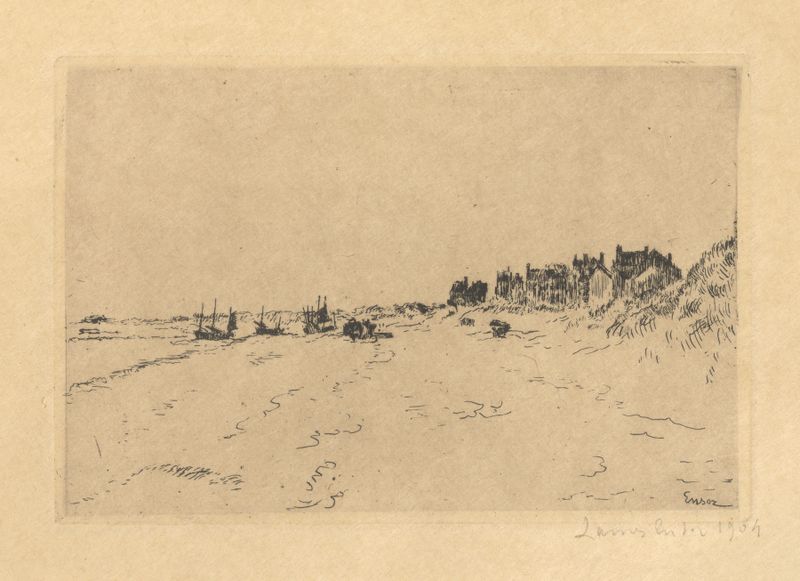
Het strand van De Panne
James Ensor
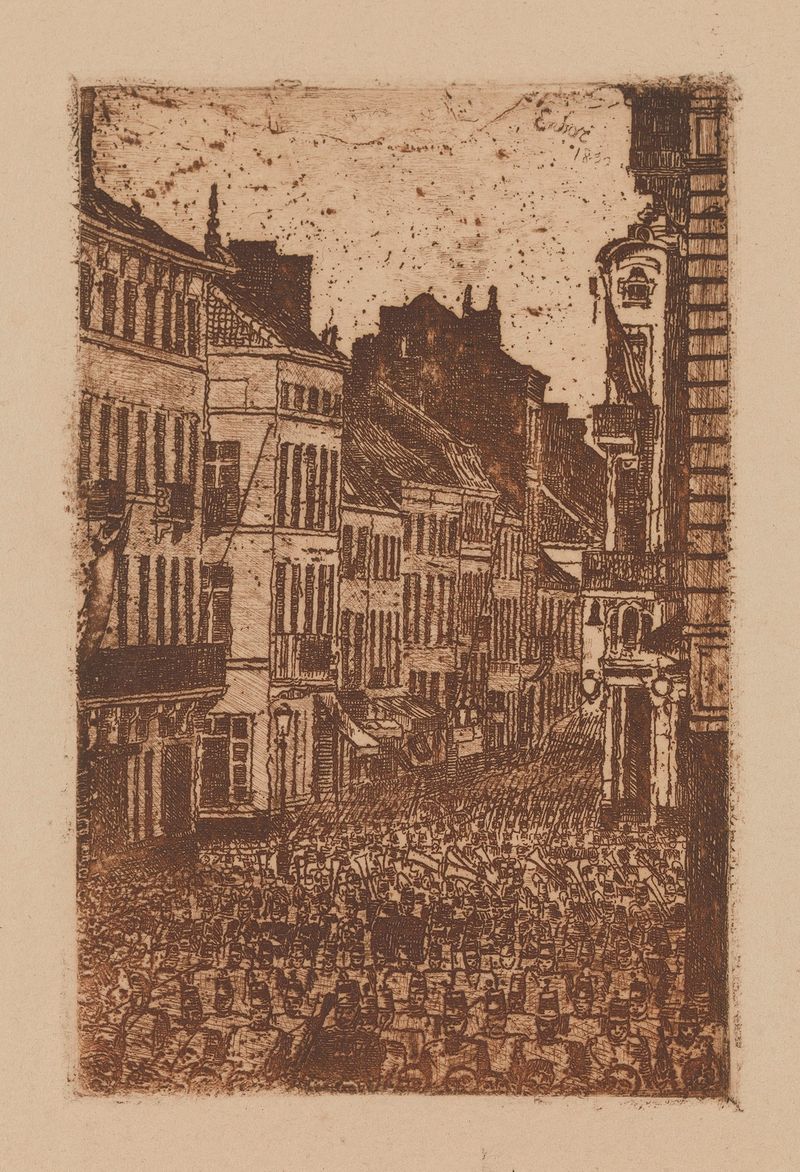
The Music in the rue de Flandre, Ostend
James Ensor
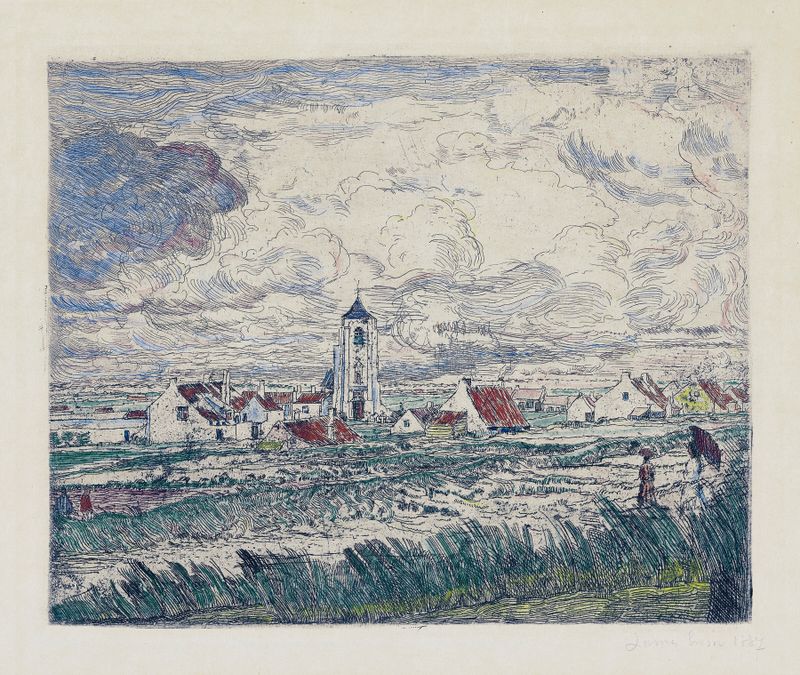
Grande vue de Mariakerke
James Ensor
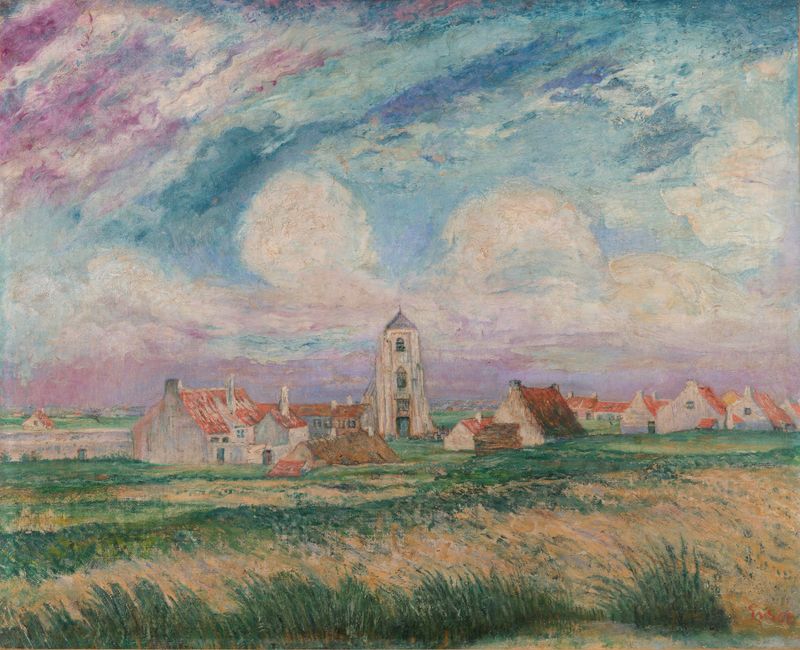
View of Mariakerke
James Ensor
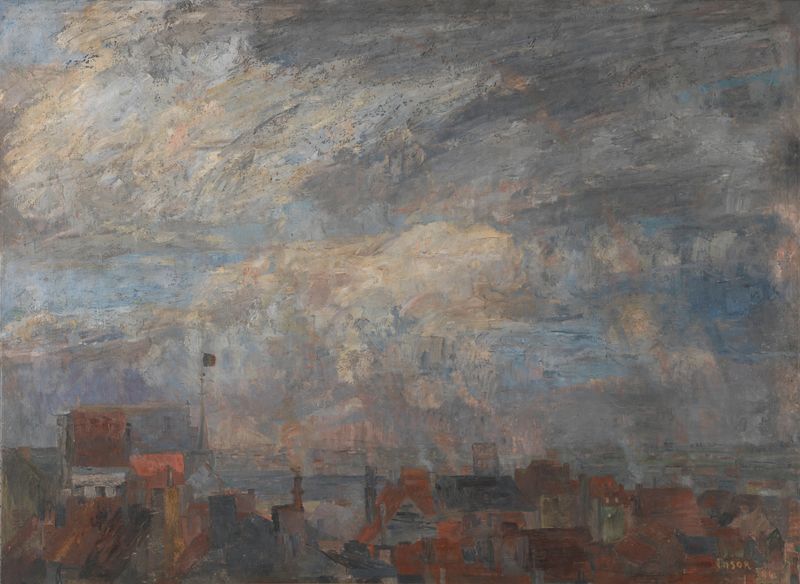
The Rooftops of Ostend
James Ensor
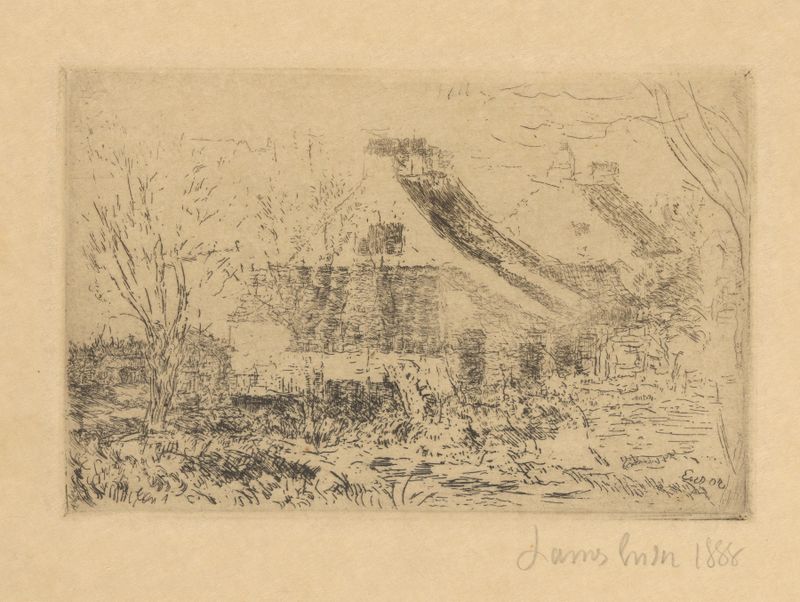
Huisjes in Mariakerke
James Ensor
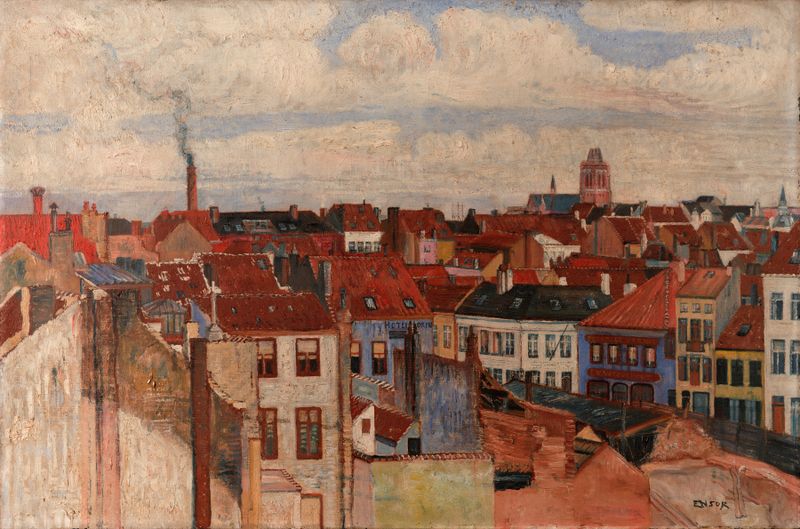
The rooftops of Ostend
James Ensor
The Music in the rue de Flandre, Ostend
James Ensor
Verovering van een vreemde stad
James Ensor





