
Fortunen ved Dyrehaven — History & Facts
Can beauty exist without sorrow? In Fortunen ved Dyrehaven, the delicate interplay of nature and emotional resonance suggests that joy is often intertwined with the echoes of loss, echoing the cycle of rebirth. Look closely at the vibrant greens and soft earth tones that dominate the canvas, drawing your gaze into the serene landscape. Notice how the sunlight bathes the figures in golden warmth, illuminating their features and casting gentle shadows that breathe life into the scene. The artist's meticulous brushwork captures minute details—a rustle of leaves, a glint of water—inviting contemplation of the peaceful tableau while hinting at an underlying complexity. As you explore, consider the juxtaposition of the lush setting and the human figures, who seem momentarily suspended in time.
Their expressions, though seemingly serene, hint at an unspoken narrative, perhaps reflecting nostalgia or anticipation. The placement of the animals within the composition further emphasizes a delicate balance between nature and humanity, suggesting that the beauty of rebirth often arises from the remnants of what has passed. Created during the late 18th century while Elias Meyer was in his prime, Fortunen ved Dyrehaven reflects the Romantic fascination with nature and emotion. This era, marked by a burgeoning interest in landscapes as subjects, allowed artists like Meyer to explore the relationship between man and the natural world.
At this time, he was establishing his reputation, responding to broader shifts in artistic thought and societal evolution, where nature became a canvas for human introspection.
More Artworks by Elias Meyer
Browse all →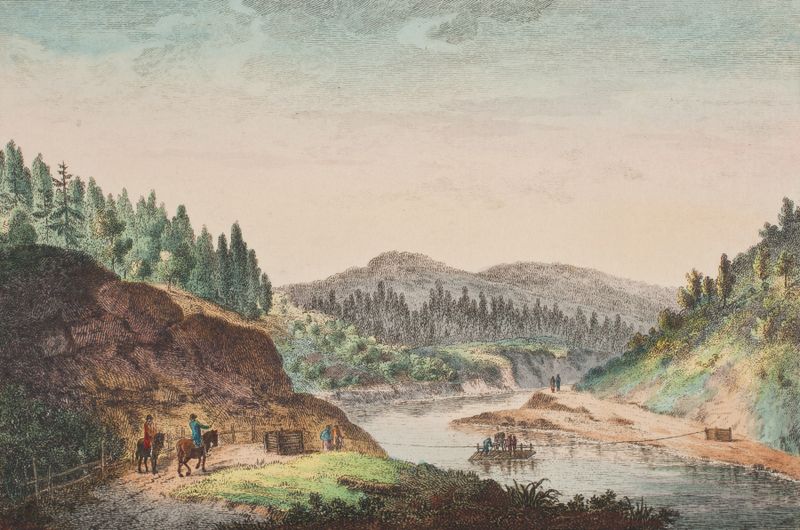
Gule Elv, i Trondheims Stift
Elias Meyer

Esplanaden ved Øster Port
Elias Meyer
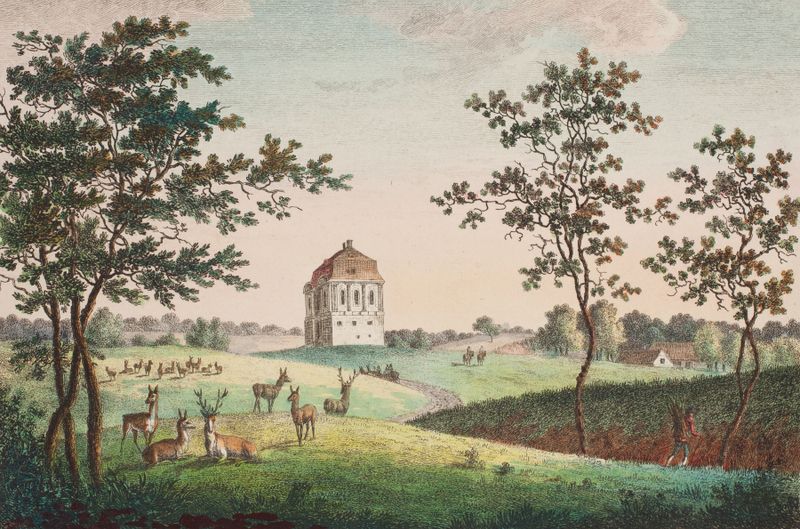
Eremitagen i Dyrehaven
Elias Meyer

Ordrups Krat
Elias Meyer
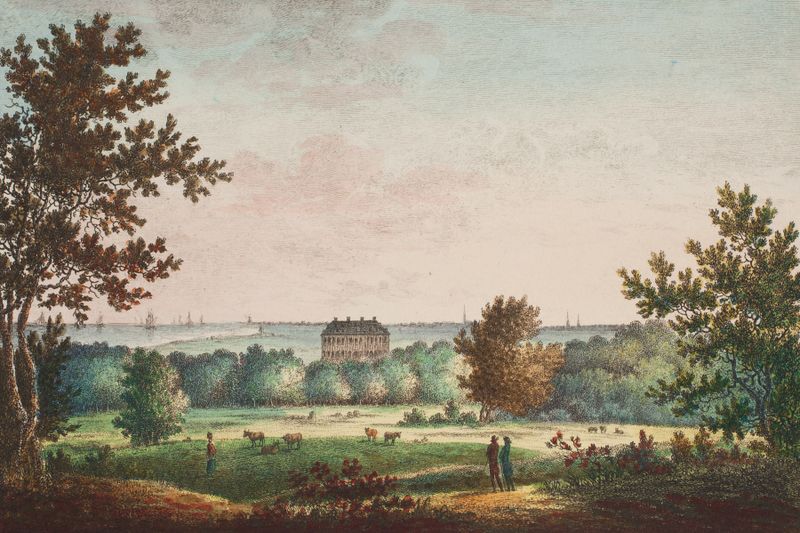
Bernstorff fra Fortunen
Elias Meyer
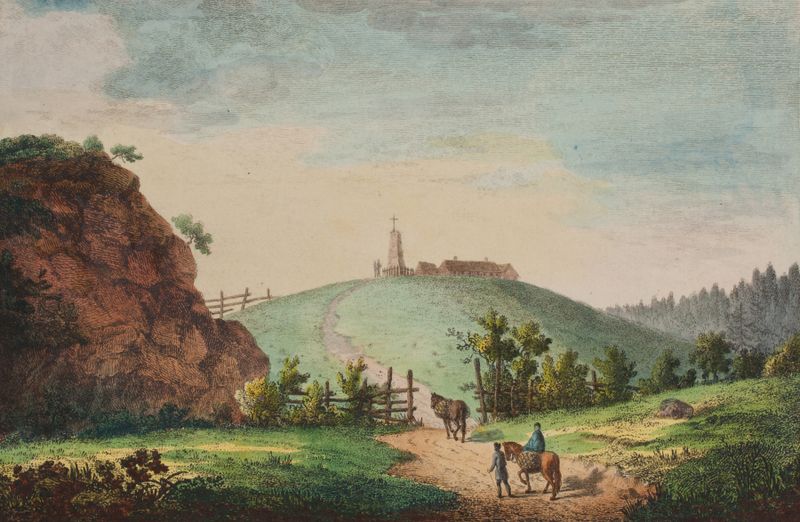
Kong Olufs Støtte i Wærdalen
Elias Meyer

Næss i Aasen Nord for Trondheim
Elias Meyer
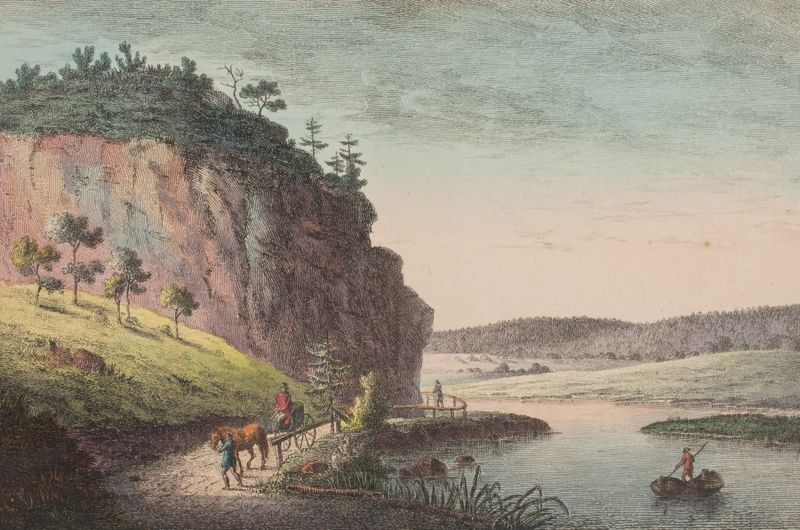
Paa Vejen til Røraas Kobberværk
Elias Meyer
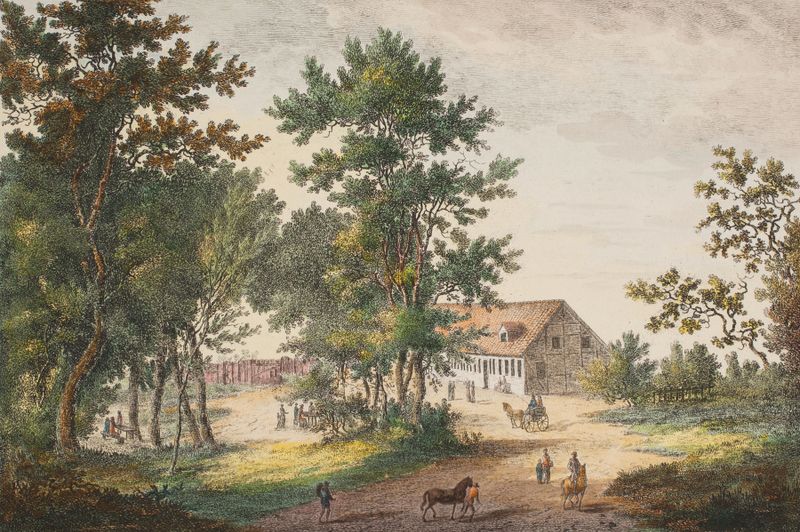
Ermelundshuset
Elias Meyer





