
Fountain in villa Borghese Gardens in Rome — History & Facts
In the heart of the Villa Borghese Gardens, a group of elegantly dressed figures gathers, their laughter mingling with the gentle sound of water cascading from the fountain. Sunlight filters through the lush canopy of trees, casting playful shadows across the cobblestone path. The atmosphere is alive with the spirit of leisure, yet beneath the surface, a whisper of revolution stirs, hinting at changes rippling through society. Look to the center where the fountain dominates the composition, its elaborate design showcasing exquisite craftsmanship.
Notice how the water gleams under the sun, reflecting hues of turquoise and gold, inviting the viewer to draw closer. The surrounding foliage, painted with vibrant greens, frames the scene, while the figures are rendered in soft pastels, their garments a harmonious blend with nature. Each brushstroke captures a moment — the stillness of the fountain juxtaposed with the dynamic poses of the guests, their gestures caught in a dance of elegance. The painting speaks to contrasts: the tranquility of the garden as a refuge against the tumult of the outside world, where whispers of revolution await.
Each figure's expression suggests a deeper narrative, a poignant blend of contentment and unvoiced concerns. The fountain becomes a symbol of both beauty and the inevitable change looming on the horizon, a reminder that even in serene settings, the tides of history are always present. In 1854, Arthur Blaschnik created this work during a period of significant political upheaval in Europe. Living in Rome, he was influenced by the romantic ideals of the time, which celebrated nature and human emotion.
The era was marked by the stirrings of revolution, and this painting captures the tension between peace and impending change, reflecting the artist's keen awareness of the world around him.
More Artworks by Arthur Blaschnik
Browse all →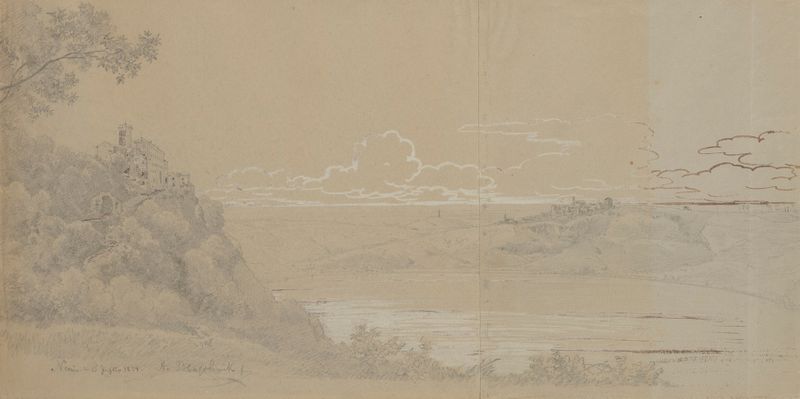
Palazzo Ruspoli by Lake Nemi, in the Distance the Town of Genzano di Roma
Arthur Blaschnik
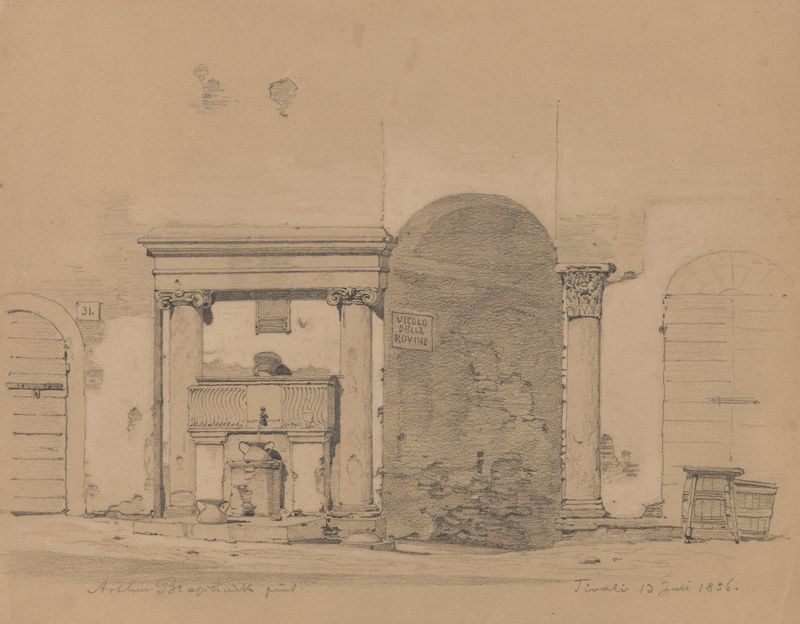
Gate Leading to Vicoli dei Grana near Piazza Palatina in Tivoli
Arthur Blaschnik
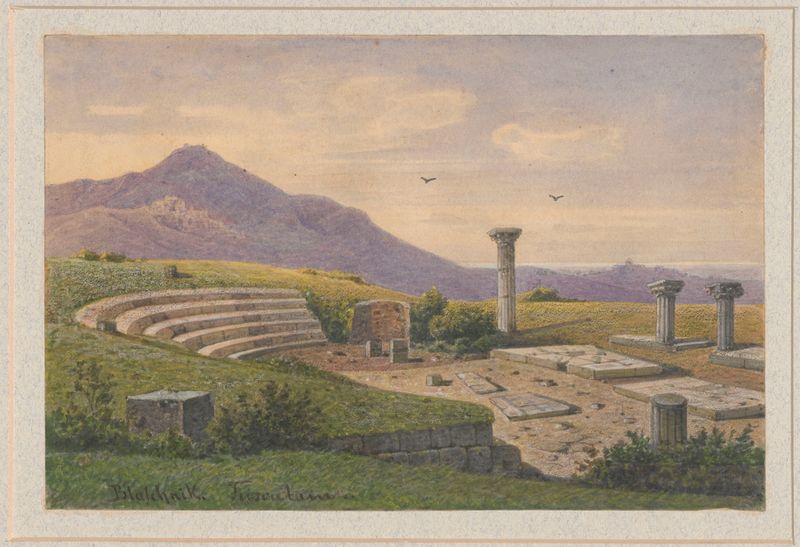
Amphitheatre in Tusculum
Arthur Blaschnik
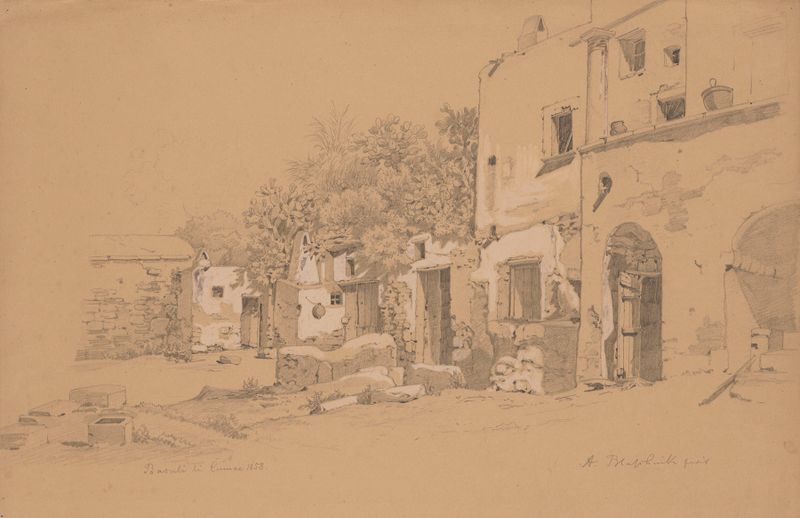
House and Outbuildings in Bacoli
Arthur Blaschnik
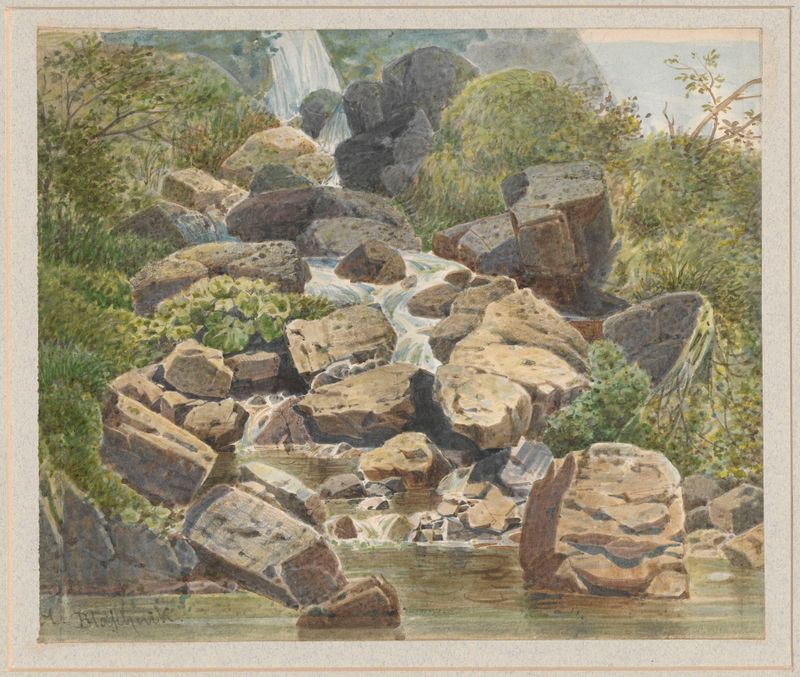
View of a small waterfall near Covigliaio, Tuscany
Arthur Blaschnik
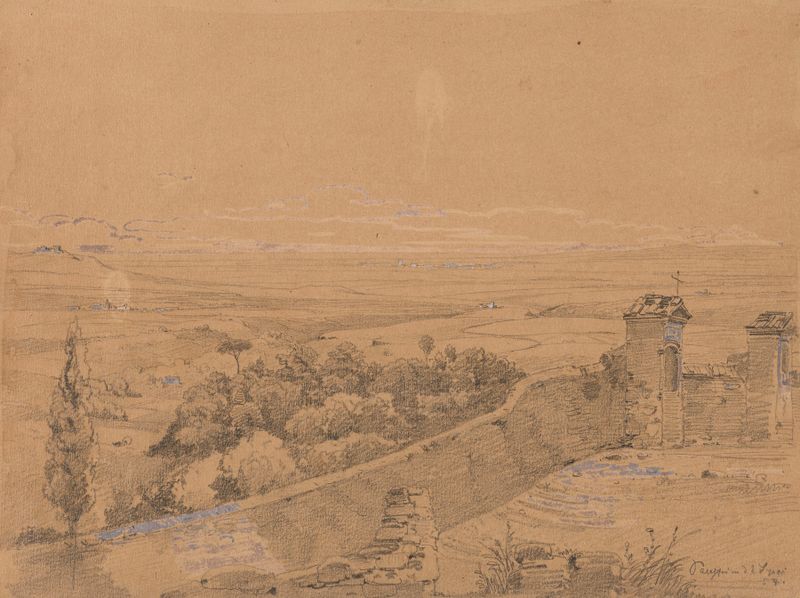
Landscape from the Vicinity of Palestrina
Arthur Blaschnik
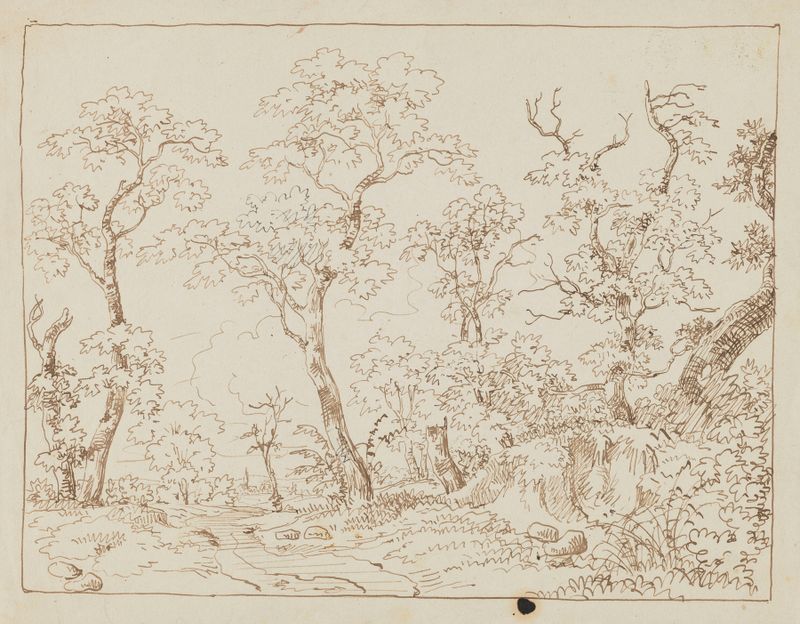
Studies of Trees, Landscape
Arthur Blaschnik
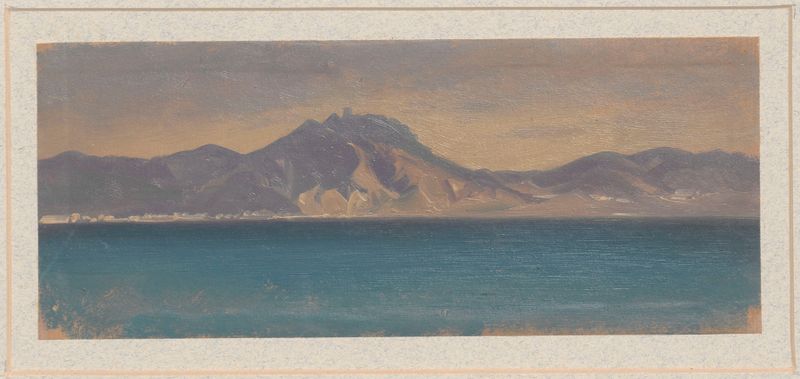
View of the Island of Capri
Arthur Blaschnik
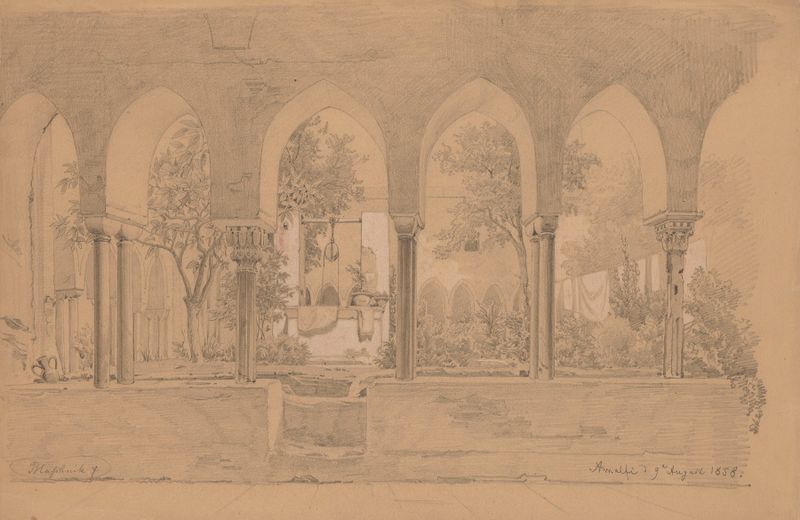
Cloister with Arcade Gallery in Amalfi
Arthur Blaschnik
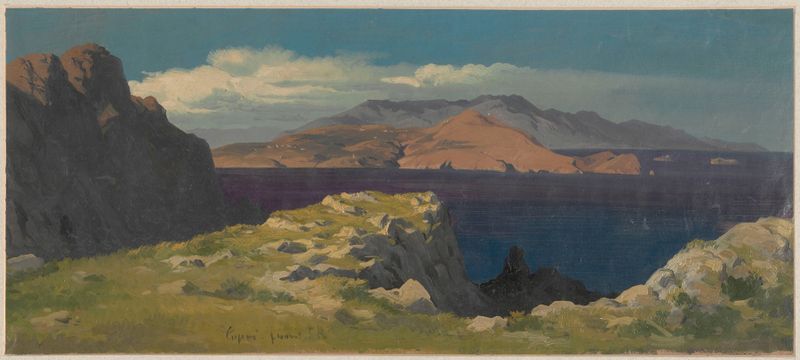
View of Capri
Arthur Blaschnik





