
Four Figures — History & Facts
There is a quiet choreography to the arrangement of bodies in Four Figures by Arthur Bowen Davies. The eye is drawn first to the interplay of limbs and glances, the way each figure’s gesture seems to ripple into the next. The soft, almost whispering lines suggest a moment of rest or reverie, while the overlapping forms create a sense of intimacy—each figure aware of the others, yet lost in her own world.
The spareness of the background gives the scene a floating quality, as if these four women exist outside of time, their connection defined only by the artist’s hand. Created in 1921, this work belongs to an era when American artists were looking both inward and outward, searching for new ways to capture the human form and psyche. Arthur Bowen Davies was known for his dreamlike compositions and fascination with the figure, often blending elements of classical tradition with the looser, more experimental spirit of early twentieth-century modernism. History has kept few traces of the journey this particular drawing has taken, but today it forms part of the National Gallery of Art’s open-access collection, a quiet testament to the enduring allure of line, gesture, and the mysteries of human presence.
Let your gaze linger on the subtle dialogues between these figures—the story is in the spaces between them.
More Artworks by Arthur Bowen Davies

Mirror of Illusion
Arthur Bowen Davies
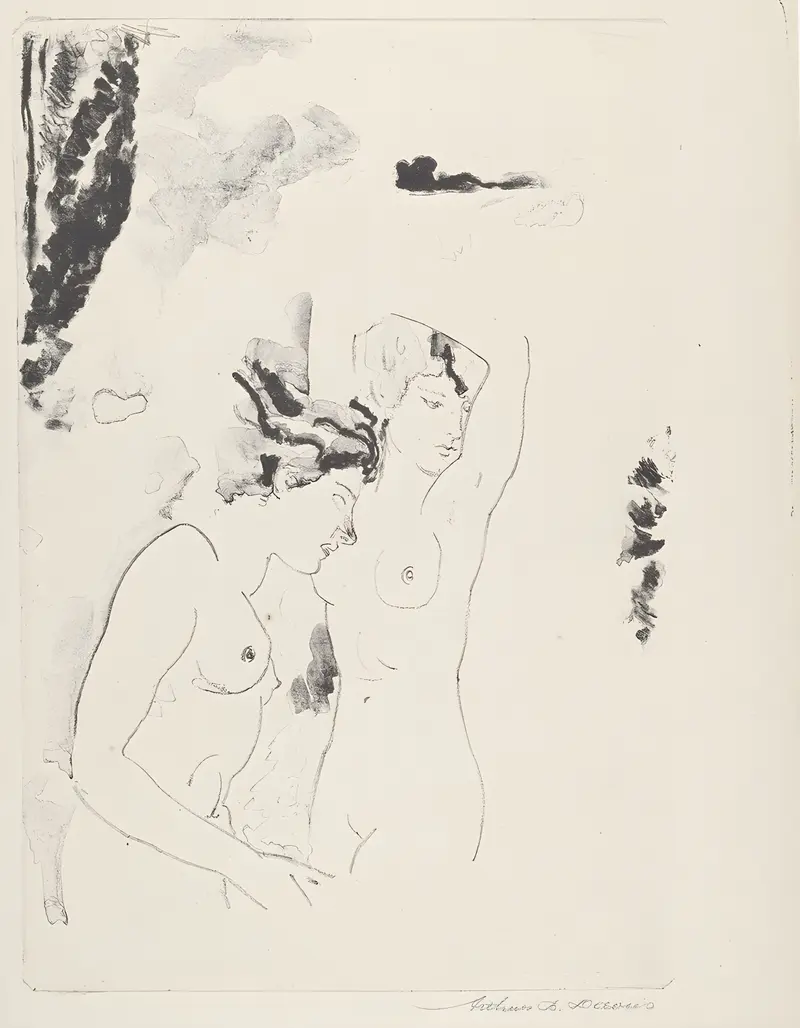
Nymphs of the Stream
Arthur Bowen Davies

Woman Dancing
Arthur Bowen Davies
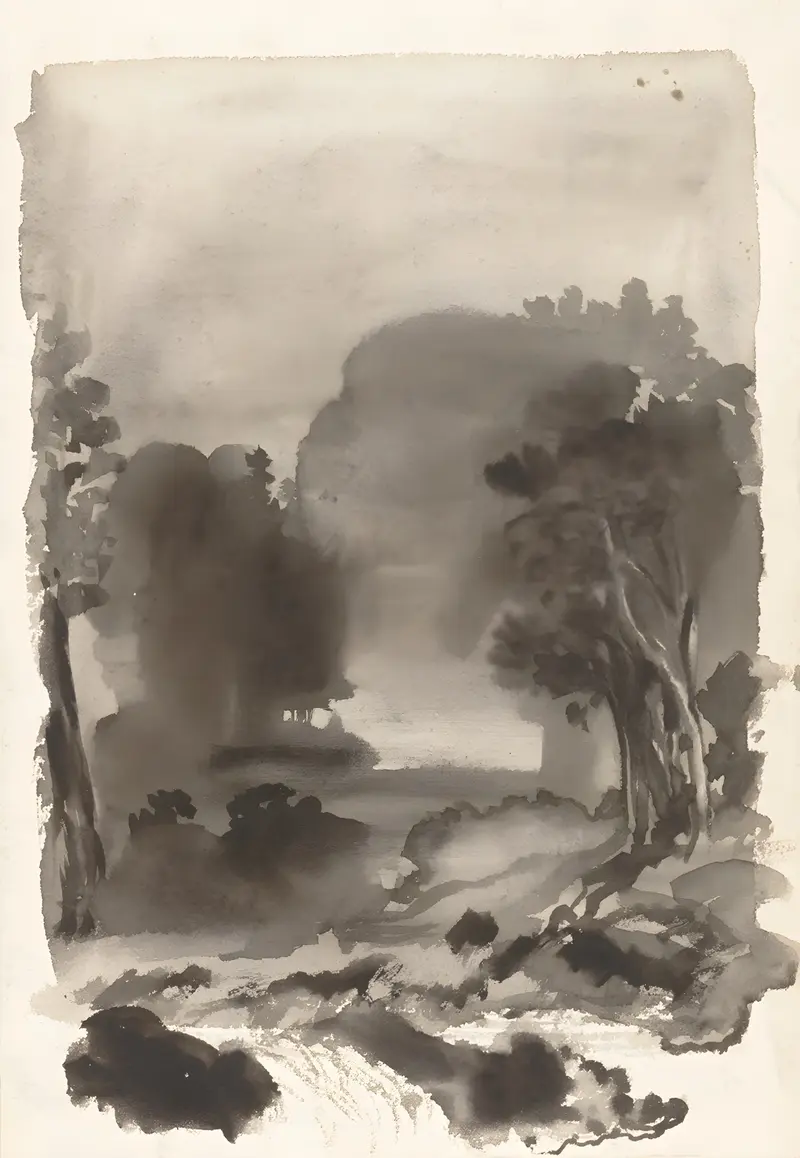
Landscape 2
Arthur Bowen Davies
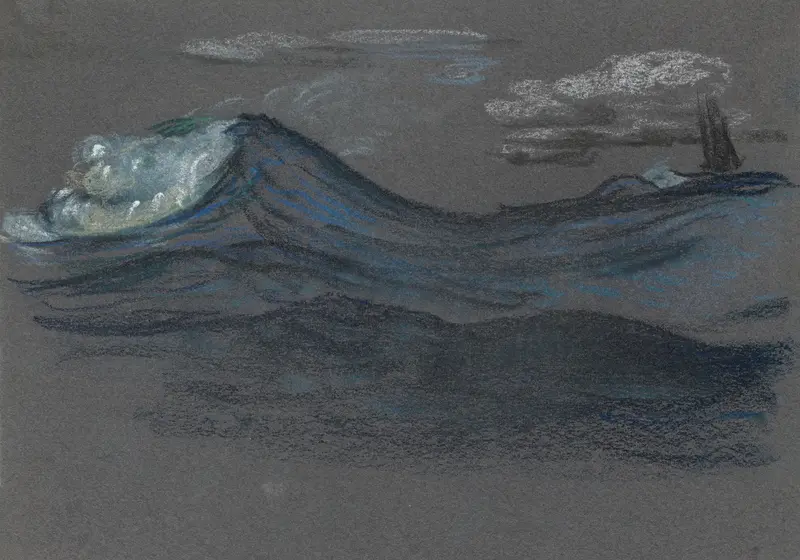
Ocean Swells
Arthur Bowen Davies
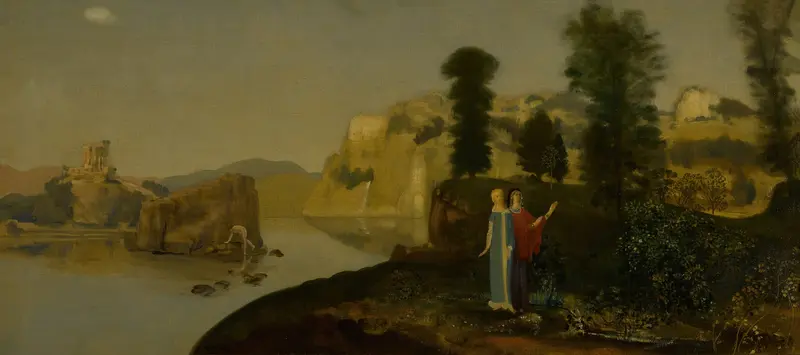
Silver Springs
Arthur Bowen Davies
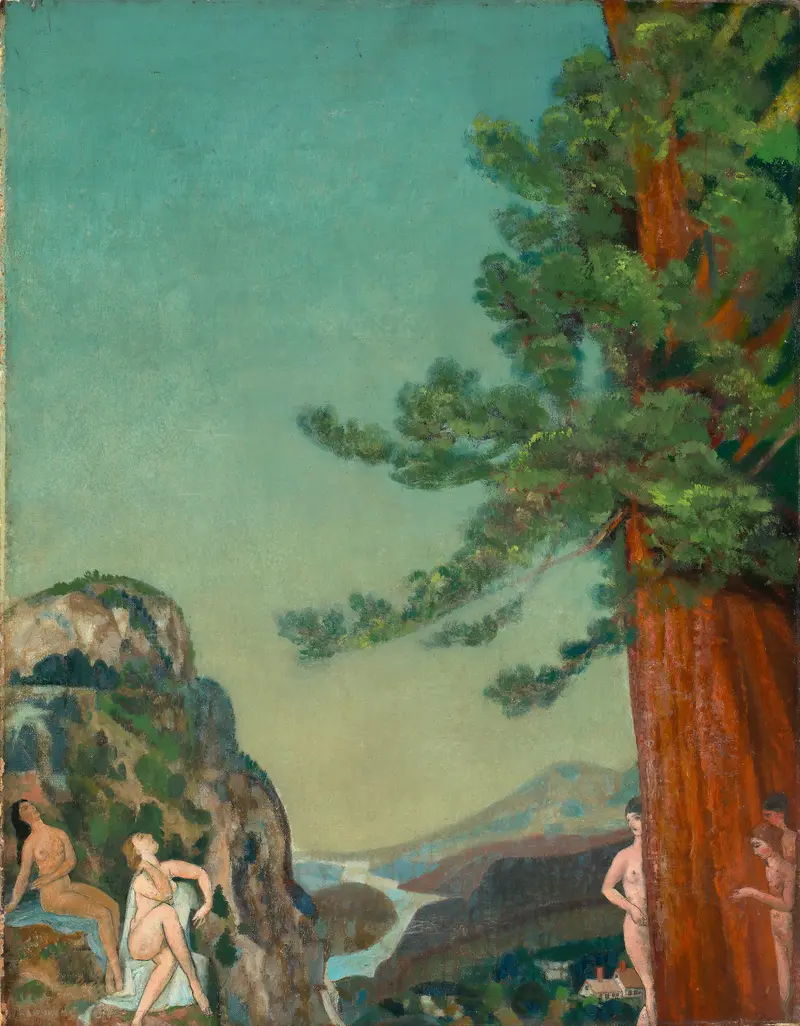
On the Cliffs
Arthur Bowen Davies

Landscape
Arthur Bowen Davies
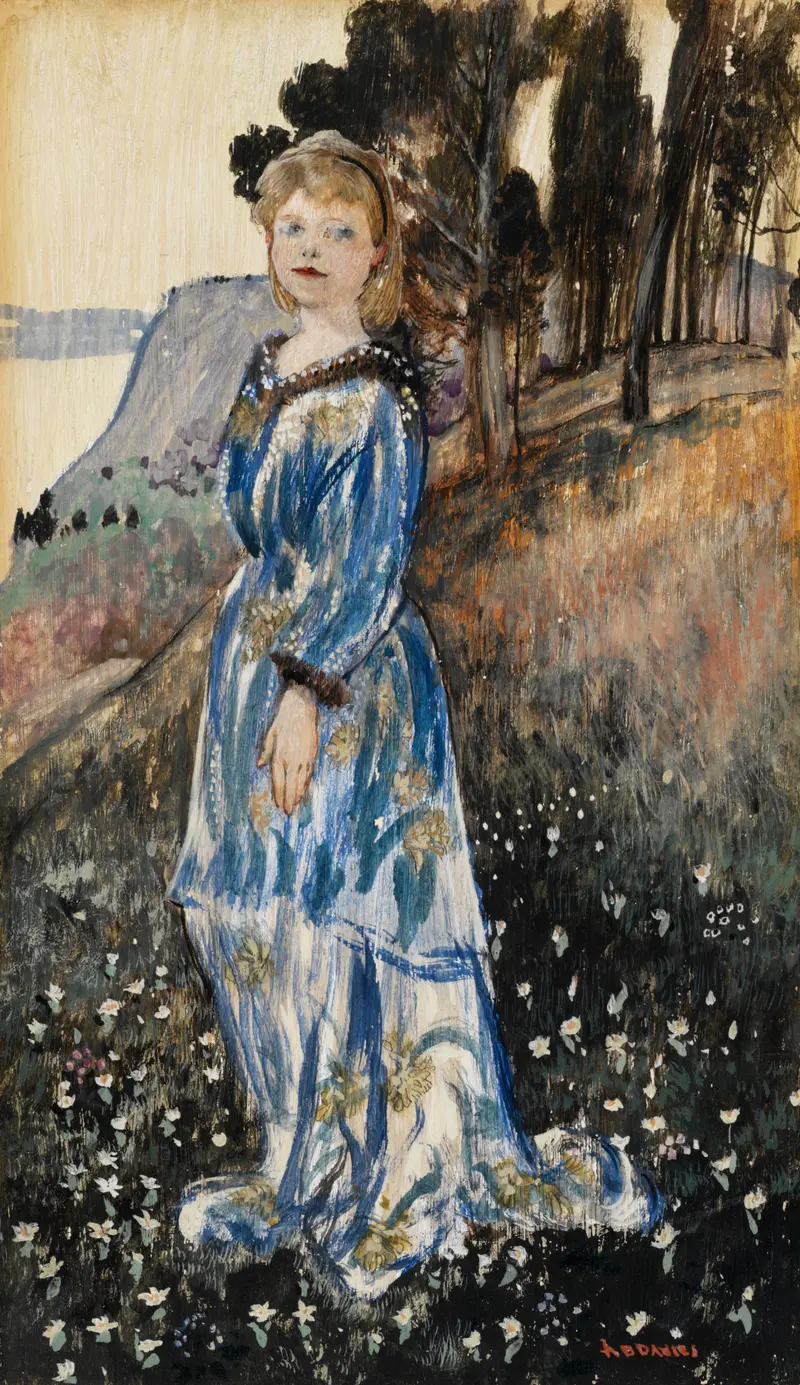
Flora
Arthur Bowen Davies
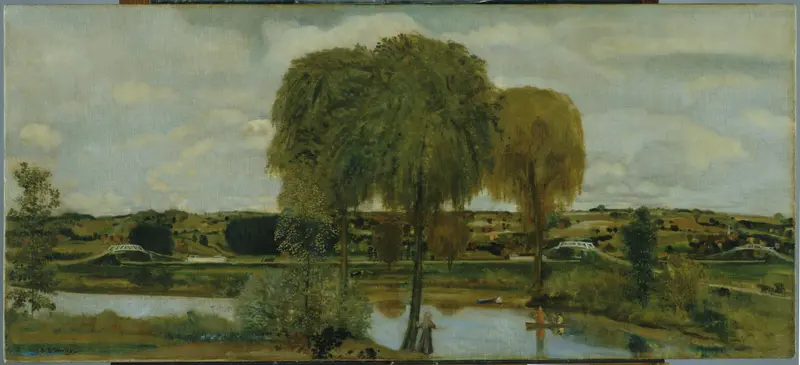
Along the Erie Canal
Arthur Bowen Davies



