Freuden des Soldatenlebens — History & Facts
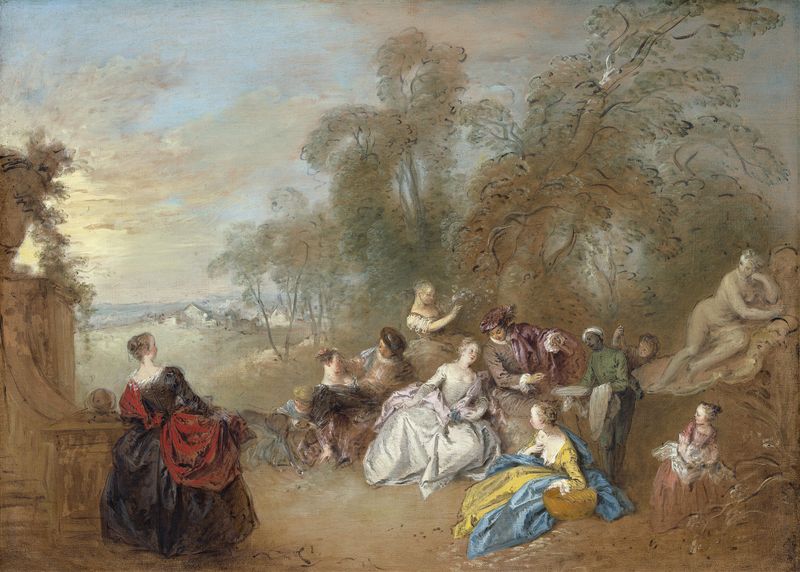
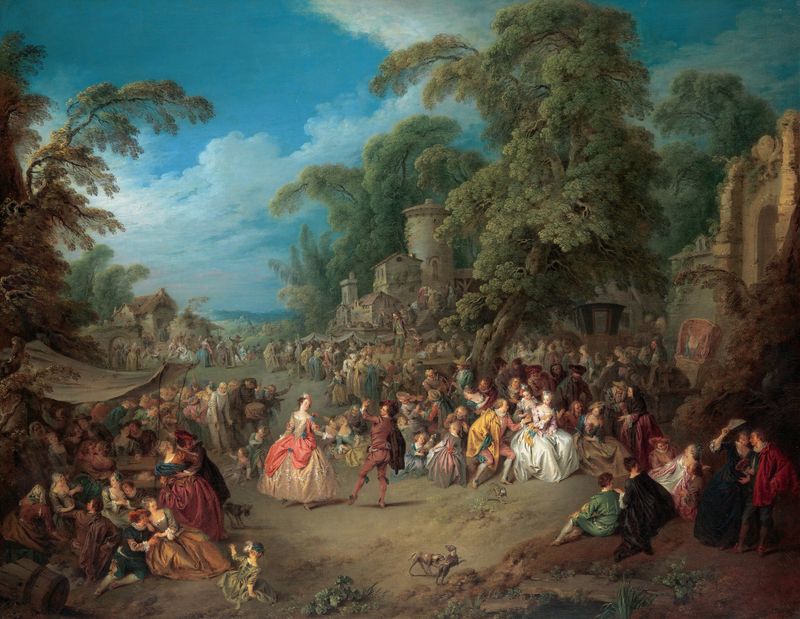
Can paint confess what words never could? In Freuden des Soldatenlebens, a silent chaos unfolds, revealing the tumultuous life of soldiers caught between camaraderie and conflict. Look to the right at the elegantly draped figures, coiled in laughter and mirth, their emotional states illuminated by the soft, diffused light of the afternoon sun. The rich palette of greens and golds invigorates the scene, drawing the eye to the intricate details in the soldiers' uniforms and the joyful expressions on their faces. Notice how the painter masterfully employs fluid brushstrokes to convey movement, as if the comrades are caught in a dance—a fleeting moment of joy amidst the impending uncertainty of battle. Yet beneath the surface revelry lies a stark contrast; the tension between festivity and the inevitable chaos of war lingers in the air.
The delicate balance of light and shade hints at the soldiers' need for distraction, a respite from the looming shadows of their duties. Subtle expressions and postures suggest a longing for peace that transcends the joyous facade, evoking a sense of bittersweet nostalgia for a time that may never be again. Jean-Baptiste Pater created this work between 1730 and 1735 in France, during a period when Rococo art was flourishing. As he painted, the world was grappling with the realities of warfare, yet within this vibrant scene, the artist sought to capture a fleeting moment of joy, reflecting both the exuberance and fragility of life as experienced by soldiers of his time.