The Fair at Bezons — History & Facts
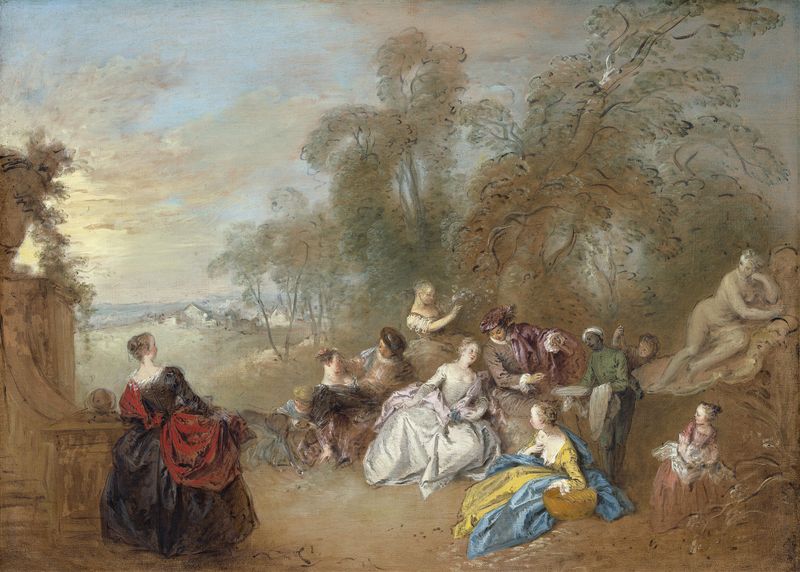
Did the painter know this moment would outlive them? In The Fair at Bezons, a world of laughter and joy conceals a subtle undercurrent of fear — the fragility of human happiness amidst the relentless march of time. Focus on the foreground, where figures bustle in animated conversation, their rich, vibrant garments contrasting against the muted tones of the background. Notice how the artist masterfully captures the play of light, casting gentle warmth on the scene, inviting you into a moment that feels both fleeting and eternal. The composition draws your eye around the fair, leading you from the animated crowd to the delicately rendered tents that sway in the breeze, further emphasizing the transience of the festivities. As you explore deeper, hints of anxiety emerge beneath the surface.
The joyous faces bear expressions tinged with weariness, suggesting that this celebration is but a brief escape from life's uncertainties. The precariousness of the tents, barely holding together, evokes the fragility of the joy they represent, reminding us that laughter can quickly fade into silence. The juxtaposition of merriment and looming dread creates a poignant tension, inviting reflection on the nature of happiness itself. In 1733, while working in France, Pater was influenced by the Rococo style, which celebrated the pleasures of life.
This period was marked by a pursuit of aesthetic beauty and leisure amidst the socio-political turbulence of the time. As he painted, artists like him were exploring themes of transience, making The Fair at Bezons not just a snapshot of joy but a meditation on the delicate balance of life and the fear of its impermanence.