Summer — History & Facts
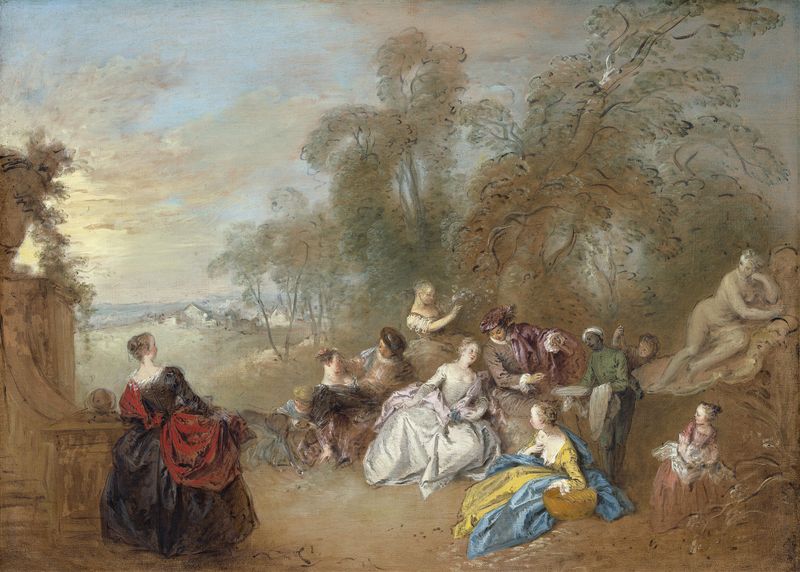
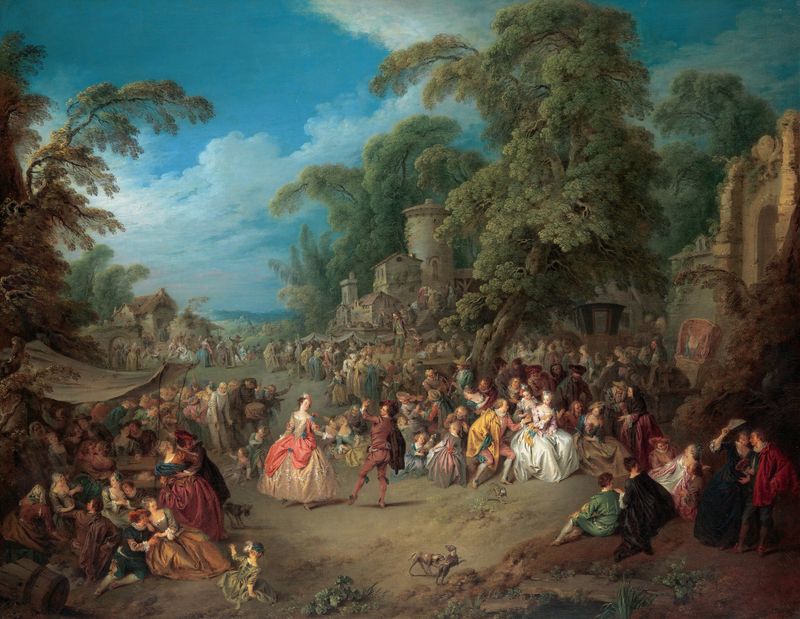
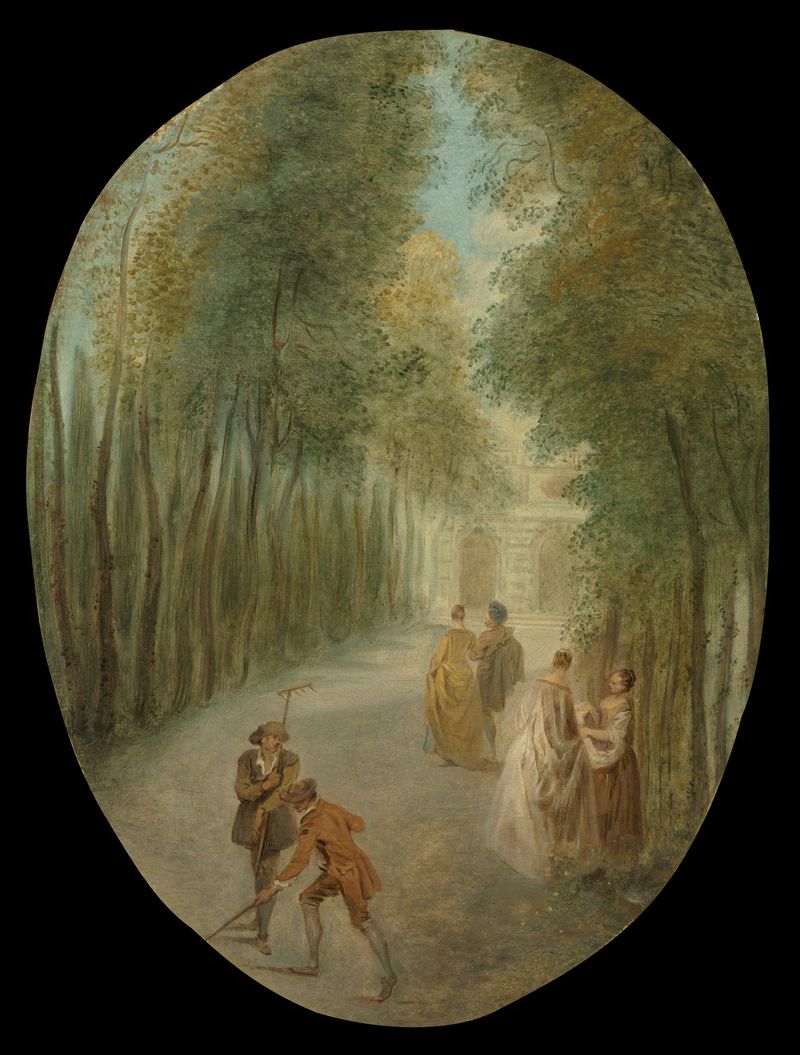
Is this a mirror — or a memory? The soft, sun-drenched hues of Summer invite contemplation of fleeting moments, where destiny intertwines with the delicate threads of time. Focus on the idyllic setting, where lush greenery embraces the viewers’ eyes, drawing them swiftly to the foreground. Notice how the gentle light bathes the figures, creating a warm atmosphere that enhances their carefree activities. The pastel palette beautifully echoes the vibrancy of the season, giving life to fluttering dresses and the playful gestures of the characters, inviting you deeper into their world of leisure and celebration. Yet, beneath this serene exterior lies a subtle tension.
The figures, seemingly joyous, hint at a wistfulness that contrasts the bucolic beauty surrounding them. The juxtaposition of their lighthearted revelry against the quiet, distant horizon suggests that the warmth of summer can be both a moment to cherish and a reminder of life’s ephemeral nature. Each gesture and glance speaks of relationships intertwined, making the painting resonate with the inevitability of change. Created between 1720 and 1736, Summer captures a transitional period for Pater, whose work flourished in the vibrant atmosphere of 18th-century France.
This era was defined by the Rococo movement, characterized by its exuberance and elegance, reflecting the prevailing cultural shifts in art and society. As Pater immersed himself in this environment, he embraced the celebration of beauty, love, and leisure, ultimately giving life to a moment that feels both timeless and transient.