Frigate Approaching The Mouth Of The Tagus With A Paddle Steamer Passing The Belem Tower, Lisbon — History & Analysis
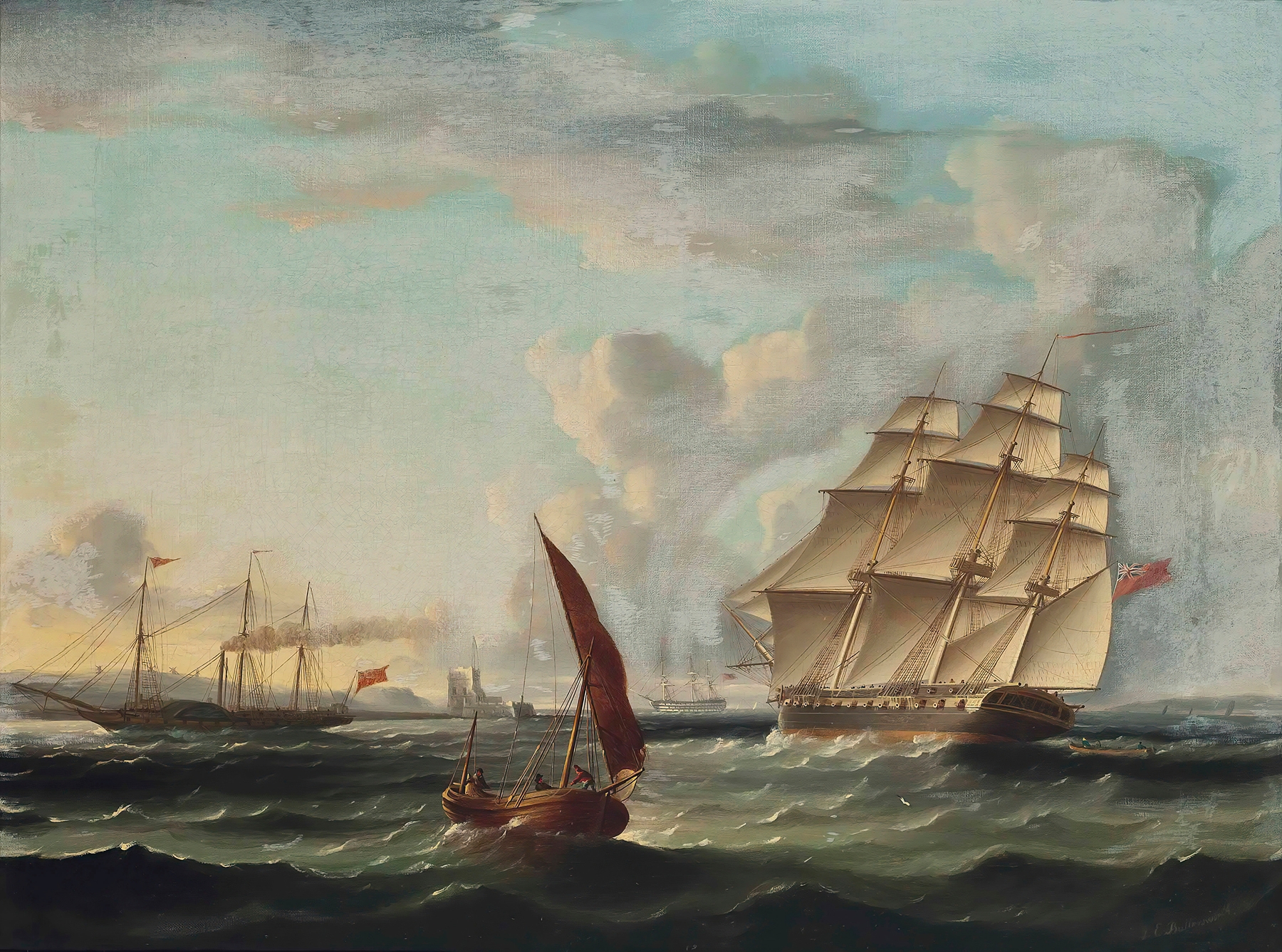
What secret hides in the quiet of the canvas? Time, suspended in a moment, invites the viewer to linger and reflect on the fleeting nature of life and history. Focus on the paddle steamer gracefully cutting through the shimmering waters to the right, its smoke blending with the clouds above. The vibrant blues of the Tagus River contrast with the warm ochres and terracottas of the Belem Tower, drawing the eye to the imposing structure bathed in golden sunlight.
Look closely at the meticulously painted sails of the frigate, their billowing forms hinting at movement, as if they too could break free from the confines of the frame. The interplay of light across the water and the soft shadows on the tower create a sense of depth, anchoring the scene in both time and place. Hidden meanings weave through the details: the paddle steamer symbolizes the emerging modernity, while the ancient Belem Tower stands as a guardian of the past, a bridge between eras. The calm waters reflect a world at peace, yet the presence of both vessels suggests a tension between tradition and innovation, inviting contemplation of progress against the backdrop of history.
The clouds above seem to whisper stories of mariners and explorers—each wave holding a memory, each ripple echoing the passage of time. During this period, Buttersworth was immersed in the maritime culture of 19th-century England, likely painting this work while he resided in the United States and reflecting on his own journey through new and old worlds. The painting captures a transitional moment in naval history amidst the rise of steam power, showcasing his deep appreciation for both the beauty of ships and the significance of their evolution.