
From Balestrand at the Sognefjord — History & Facts
Art reveals the soul when the world turns away. In the quiet embrace of nature, longing unfurls like a delicate petal, inviting us to explore the depths of human emotion. Look to the left at the tranquil waters of the Sognefjord, where the gentle ripples echo the soft whispers of solitude. The artist’s deft brushwork captures the interplay of light and shadow, illuminating the distant mountains that rise majestically against the horizon.
Notice how the cool blues and muted greens harmonize, creating a serene yet poignant atmosphere that envelops the viewer in a reflective calm. Within this landscape, juxtaposition breathes life into the scene. The vibrant greenery of the foreground contrasts sharply with the cool, distant peaks, symbolizing the tension between proximity and the unattainable. The placid water reflects not just the physical landscape, but also a deeper yearning, a mirrored desire to connect with something beyond reach.
Each element, from the smallest wave to the largest mountain, conveys an emotional weight, inviting contemplation on the nature of longing and the beauty found in solitude. In 1839, Thomas Fearnley painted this work while residing in Norway, amidst a burgeoning Romantic movement that sought to capture the sublime beauty of the natural world. Influenced by his travels and the scenic landscapes he encountered, Fearnley’s work exemplifies a transformative period in art history, where emotional expression began to rival technical precision, allowing viewers to engage with the profound depths of feeling found in nature's embrace.
More Artworks by Thomas Fearnley
Browse all →
Norwegian Landscape, Marumfoss
Thomas Fearnley

View of the Oslofjord
Thomas Fearnley

Gudvangen
Thomas Fearnley

Stormy Landscape with a Rider
Thomas Fearnley
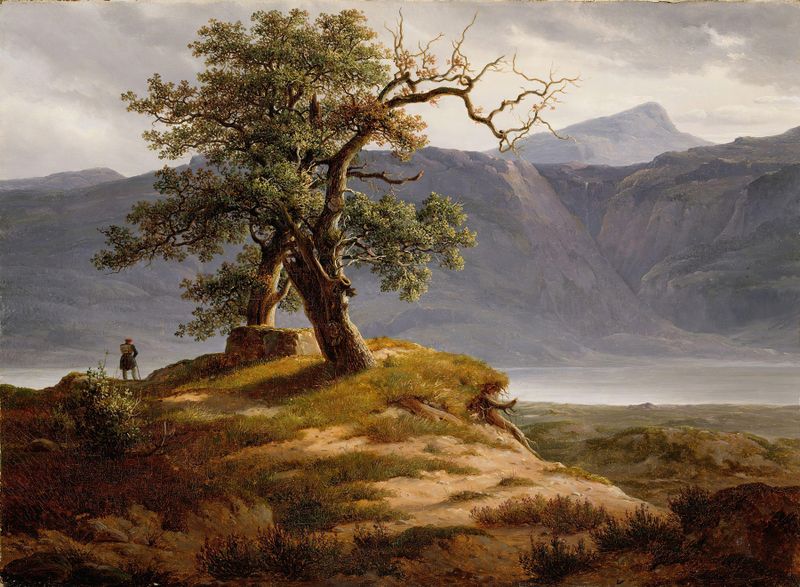
Landscape with a Wanderer
Thomas Fearnley
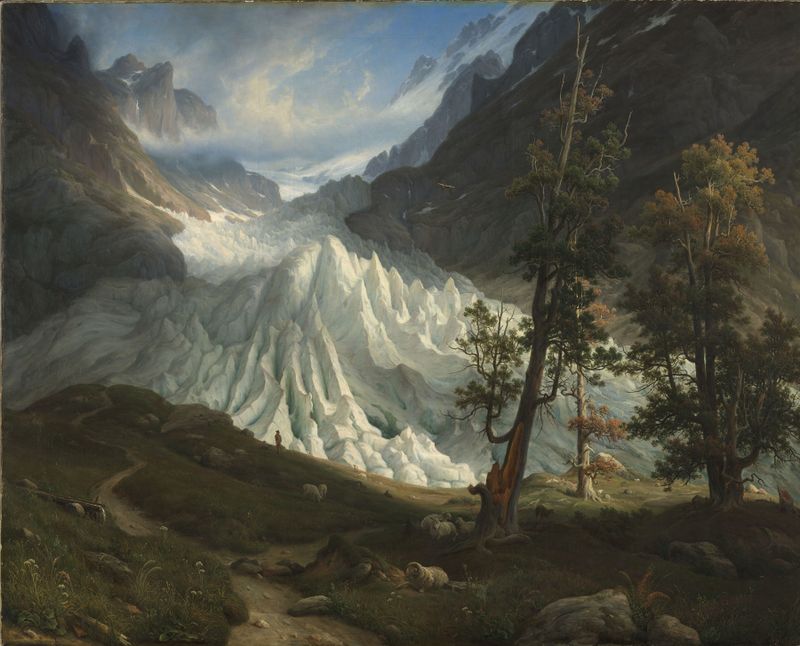
The Grindelwaldgletscher
Thomas Fearnley

Clouds over the Fjord
Thomas Fearnley
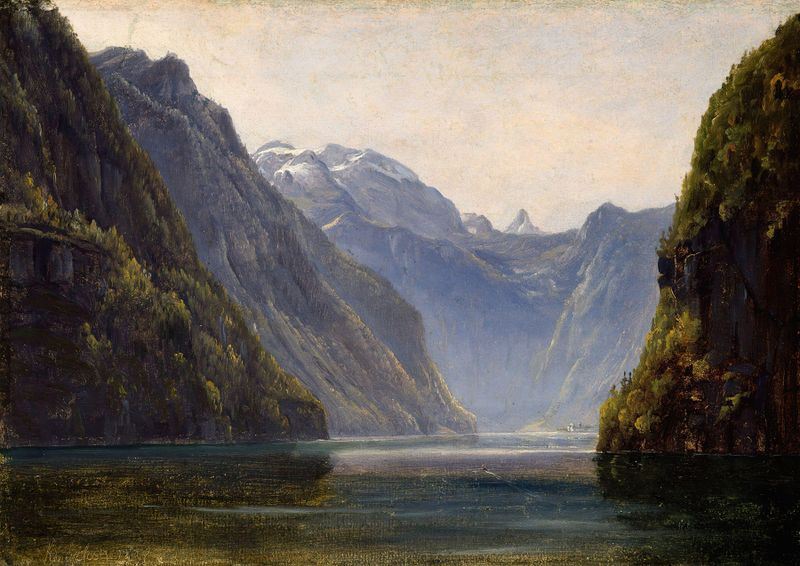
From Königssee
Thomas Fearnley

The Bridge of Hauge outside Arendal
Thomas Fearnley

King Vilhelm II’s ceremonial Processsion in Amsterdam in 1840
Thomas Fearnley





