
Fête Foraine — History & Facts
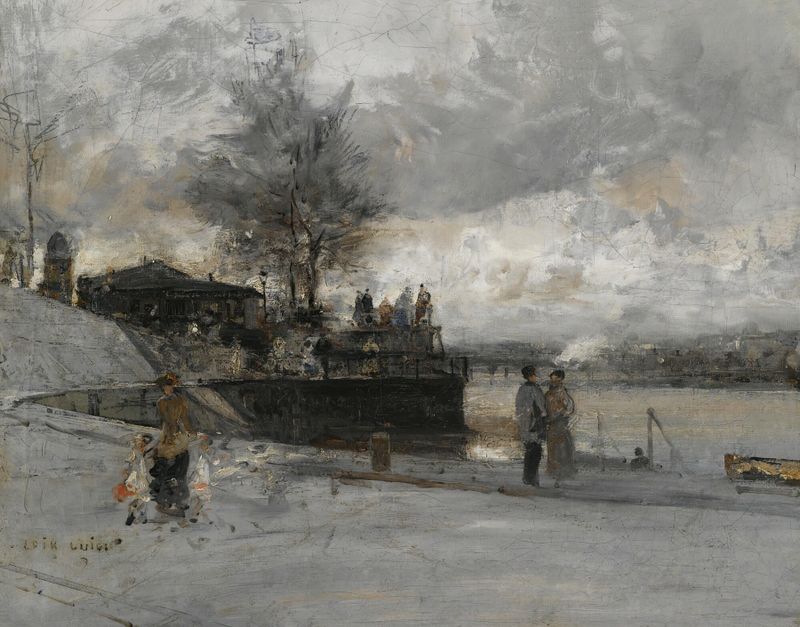
When did color learn to lie? Beneath the shimmering surface of a carnival scene lies a deeper narrative of illusion and divinity, where joy becomes a veil for the complexities of life. Look to the left at the vibrant carousel, its painted horses frozen in a joyous gallop. The artist employs a vivid palette, with swirling reds and golds that capture the exuberance of the fête. Notice how the light dances off the figures, illuminating their expressions of delight, while shadows in the corners suggest a lurking melancholy.
Each brushstroke pulsates with the energy of the celebration, inviting you to savor the moment yet hinting at transient pleasure. As you delve further, consider the figures in the background, their faces obscured yet filled with unspoken stories. The juxtaposition of the exuberant foreground against the somber undertones of the crowd evokes an unsettling contrast. Here, laughter coexists with hidden sorrow, illuminating the duality of human experience—the fleeting nature of happiness, amplified by the enchanting colors and the ephemeral atmosphere of a fair. Luigi Loir created Fête Foraine during a period marked by the rise of Impressionism, a movement that sought to capture the ephemeral quality of light and color.
In the late 19th century, while living in Paris, Loir was immersed in a vibrant art scene characterized by a push away from realism. His work reflects a fascination with the interplay of light and the celebration of everyday life, amidst the broader cultural shifts of a rapidly modernizing world.
More Artworks by Luigi Loir
Browse all →
Marché aux fleurs sous la neige
Luigi Loir

Le Louvre, Paris
Luigi Loir
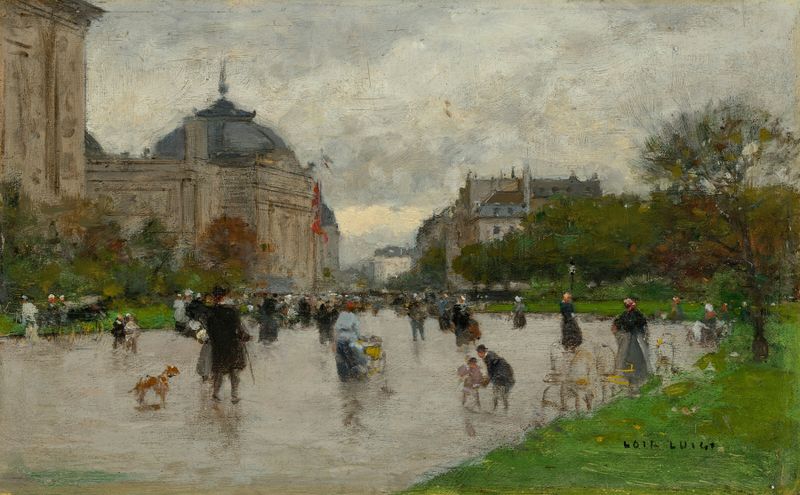
The Champs Élysées, Paris
Luigi Loir
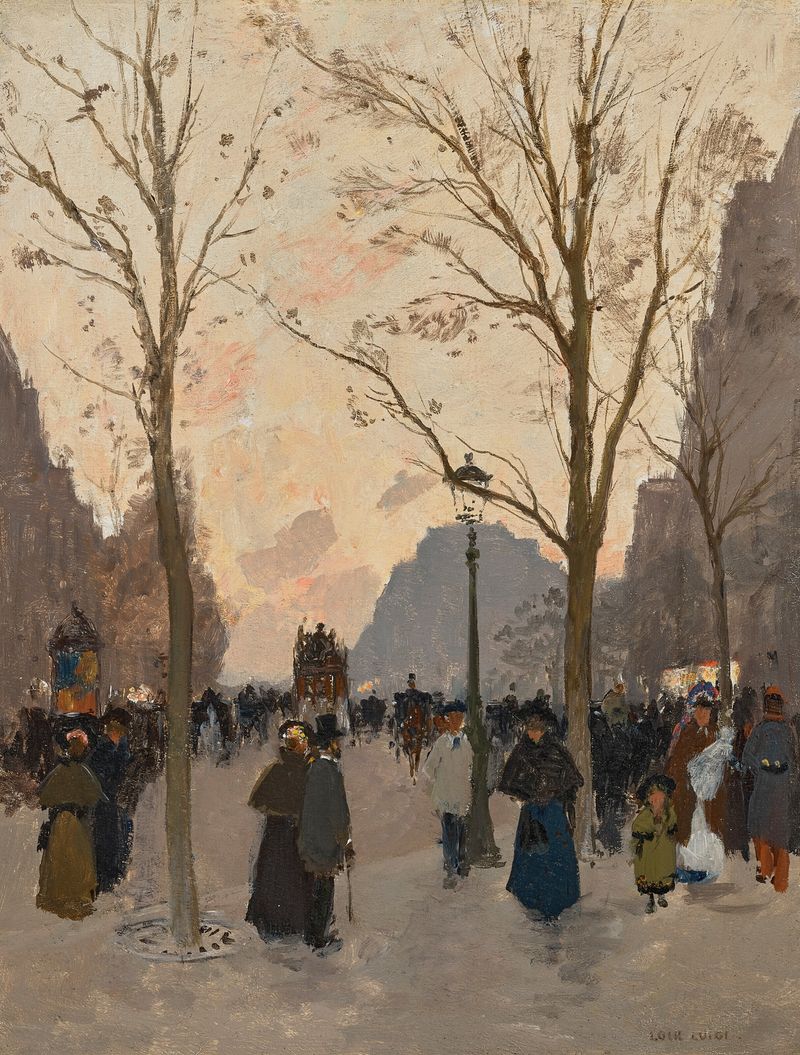
La Place de la République, Paris
Luigi Loir

Le boulevard du Palais, vu de la place Saint-Michel
Luigi Loir

La fête foraine
Luigi Loir
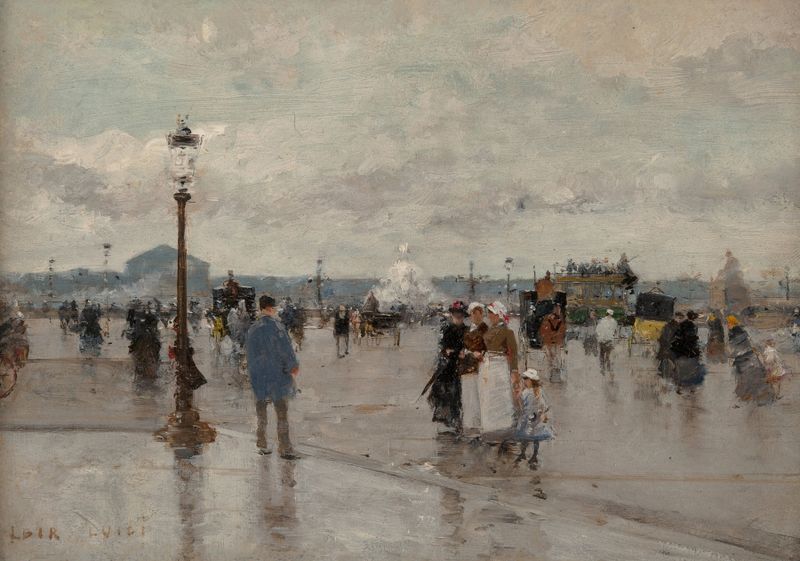
La sortie de Paris, Porte d’Asnières
Luigi Loir
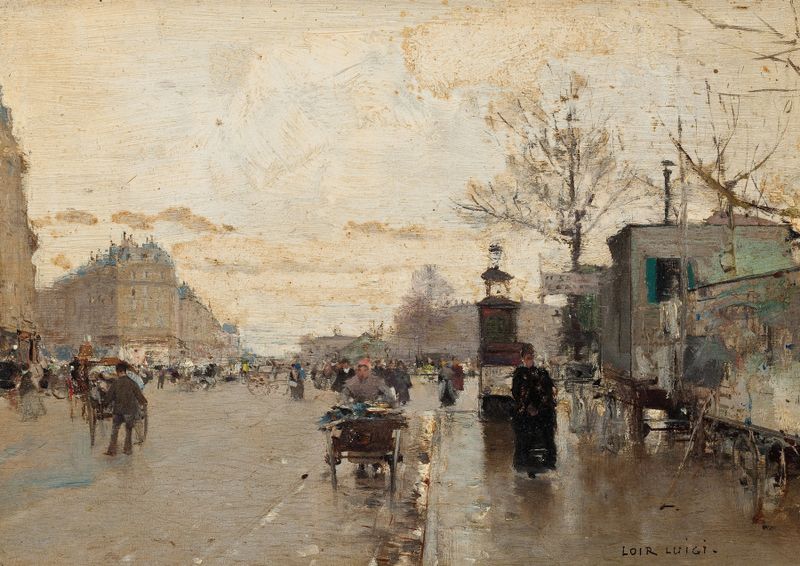
Parisian Street Scene
Luigi Loir

Les Quais De La Seine, 1900
Luigi Loir
Quai Au Bord De La Seine, Paris
Luigi Loir





