
Fête foraine — History & Facts
What secret hides in the quiet of the canvas? Beneath the vibrant colors and joyful scenes, the essence of destiny awaits in the balance of laughter and longing. Look to the center of the painting, where a lively fair unfolds, teeming with figures adorned in elaborate costumes. The joyful expressions of children and adults alike bring a sense of warmth, while soft lantern light bathes the scene in a golden glow. Notice how the artist deftly captures movement; swirling skirts and raised arms evoke a sense of celebration, yet there’s a subtle melancholy in the shadows that linger, hinting at the inevitable cycle of joy and sorrow. As your gaze wanders, pay attention to small details: the little girl, standing apart, clutching her doll with a serious expression, contrasting the carefree chaos around her.
This juxtaposition of innocence and the underlying tension of life's unpredictability adds depth to the scene, suggesting that amidst the festivities, profound transformations are quietly unfolding. The festival may be a moment of bliss, but the artist reminds us that destiny often looms just beyond our immediate perception. Luigi Loir created Fête foraine during a time when the world was beginning to embrace the thrill of modernity, likely in the late 19th century. Living in Paris, a hub of artistic innovation, he was influenced by the emerging Impressionist movement, which celebrated everyday life and light.
This painting encapsulates that spirit, reflecting both the vibrancy of the era and the complexities of human experience intertwined with the fleeting nature of happiness.
More Artworks by Luigi Loir
Browse all →
Marché aux fleurs sous la neige
Luigi Loir

Le Louvre, Paris
Luigi Loir
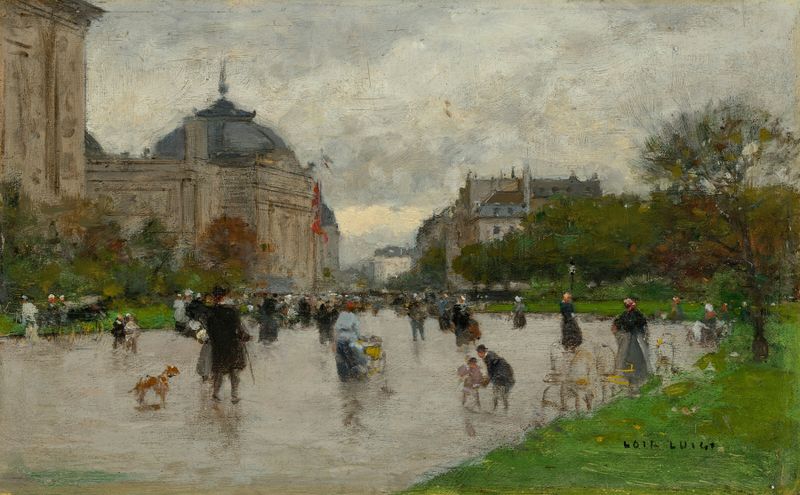
The Champs Élysées, Paris
Luigi Loir
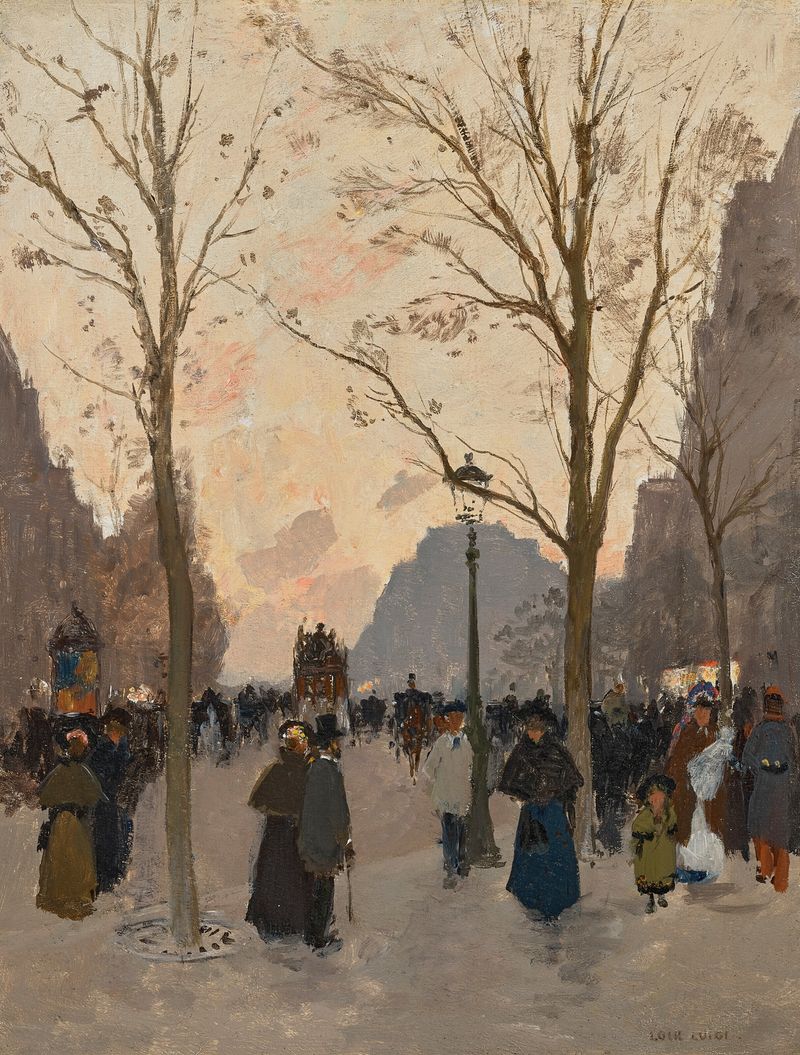
La Place de la République, Paris
Luigi Loir

Le boulevard du Palais, vu de la place Saint-Michel
Luigi Loir

La fête foraine
Luigi Loir
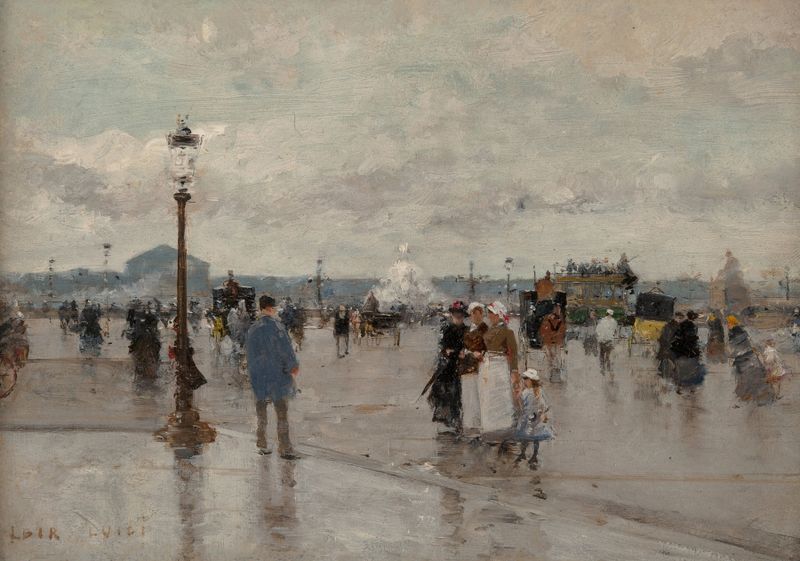
La sortie de Paris, Porte d’Asnières
Luigi Loir
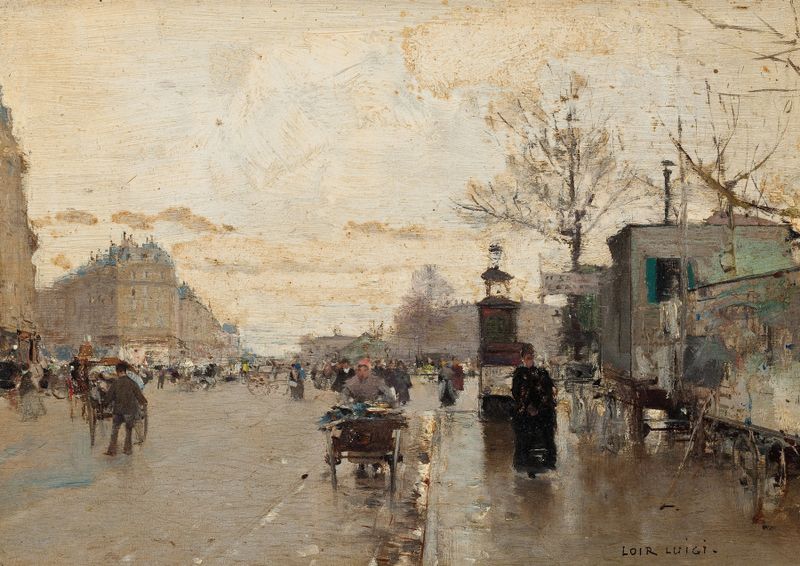
Parisian Street Scene
Luigi Loir

Les Quais De La Seine, 1900
Luigi Loir
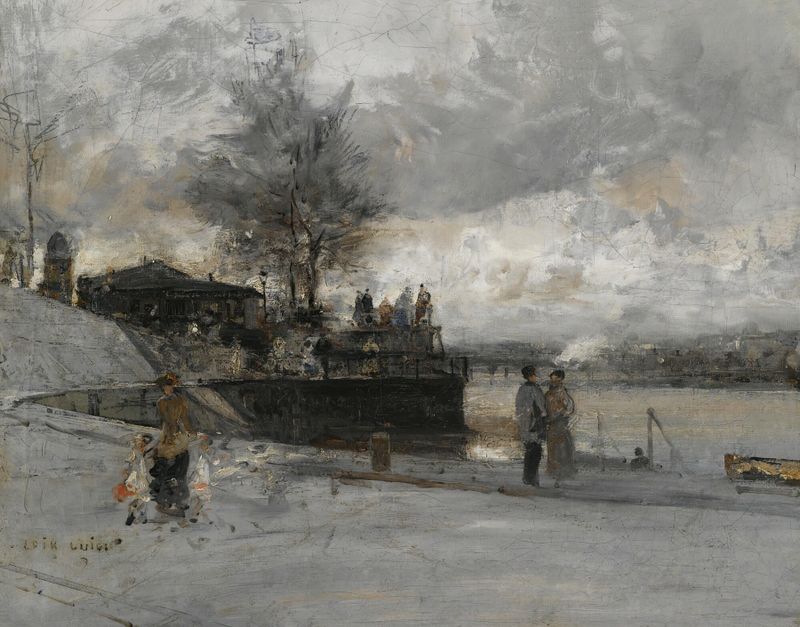
Quai Au Bord De La Seine, Paris
Luigi Loir





