
Garden path — History & Facts
A curve draws you in before you even know where it leads. In Garden path, the artist sets the viewer at the edge of a winding trail, its pale surface slicing through a riot of green. The eye is caught first by the bold, almost playful brushstrokes that tangle together ferns, shrubs, and the suggestion of flowers—bursts of orange and red that refuse to be mere background.
The path itself is a promise, its bend just out of sight, inviting you to imagine what lies beyond. Light seems to filter through unseen branches, dappling the foliage and lending the scene a sense of both shelter and anticipation. Created in 1912, this painting stands at a crossroads of early twentieth-century art, when painters like August Macke—a key figure of the Expressionist movement—sought to capture the world not as it appeared, but as it felt. Works like this were rarely grand commissions; instead, they were made for private enjoyment or the walls of progressive collectors, eager for color and modernity.
The collection that now holds this piece, Wuselig, preserves a fragment of a world in flux, when artists looked to gardens and city streets alike for new ways to see. Return to the painting and notice how the path’s gentle curve holds a quiet tension: the journey, not the destination, is the heart of the scene.
More Artworks by August Macke
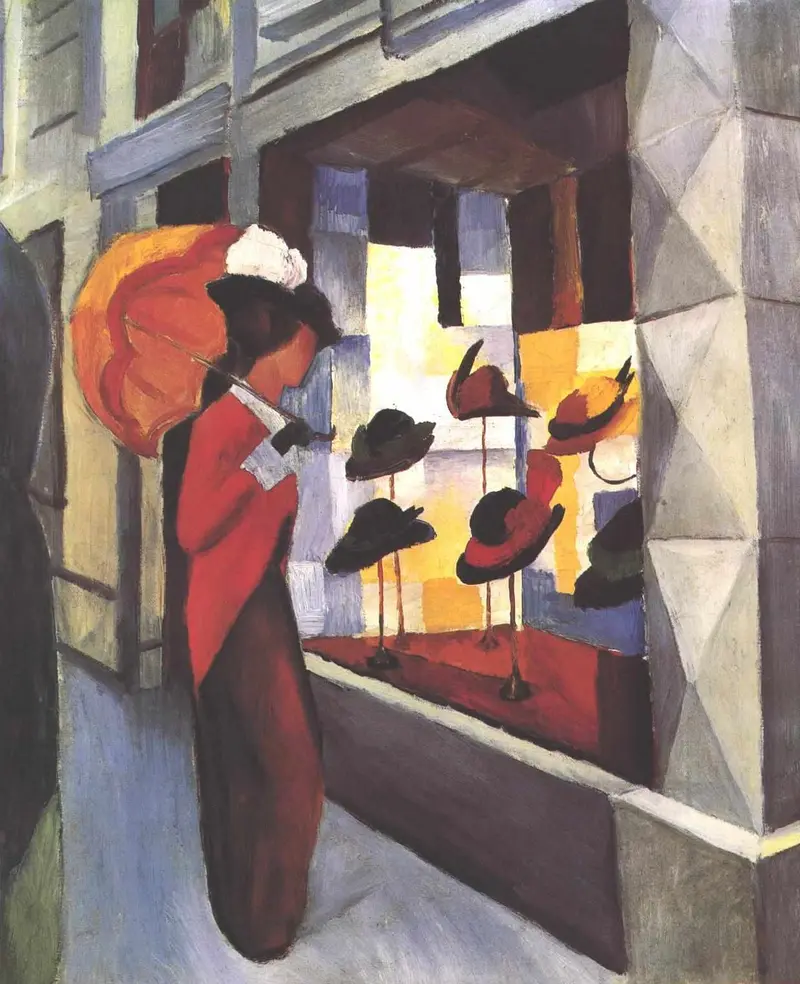
Woman with a Parasol in Front of a Hat Shop
August Macke

Street with Church in Kandern
August Macke
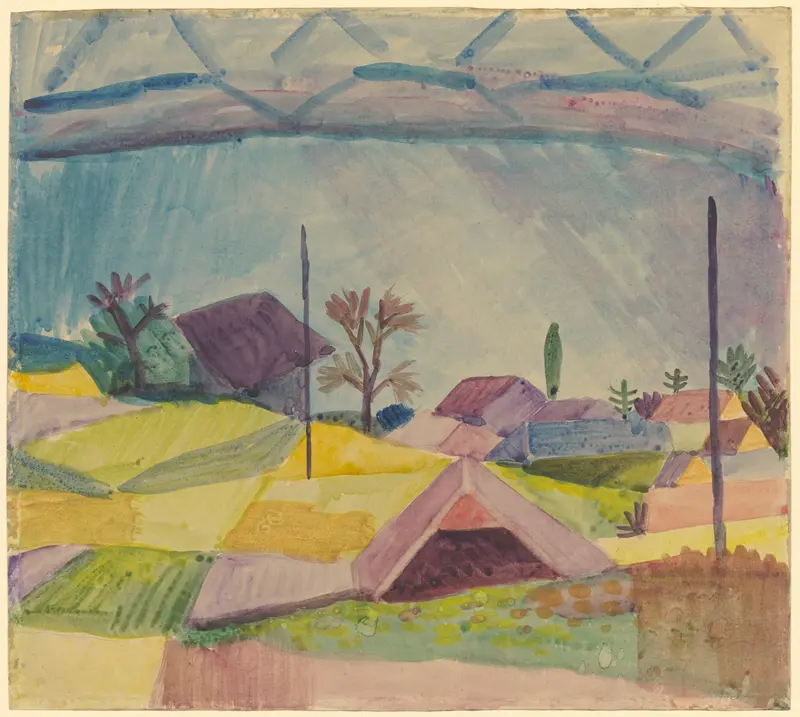
View of Hilterfingen
August Macke

Paar im Nachen
August Macke
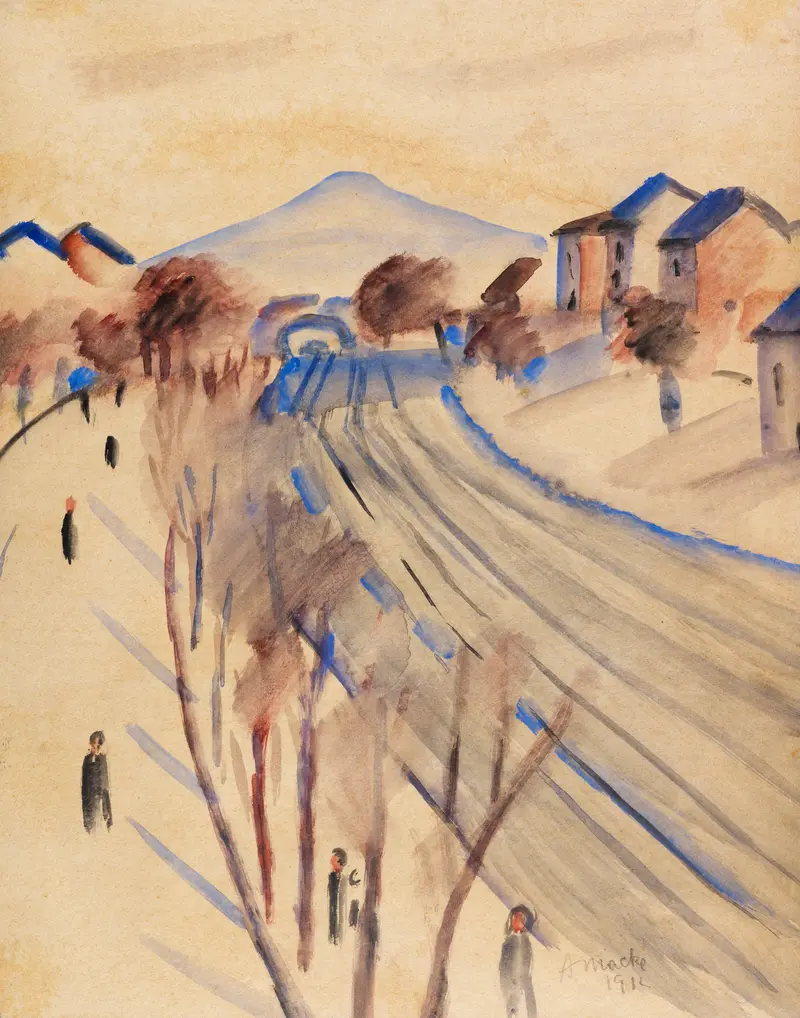
Ölberg mit Bahngleisen II
August Macke
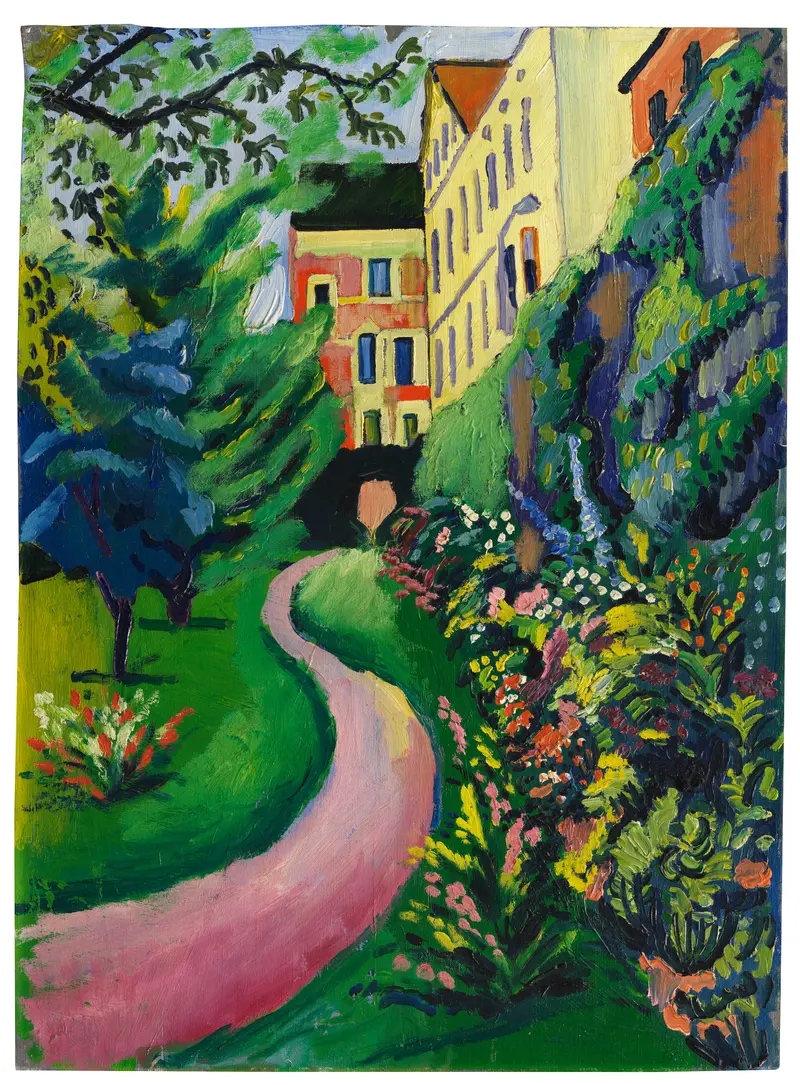
Unser Garten mit blühenden Rabatten
August Macke
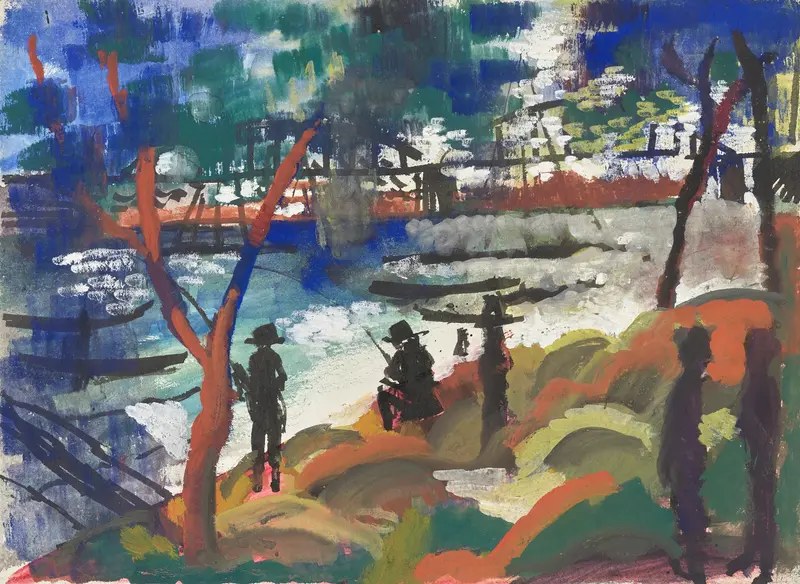
Angler am Fluss
August Macke
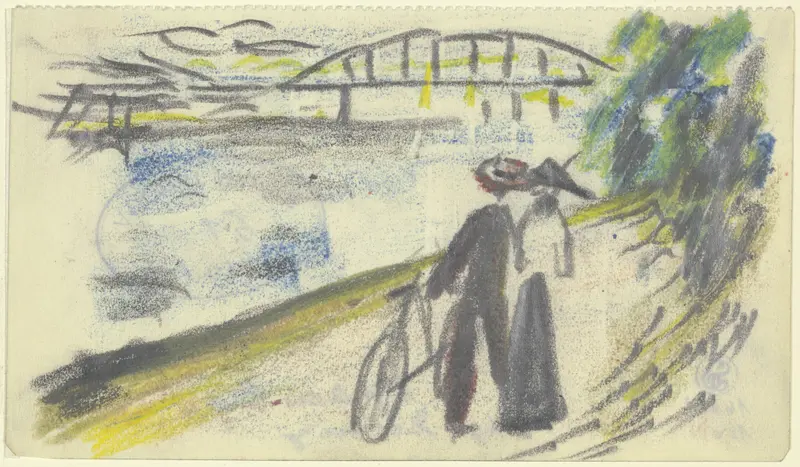
Path at the Rhine
August Macke
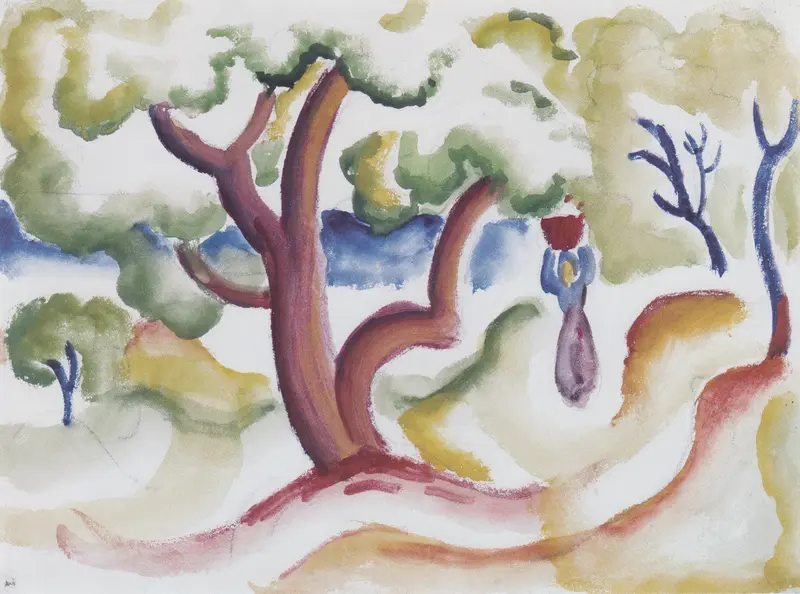
Frau mit Krug unter Bäumen
August Macke
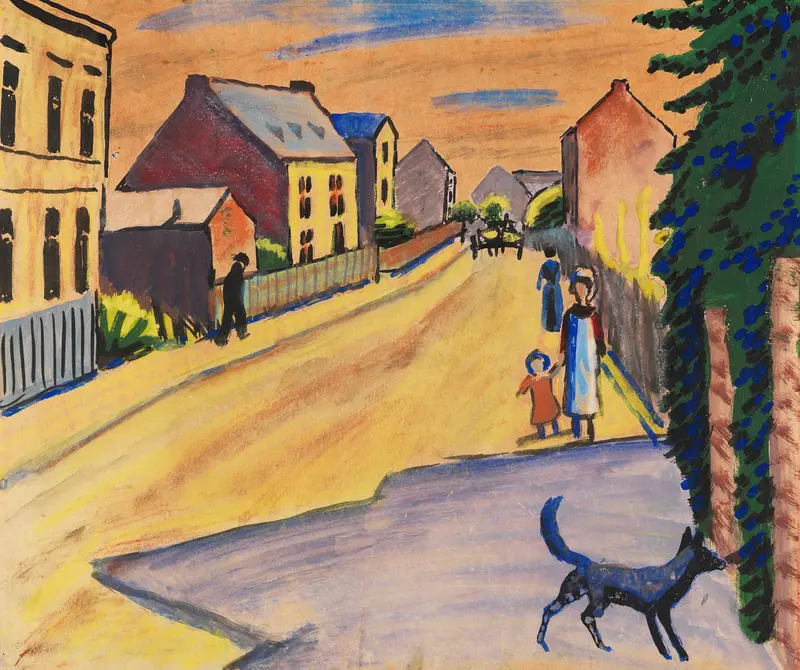
Sonnige Straße mit Hund
August Macke
More Landscape Art

The Starry Night
Vincent van Gogh

View of Delft
Johannes Vermeer

Water Lilies
Claude Monet

The Grand Canal, Venice, looking north-west from the Ca' Corner to the Ca' Contarini degli Scrigni, with the campanile of Santa Maria della Carità
Canaletto

Windsor Castle
Canaletto

The Grand Canal looking North-East from the Palazzo Dolfin-Manin to the Rialto Bridge
Canaletto