Garten mit Fahne — History & Facts
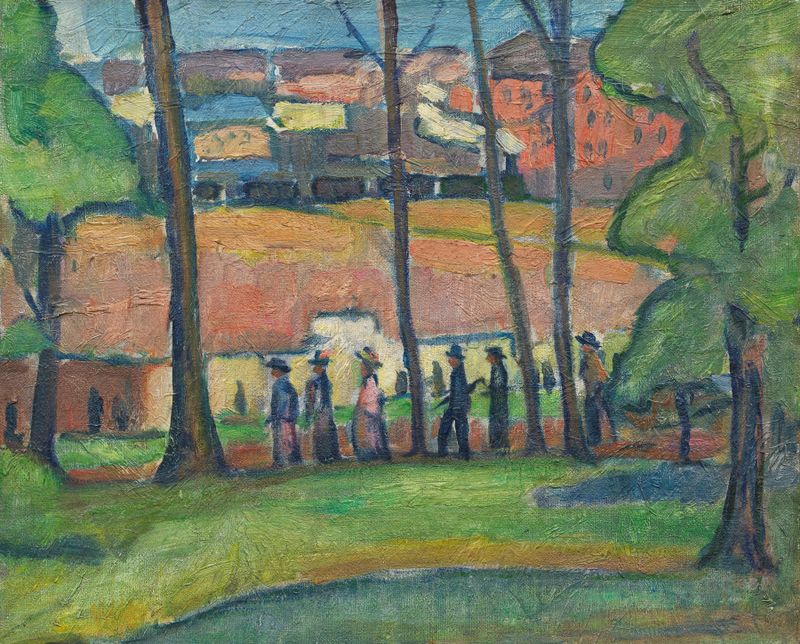
When did color learn to lie? In the realm of art, hues can dance gracefully between truth and illusion, revealing depths of emotion hidden beneath their surface. Look to the left at the vibrant green foliage, alive with shades of emerald and lime, a testament to the artist’s skilled brushwork. The bold strokes create a textured interplay between light and shadow, inviting the viewer to traverse the garden's depth. Notice how the crimson flag, unfurling against the serene backdrop, draws the eye upward, embodying a striking contrast that compels contemplation. This scene embodies a tension between the serene beauty of nature and the jarring symbolism of the flag—a harbinger of political upheaval.
The garden, lush and inviting, suggests an idyllic space, yet the vibrant colors evoke a sense of urgency and awareness, hinting at the changing world outside its tranquil confines. The juxtaposition of serenity and unrest invites viewers to reflect on the fragility of peace in a time of uncertainty. In 1911, Garten mit Fahne was created during a period of artistic exploration for Hermann Stenner, who was deeply influenced by the burgeoning Expressionist movement in Germany. Living in Dresden, the artist sought to capture the emotional resonance of his surroundings, while the world was on the brink of conflict.
This work reflects both a personal revelation and a broader cultural awakening, as artists grappled with new realities in a shifting social landscape.