Mit Kastanien bestandener Kanal — History & Facts
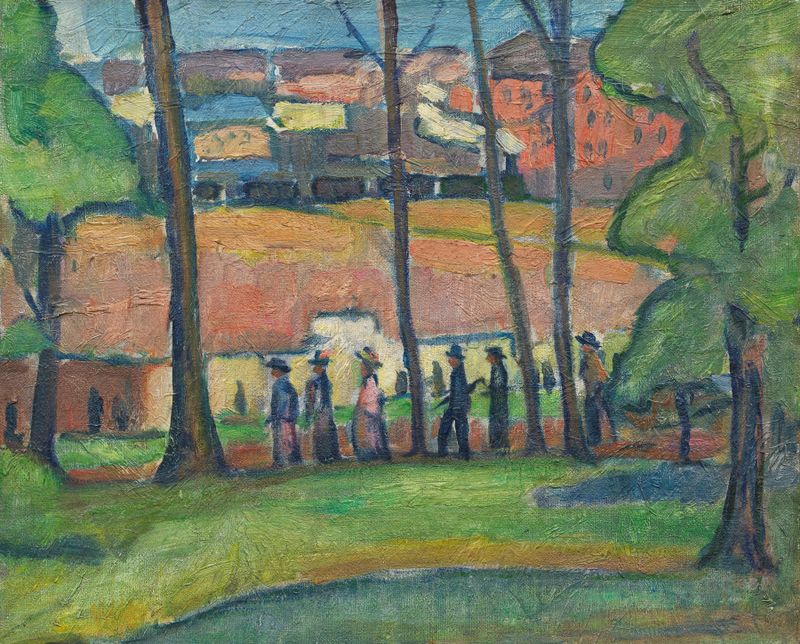
In Hermann Stenner's work, light becomes both a brush and a witness, revealing the unseen layers of existence. Look to the left at the vibrant chestnut trees, their leaves a riot of green and gold that contrasts beautifully against the calm waters below. The reflections ripple softly, inviting your gaze to trace the gentle curves of the canal. Notice how the light dances across the surface, creating a shimmering tapestry that draws you deeper into the tranquil scene.
The deliberate brushstrokes meld color and form, creating both a sense of movement and profound stillness. The emotional tension in the painting lies in the juxtaposition of this serene environment with an underlying restlessness. The vibrant foliage is alive, yet the water feels almost static, a metaphor for the interplay between nature's vitality and the contemplative pause we often crave. This duality invites a reflection on our own lives—how chaos and calm coexist within us.
Stenner's choice of color heightens this contrast, leading the viewer to consider not just what is present, but what is suggested beneath the surface. In 1909, Hermann Stenner painted this piece in Germany during a period of artistic exploration and innovation. The dawn of modernism was shaping the art world, as traditional forms were challenged and redefined. Stenner, influenced by both Expressionism and Impressionism, sought to express the emotional resonance of landscapes, ultimately contributing to the broader dialogue of a changing artistic landscape.