
Gartenlokal am Wannsee – Schwedischer Pavillon — History & Facts
In the brushstrokes of Liebermann, nostalgia takes on a vivid form, inviting us into a moment suspended in time. Look to the center of the canvas where the Swedish pavilion stands, its architectural elegance mirrored in the serene waters of Wannsee. The lush foliage frames this idyllic scene, with dappled sunlight dancing across the greenery, evoking warmth and comfort. Notice how the palette is filled with soft greens and luminous blues, harmonizing with the gentle play of light and shadow that envelops the figures leisurely lounging nearby, creating a tranquil rhythm that invites pause. There’s a subtle tension in this scene—a juxtaposition of leisure and the passing of time.
The figures seem lost in conversation, yet the stillness of the water alludes to moments that may have slipped away, leaving a trace of longing. The structure of the pavilion, sturdy yet ephemeral, symbolizes the transitory nature of leisure itself, while the vibrant nature surrounding it offers solace and continuity against life's inevitable changes. Each detail, from the textures of the foliage to the soft gestures of the people, resonates with an underlying yearning for simpler joys. In 1925, Liebermann painted this piece amid a flourishing period for the German art scene, marked by a return to impressionism and a focus on modern leisure.
He created it in Berlin, drawing inspiration from the idyllic settings of his summertime escapes. At this time, the world was undergoing significant change, yet within this canvas, the artist captured a moment of blissful pause, allowing viewers to connect with their own own memories of joy.
More Artworks by Max Liebermann
Browse all →
Die Blumenterrasse in Wannsee mit Blick auf den Fischotterbrunnen
Max Liebermann
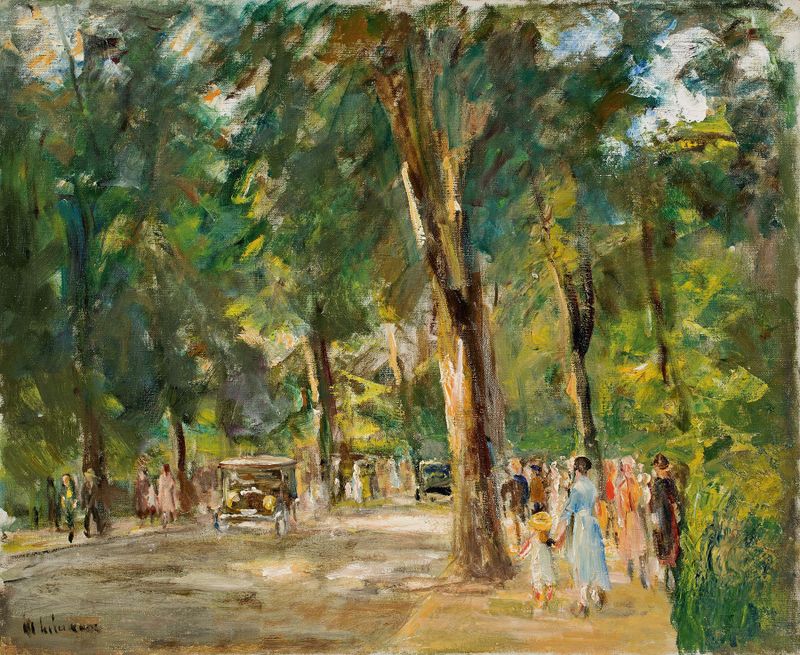
Die Große Seestraße in Wannsee mit Spaziergängern
Max Liebermann

Seitlicher Blick in den Wannseegarten
Max Liebermann

Der Rosengarten in Wannsee
Max Liebermann

Allee mit Spaziergängern und Automobilen
Max Liebermann

Blick in meinen Garten
Max Liebermann
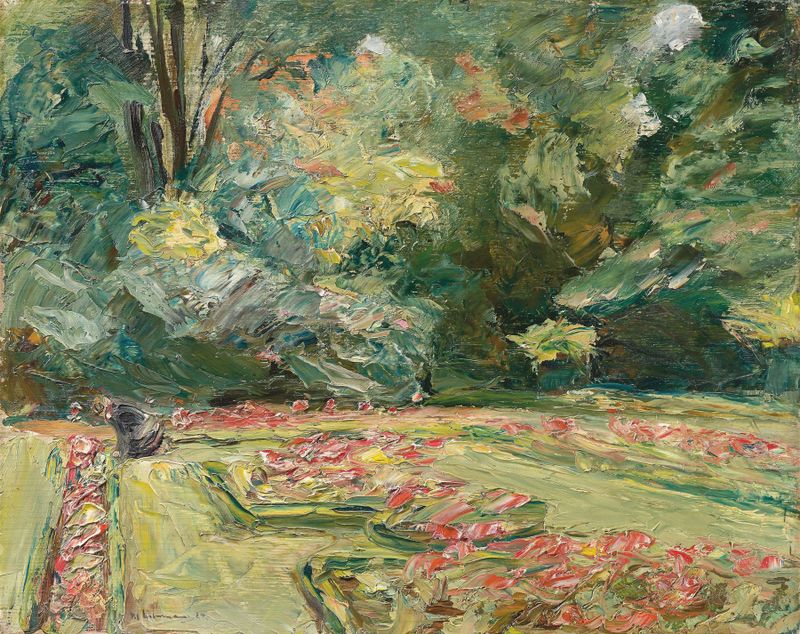
Die Blumenterrasse im Wannseegarten nach Norden
Max Liebermann

Spielende Kinder am Strand
Max Liebermann
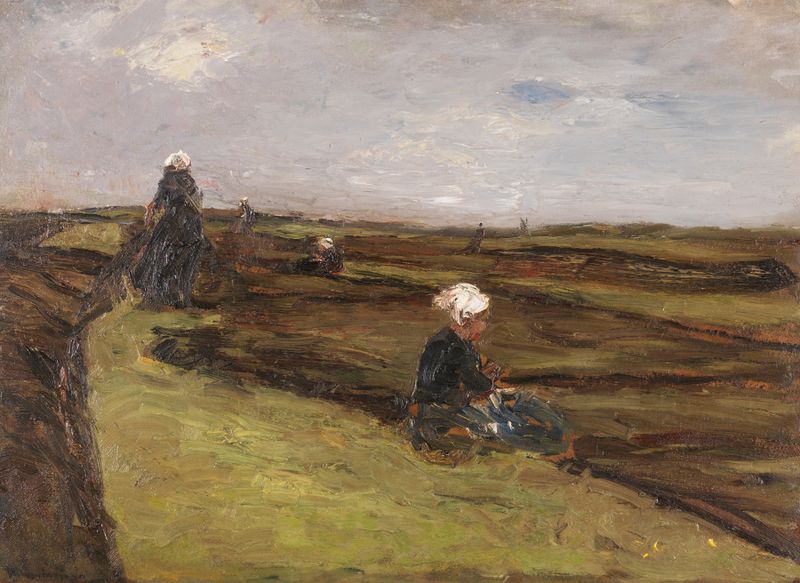
Die Netzflickerinnen
Max Liebermann

Am Strand von Noordwijk
Max Liebermann
More Architecture Art
Browse all →
The statue of Liberty
Frédéric Auguste Bartholdi

View of Houses in Delft, Known as ‘The Little Street’
Johannes Vermeer

View of Houses in Delft, Known as ‘The Little Street’
Johannes Vermeer

The Cathedral in Rouen. The portal, Grey Weather
Claude Monet

The yellow house
Vincent van Gogh

The Church in Auvers-sur-Oise, View from the Chevet
Vincent van Gogh