
Gasse in Sorrent — History & Facts
What if beauty was never meant to be finished? In Carl Wuttke's Gasse in Sorrent, the viewer is drawn into an enchanting moment suspended in time, where the essence of a sun-drenched Italian street unfolds in delicate brushstrokes and luminous colors. Look closely at the play of light as it filters through vibrant foliage lining the cobbled pathway. The warm hues of terracotta buildings contrast beautifully with the vibrant greens, inviting the eye to wander deeper into the scene. Notice how the shadows stretch and twist, giving life to the textured walls, while sparing moments of clarity reveal the inviting warmth of this coastal town.
Each element is meticulously placed, weaving together a tapestry of daily life that pulses with an unspoken vibrancy. Yet, it's in the subtleties that deeper meanings emerge. The narrow passageway suggests confinement, evoking a sense of intimacy and serenity juxtaposed against the bustling life just beyond its threshold. The delicate interplay of light and shadow hints at transience—moments fleeting but profoundly beautiful.
Here, the mundane is elevated; in the stillness, one senses the ripe potential of life, a reminder that beauty can reside in the simplest of experiences. In 1882, Wuttke painted this piece during a period of burgeoning artistic exploration across Europe. Residing in Italy, he was captivated by the landscapes and local culture, merging Romanticism with a fresh perspective on realism. It was a time when the art world was beginning to embrace impressionistic techniques, reflecting an evolving understanding of light, color, and the human experience.
More Artworks by Carl Wuttke
Browse all →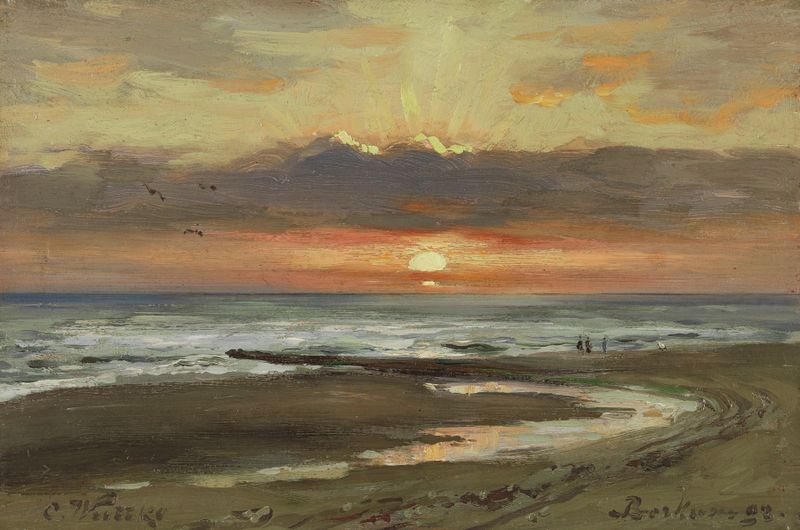
Sonnenuntergang auf Borkum
Carl Wuttke

Orientalischer Basar
Carl Wuttke

Blick vom antiken Theater in Taormina auf den Ätna
Carl Wuttke
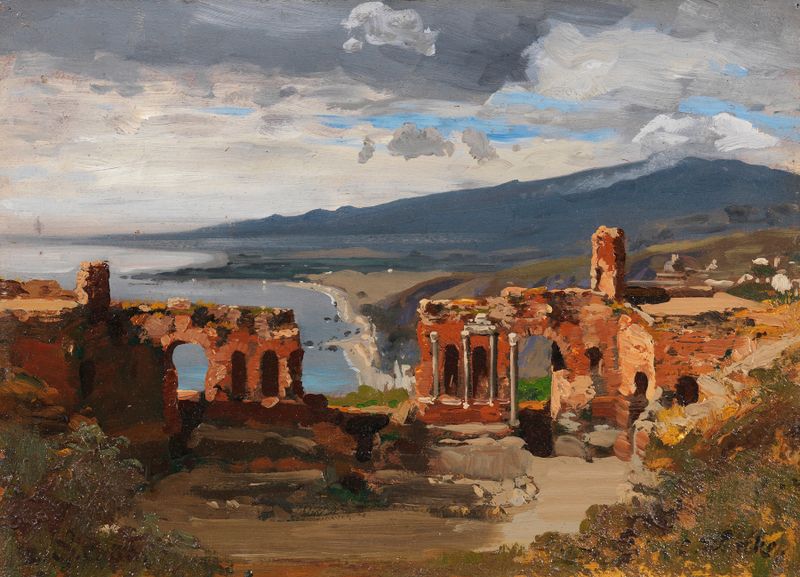
Blick vom antiken Theater in Taormina auf den Ätna
Carl Wuttke
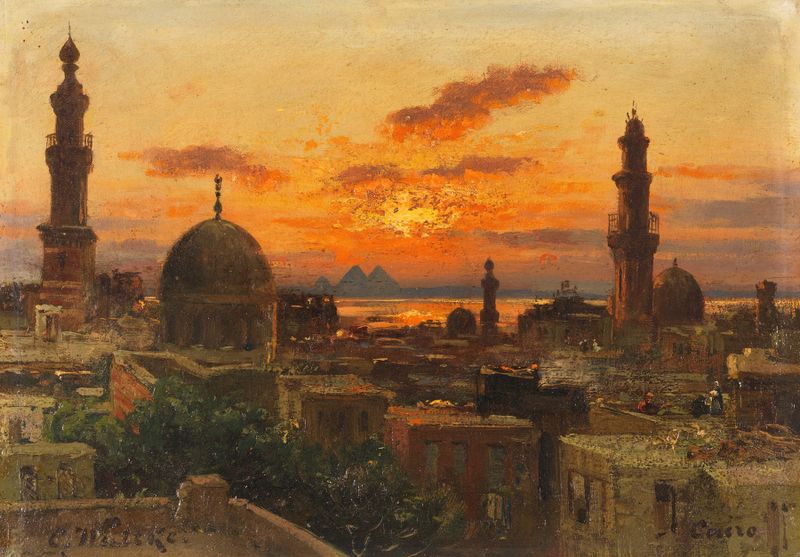
Kairo im Abendlicht
Carl Wuttke
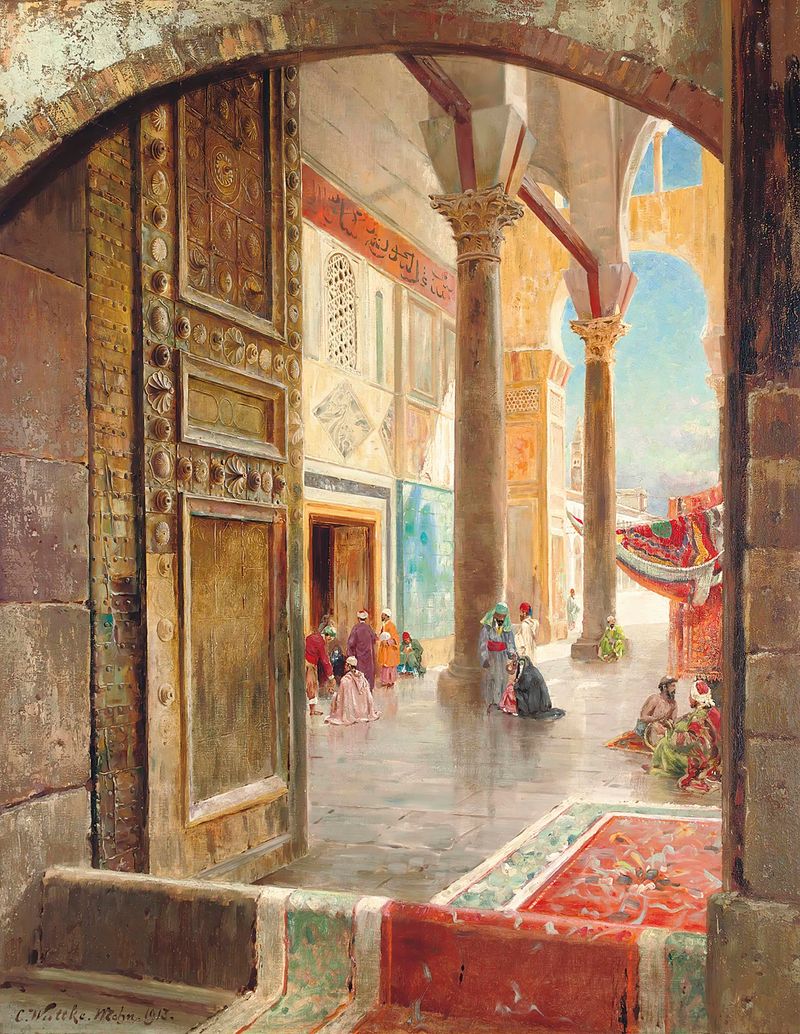
The Great Umayyad Mosque, Damascus
Carl Wuttke
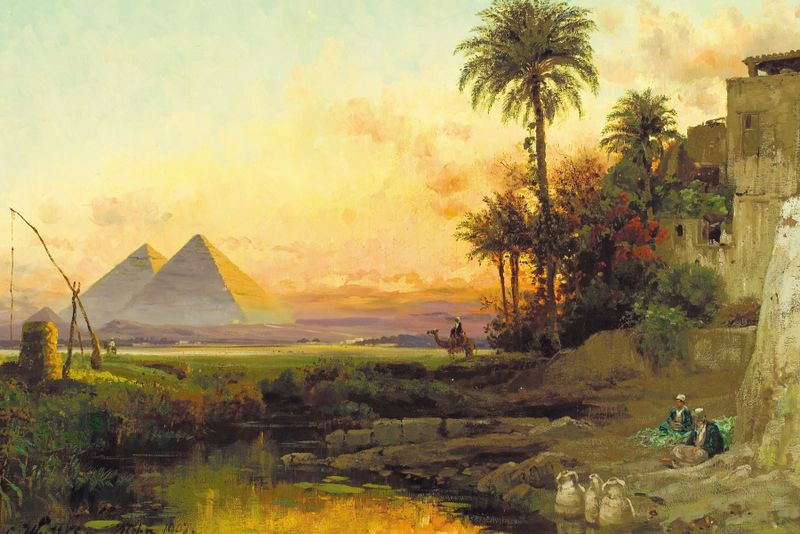
The Pyramids at Dusk
Carl Wuttke

Ansicht von Kairo mit dem Südtor der Stadtmauer
Carl Wuttke

Hügellandschaft in Westbengalen
Carl Wuttke
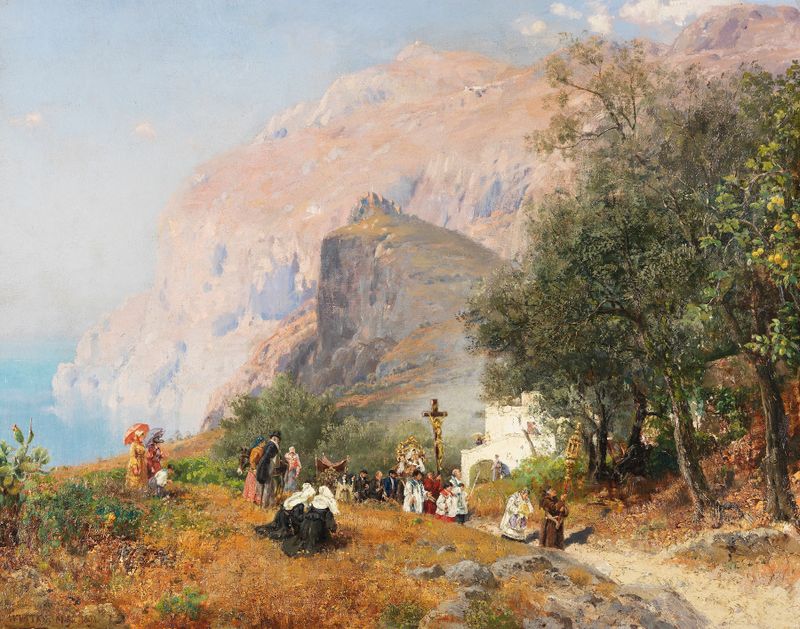
Prozession auf Capri
Carl Wuttke





