Gast bei einer ungarische Bauernfamilie — History & Facts
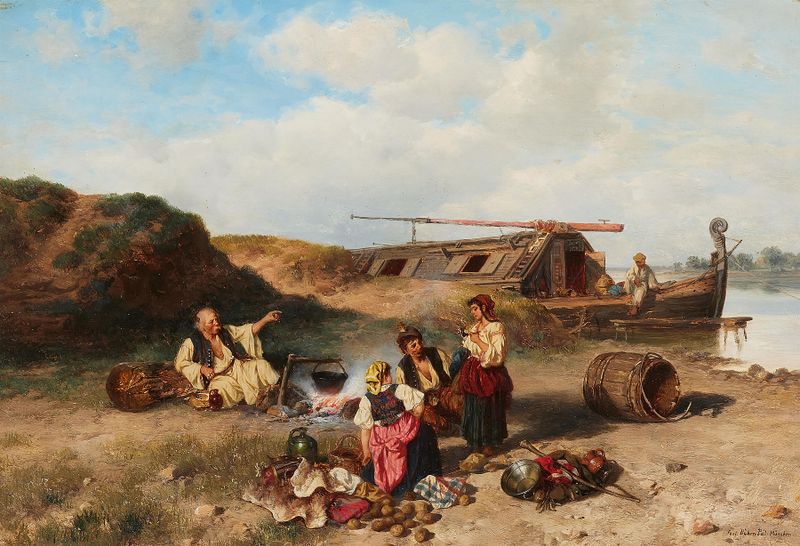
This notion of divinity reveals itself in the gentle chaos of everyday life, where moments of beauty and divine connection emerge in the simplest of gatherings. Focus on the central figure, a Hungarian farmer, his weathered hands cradling a bowl of steaming stew, embodying the spirit of sustenance and hospitality. Notice the warm palette of earthy tones, blending ochres and deep greens, which envelops the scene, creating an atmosphere that feels almost sacred. The light, filtered through wooden beams, casts soft shadows that dance across the faces of the family, inviting the viewer into this intimate moment. Within this tranquil setting lies a profound contrast between the ruggedness of rural life and the warmth of community.
Look closely at the expressions on their faces — a mixture of pride, gratitude, and perhaps a hint of weariness — revealing the interplay of labor and love that defines their existence. Each figure tells a story of resilience and devotion, resonating with a deeper sense of divine connection that transcends the canvas. Paul Böhm painted this work during a time of growing interest in folk themes and the everyday lives of ordinary people. As he captured the essence of a Hungarian family gathering, he was part of a broader movement that sought to celebrate regional identities in art.
His work reflects a period of personal exploration and a desire to connect with the culture and spirit of rural Hungary, an experience that would leave an indelible mark on his artistic journey.