
Gate house, monastery, Nikolai — History & Facts
Few artists in Ukrainian history are as revered as Taras Shevchenko, but it is less widely known that before his fame as a poet, he was trained as a painter and produced works like Gate house, monastery, Nikolai in 1838, the very year he gained his freedom from serfdom. This painting dates from a pivotal moment: Shevchenko had just been ransomed by Russian artists and intellectuals, who recognized his talent and sent him to the Imperial Academy of Arts in Saint Petersburg. The work thus stands at the threshold of his new life, capturing the world he was leaving behind as well as the one he was about to enter. The scene presents the entrance to the Monastery of St.
Nicholas, its gatehouse rendered with careful attention to architectural detail and atmosphere. Shevchenko chooses a quiet moment, perhaps early morning or late afternoon, with the light falling gently on the weathered walls and the shadows stretching across the path. The gatehouse dominates the composition, its solidity suggesting both sanctuary and separation.
The absence of figures invites the viewer to imagine the silent routines of monastic life within, and perhaps to reflect on the boundary between the sacred and the everyday. Compared to the romanticized monastery scenes of Alexey Venetsianov, Shevchenko’s approach is more restrained, focusing on the real textures of stone and wood rather than idealized spirituality. The precise medium of Gate house, monastery, Nikolai is uncertain—some sources suggest watercolor, others pencil or ink—reflecting the practical constraints Shevchenko faced as a young artist. The painting’s early provenance is not well documented, but it is typical of the architectural studies he produced during his academic training.
Today, works from this formative period are held in Ukrainian museums and archives, treasured as evidence of Shevchenko’s artistic beginnings. This painting, in particular, marks a rare intersection of personal history and national heritage, standing as a quiet testament to the artist’s dual legacy as painter and poet.
More Artworks by Taras Shevchenko
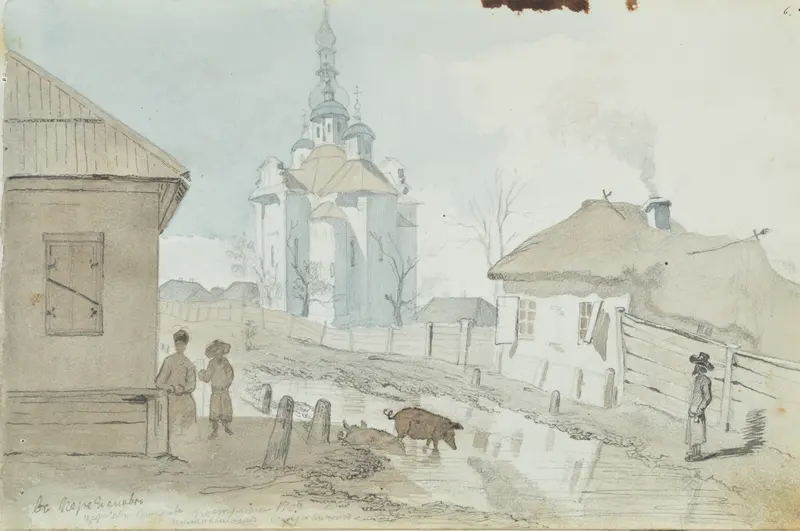
1845 Sh Sketchbook f.06r
Taras Shevchenko

1845 Sh Sketchbook f.04r
Taras Shevchenko

1848 Bilia vohnu
Taras Shevchenko
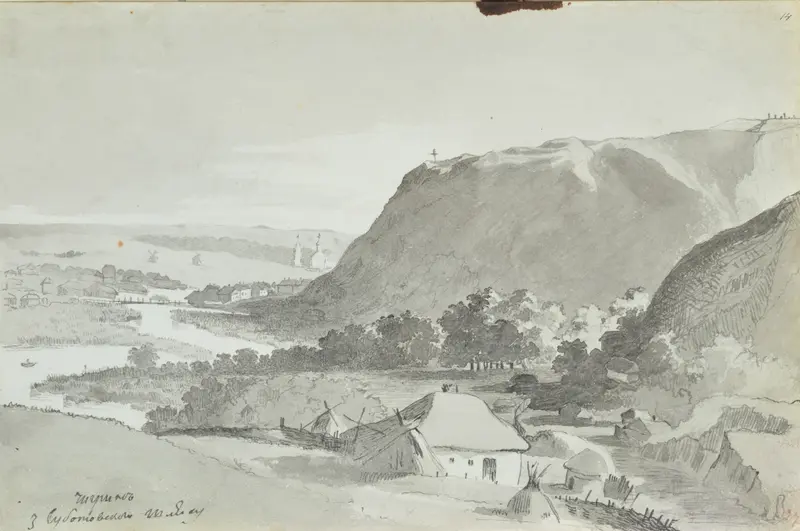
1845 Sh Sketchbook f.14r
Taras Shevchenko
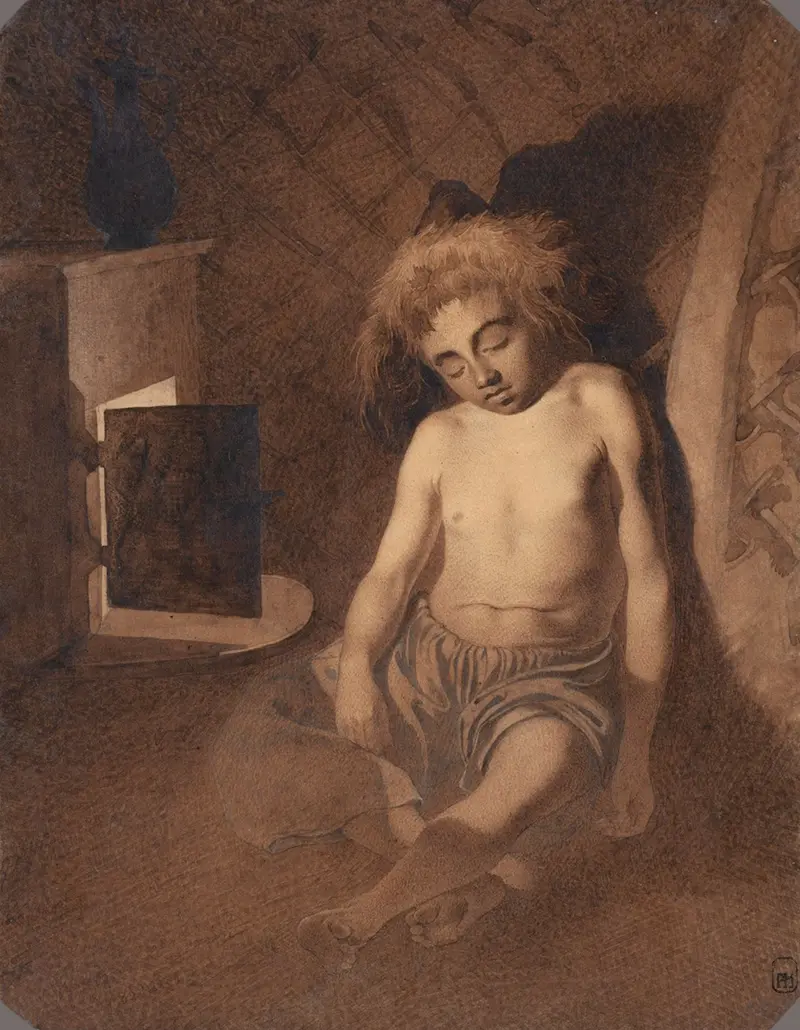
1848 Hlopcyk zasnuv
Taras Shevchenko
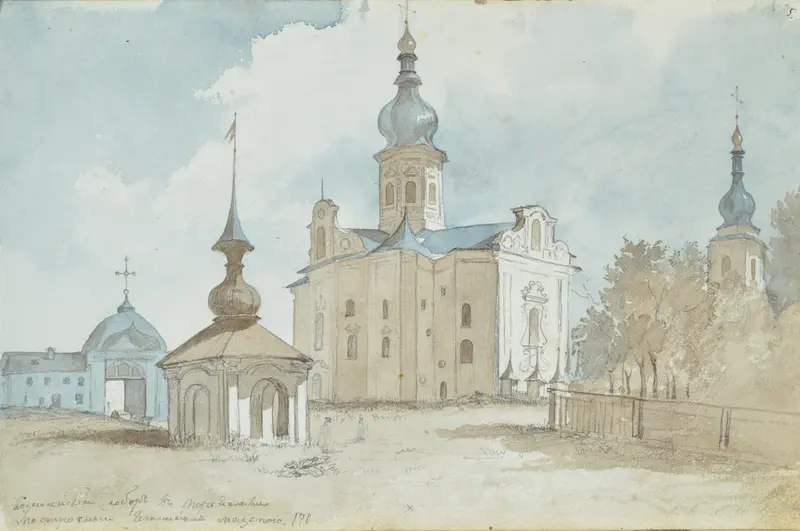
1845 Sh Sketchbook f.05r
Taras Shevchenko
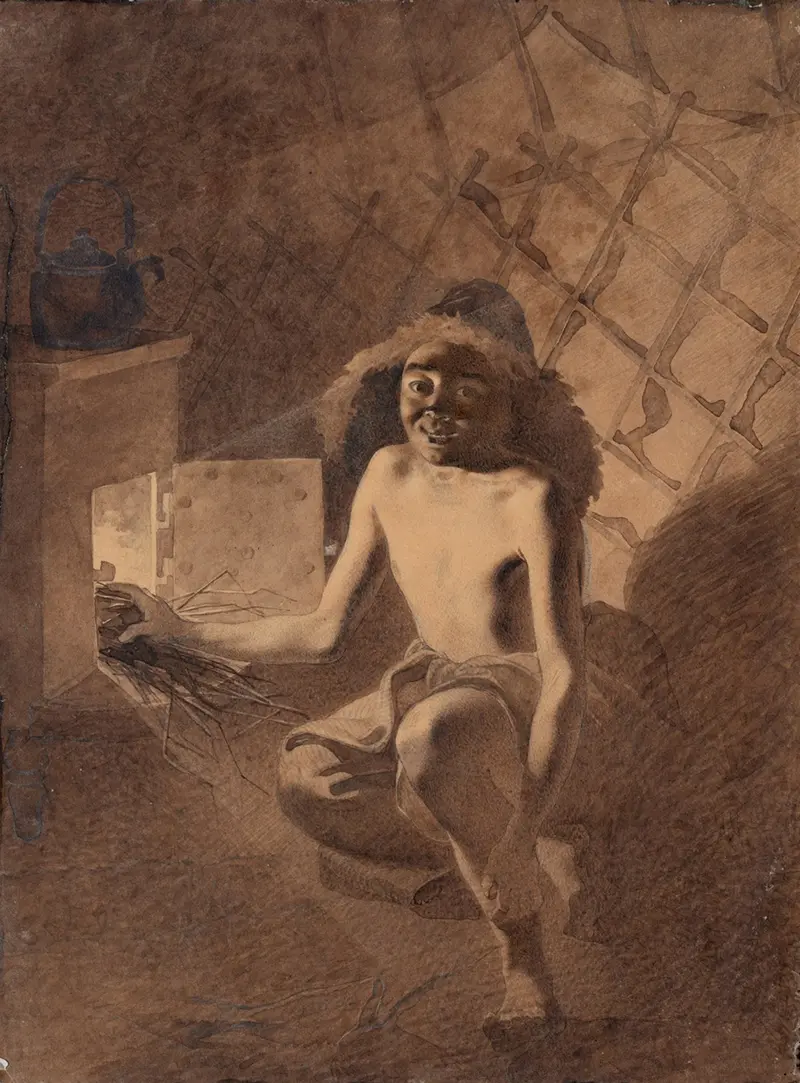
1848 Hlopcyk rozpalije
Taras Shevchenko
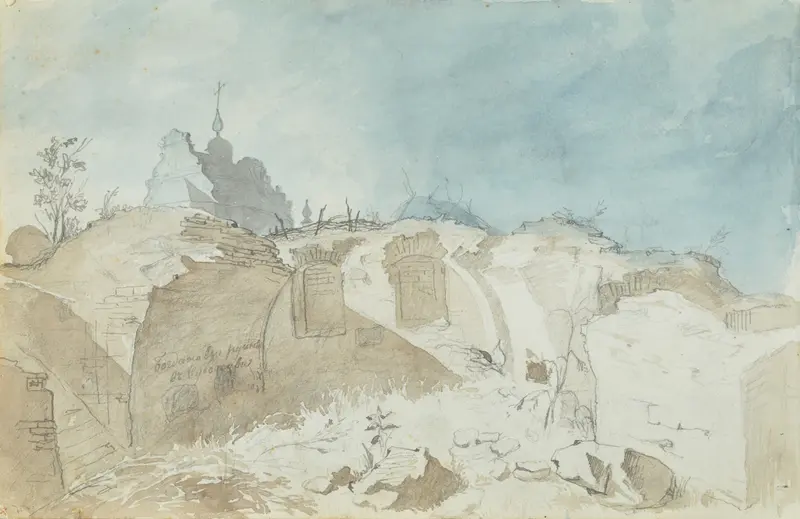
1845 Sh Sketchbook f.12v
Taras Shevchenko
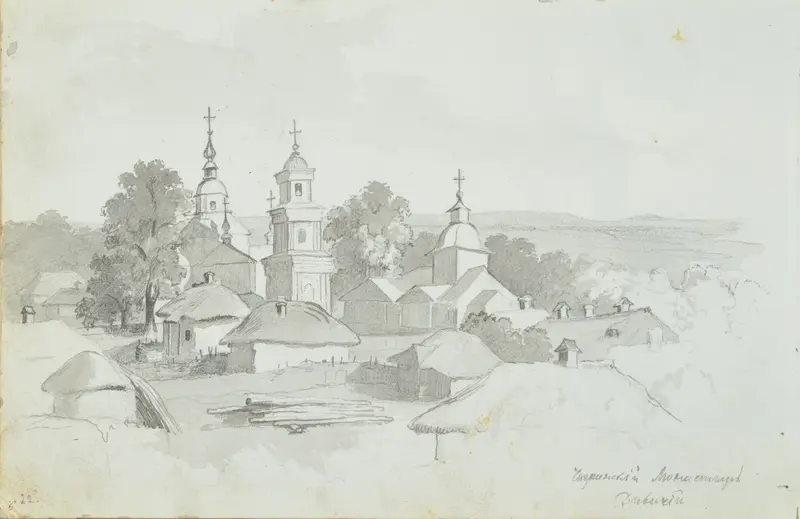
1845 Sh Sketchbook zz f.11v
Taras Shevchenko
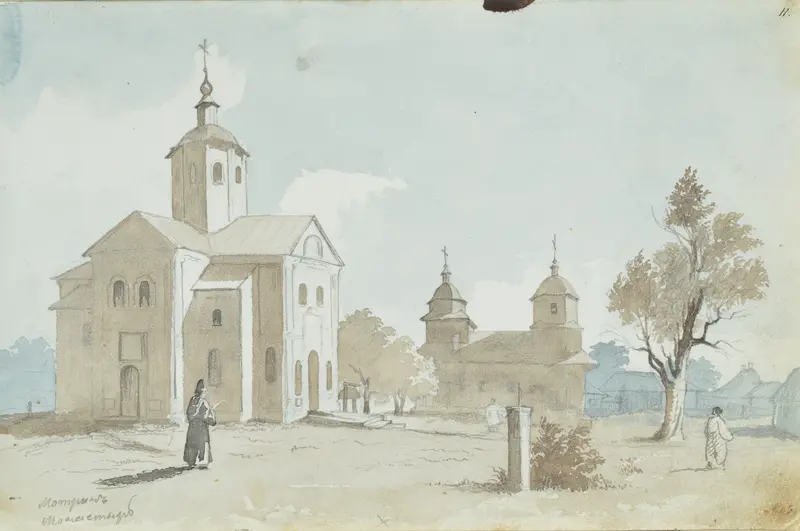
1845 Sh Sketchbook f.11r
Taras Shevchenko





