
Gebirgslandschaft — History & Facts
Who listens when art speaks of silence? In the stillness of Gebirgslandschaft, desire whispers through the untouched valleys and distant peaks, inviting contemplation and connection. Look to the center, where the mountains rise majestically, their craggy outlines softened by a gentle fog. The color palette hums with earth tones, lush greens merging with cool blues, while hints of sunlight break through the clouds, illuminating the slopes. The brushwork, fluid yet deliberate, creates a textured surface that draws the viewer into the depths of the landscape, suggesting both tranquility and latent energy. Upon closer inspection, one can sense the emotional undercurrents that pulse beneath the serene exterior.
The juxtaposition of sharp, rugged mountain faces against the smoothness of the valley below evokes a feeling of longing—a desire for connection to nature's grandeur and beauty. The winding path that snakes through the foreground hints at journeys taken and those still to come, symbolizing the human spirit's quest for exploration and understanding amidst the vastness of the natural world. In 1855, Ludwig Halauska painted this piece while living in a Europe on the brink of transformation, where Romanticism was giving way to the burgeoning influences of realism. This era saw artists striving to capture the sublime beauty of landscapes, reflecting both the external world and the inner workings of the human experience.
Halauska’s focus on the serene yet powerful presence of the mountains speaks to his desire to immortalize nature’s profound silence amidst a changing society.
More Artworks by Ludwig Halauska
Browse all →
Der Schneeberg in Niederösterreich von Gutenstein aus gesehen
Ludwig Halauska

A View of Klamm Castle near Imst in the Inntal in Tyrol
Ludwig Halauska
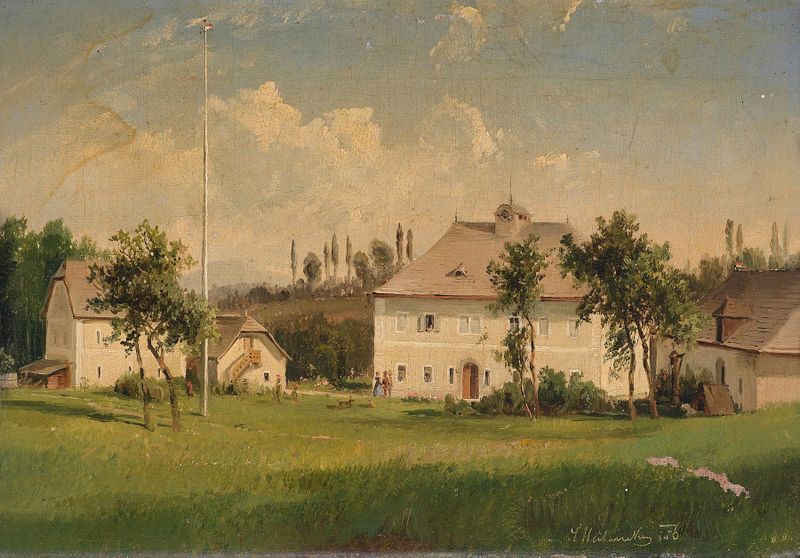
Blick auf einen Gutshof
Ludwig Halauska

Blick auf das Dorf Tutschach bei Aflenz
Ludwig Halauska
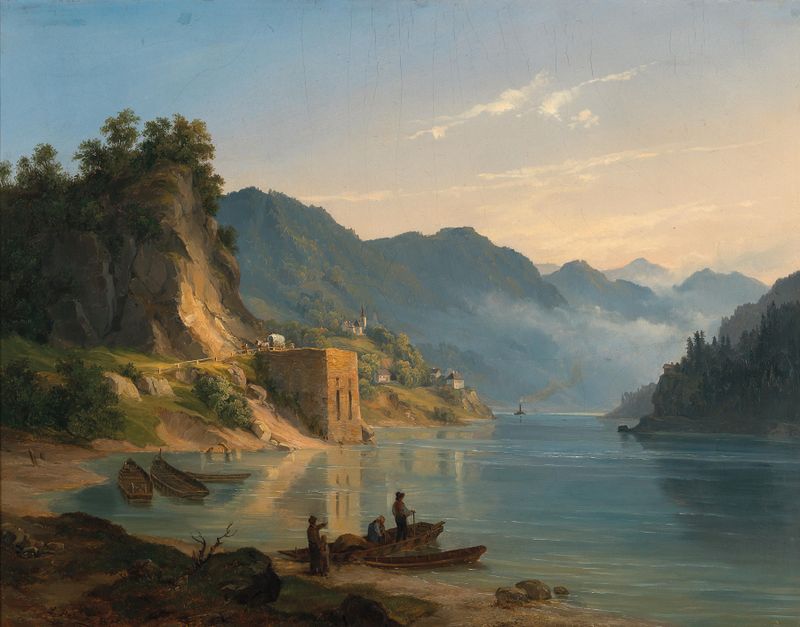
St. Nikola im Strudengau
Ludwig Halauska

Blick auf das Dorf Tutschach bei Aflenz mit dem Jauringbach im Vordergrund
Ludwig Halauska

Landschaft bei Flintsbach am Inn
Ludwig Halauska
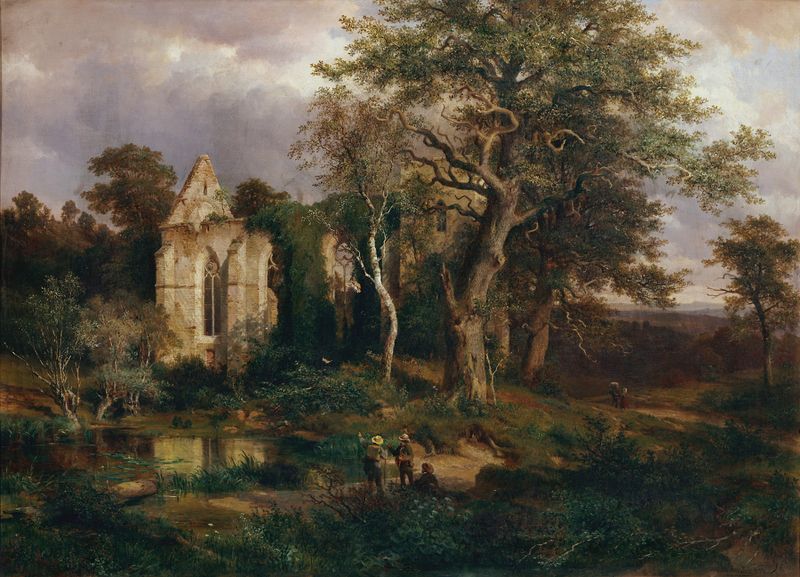
Kirchenruine
Ludwig Halauska

Partie aus Mittenwald am Karwendelgebirge
Ludwig Halauska

Sommerlandschaft
Ludwig Halauska





