
Gemälde — History & Facts
What if beauty was never meant to be finished? In the hushed corners of art, this remains an echo, reverberating through the strokes of time. Start your exploration by focusing on the intricate details of the foreground. Notice how the delicate figures, suspended in a moment of both reverie and solitude, draw the eye. The rich palette - deep blues and vibrant reds - contrast yet complement, enhancing the emotional gravity of the scene.
Each element, from the ornate garments to the soft expressions, is rendered with meticulous precision, inviting you to linger on their stories. As you delve deeper, consider the tension between the figures’ physical proximity and their palpable emotional distance. Their gazes seem to wander, suggesting an unfulfilled yearning for connection. The light, softly illuminating their forms, underscores a pervasive sense of loneliness, as if beauty itself is an incomplete narrative, forever yearning for resolution.
Each brushstroke hints at the fragility of their existence, portraying a poignant contrast between the vibrancy of life and the weight of isolation. This work was created during the early Renaissance, a period marked by a burgeoning awareness of individualism and a deepening engagement with the human experience. The artist, attributed to the Meister der Pollinger Tafeln, painted in a time when Europe was embracing new artistic techniques and exploring themes of the self. The contemplation of beauty, loneliness, and connection became central to the art of the era, as society grappled with the complexities of human emotions and relationships.
More Artworks by Meister der Pollinger Tafeln (Herstellung), 1439-1444 (zugeschrieben)
Browse all →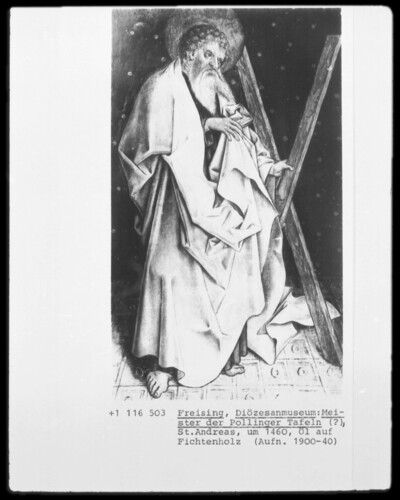
More Religious Art
Browse all →
The Return of the Prodigal Son
Rembrandt van Rijn

The Garden of Earthly Delights
El Bosco

Count Orgaz’ funeral
El Greco

The Hundred Guilder Print: the central piece with Christ preaching, the plate arched
Rembrandt van Rijn

The Descent from the Cross
Rogier van der Weyden

The return of the prodigal son
Rembrandt van Rijn