
General wounded — History & Facts
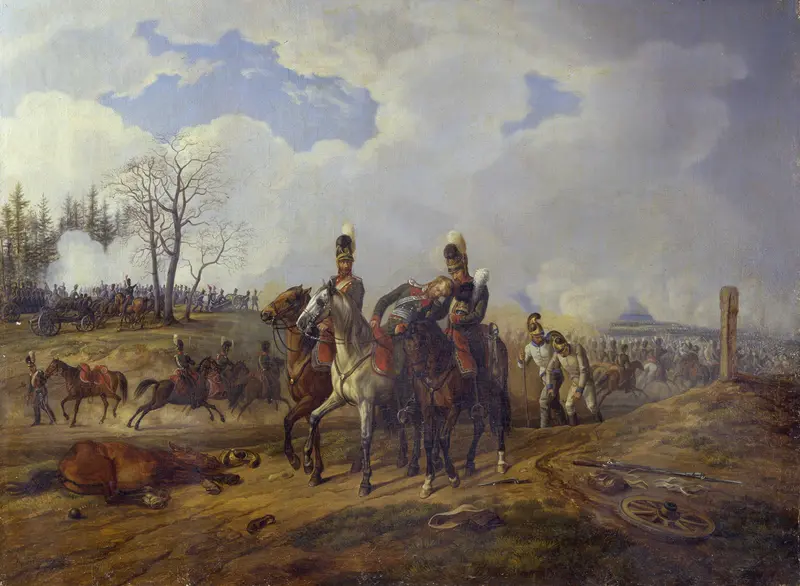
The hush of aftermath settles over this scene, where the drama is not in the clash of battle but in its quiet, human consequence. Beneath the sheltering branches of a tree, a wounded officer reclines, his head gently supported by a comrade whose red trousers and dark shako mark him as a soldier of the Napoleonic era. The fallen officer’s gaze is fixed upward, his uniform still immaculate, the glint of medals and epaulettes a reminder of rank and recent action.
The light falls softly on his pale face, drawing the viewer’s attention to the intimacy of this moment—a private reckoning between life and death, witnessed only by the loyal attendant and the horses standing patiently nearby. The officer’s sword and hat lie discarded in the grass, silent symbols of a struggle now paused. Painted around 1802, General wounded by Albrecht von Adam belongs to a world where military portraiture and battle scenes were in high demand, commissioned by officers, families, and states eager to commemorate both victory and sacrifice. The early nineteenth century saw artists turning their attention not only to the spectacle of war, but to its personal cost—the wounded, the fallen, the moments of care and vulnerability that followed the charge.
Works like this, now housed in the collection of the Museo Nacional de Bellas Artes, remind us that history is made not only in the thunder of cannon but in the quiet aftermath beneath a tree, where uniforms are stained not with glory, but with the price it exacts. The stillness of the horses, the dusk light, and the careful rendering of military dress invite us to linger, searching for the story behind the silence.
More Artworks by Albrecht von Adam

Peasants Resting in the Field
Albrecht von Adam
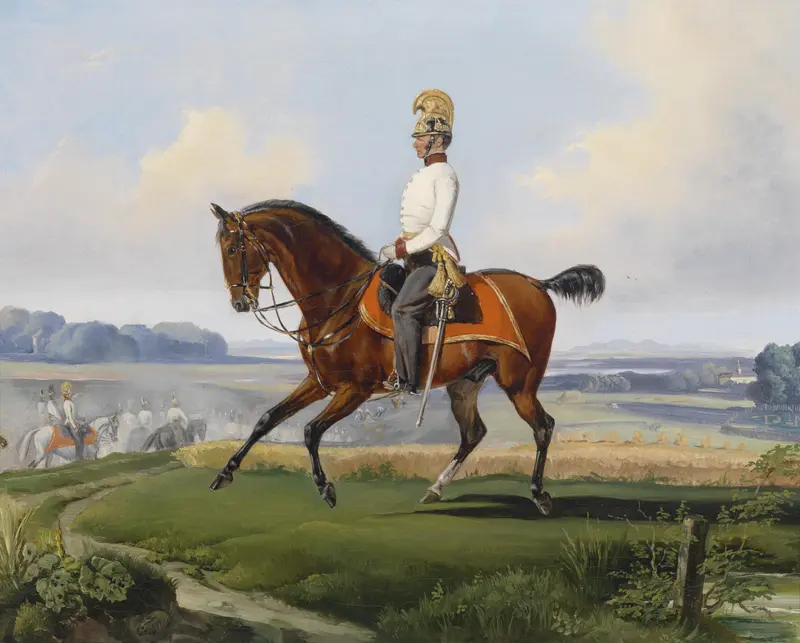
Portrait Oberleutnant Theodor von Klein zu Pferde
Albrecht von Adam
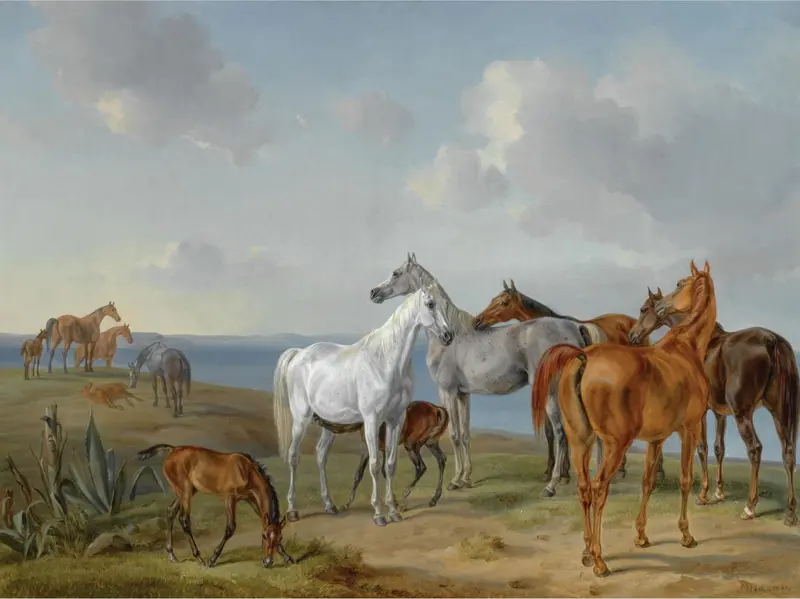
Arabian Horses at Pasture
Albrecht von Adam
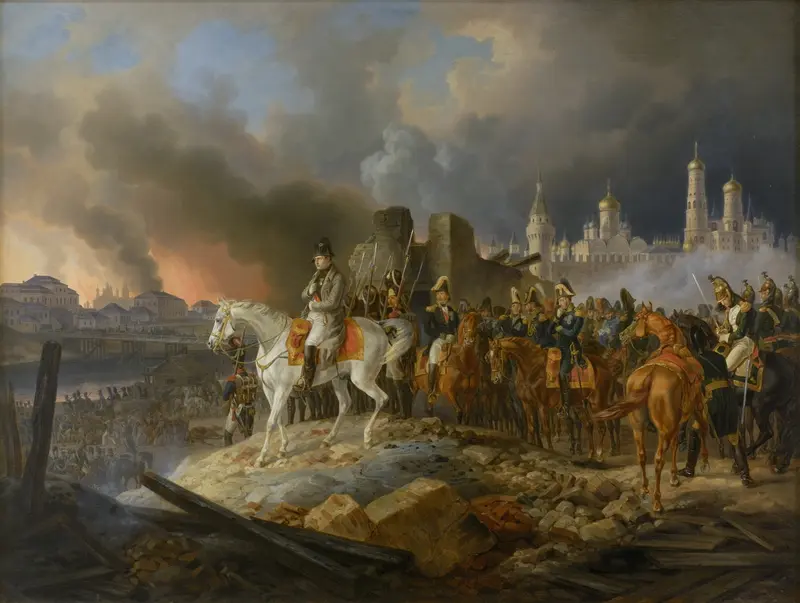
Napoleon in burning Moscow - Adam Albrecht
Albrecht von Adam
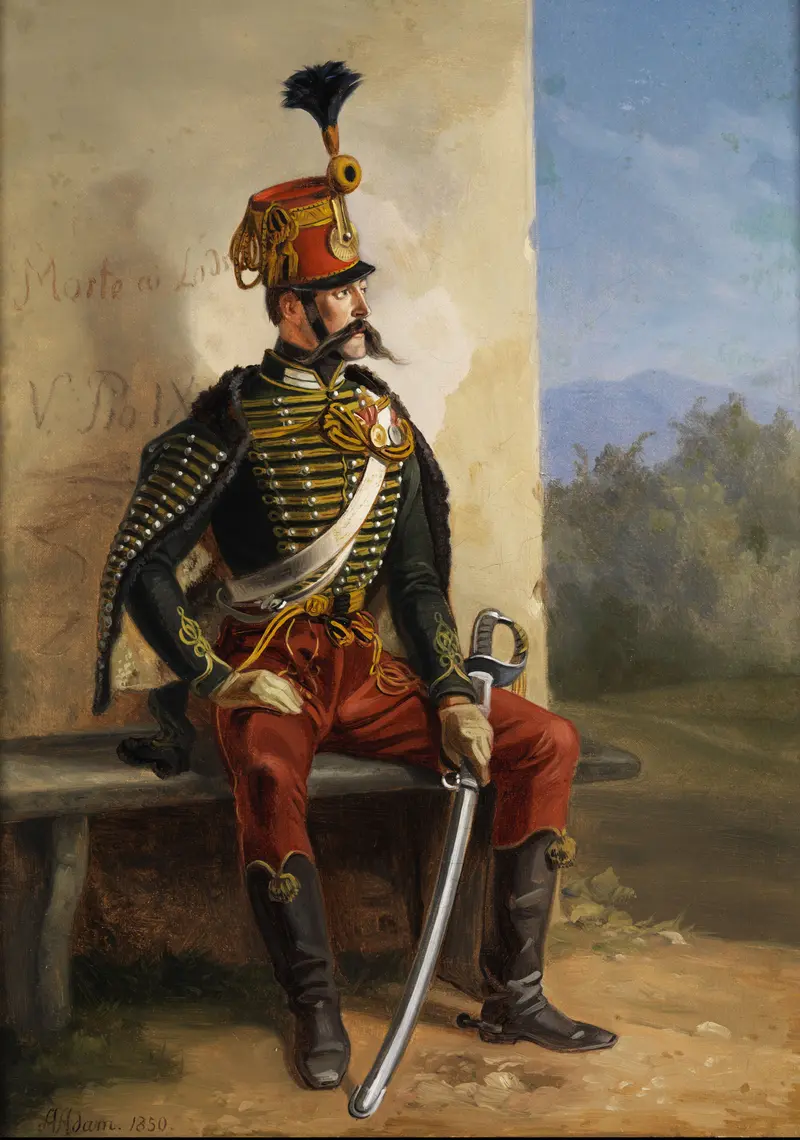
Soldat bei der Rast
Albrecht von Adam
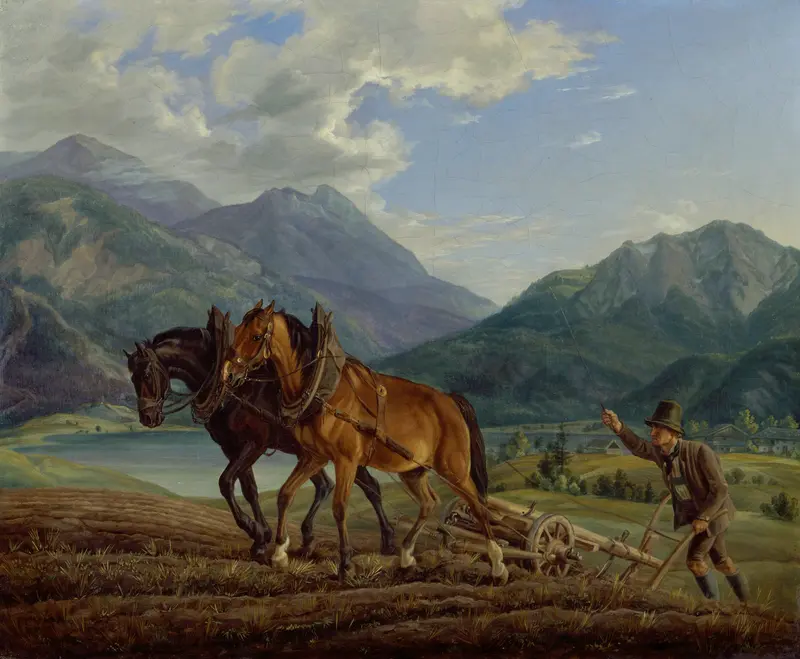
Gebirgslandschaft mit pflügendem Bauern G 303 Lenbachhaus
Albrecht von Adam
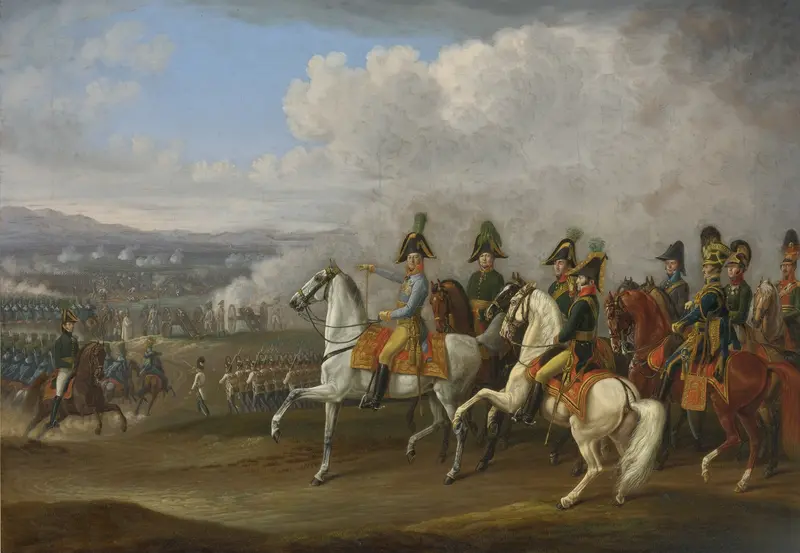
General von Bellegarde and his officers cbserving a battle
Albrecht von Adam
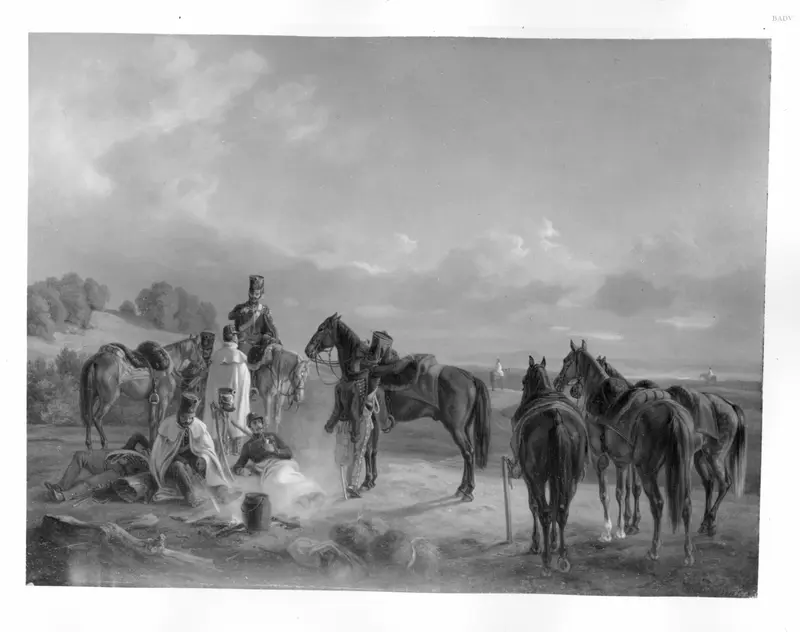
Soldaten und Pferde am Lagerfeuer 0420 Führermuseum
Albrecht von Adam
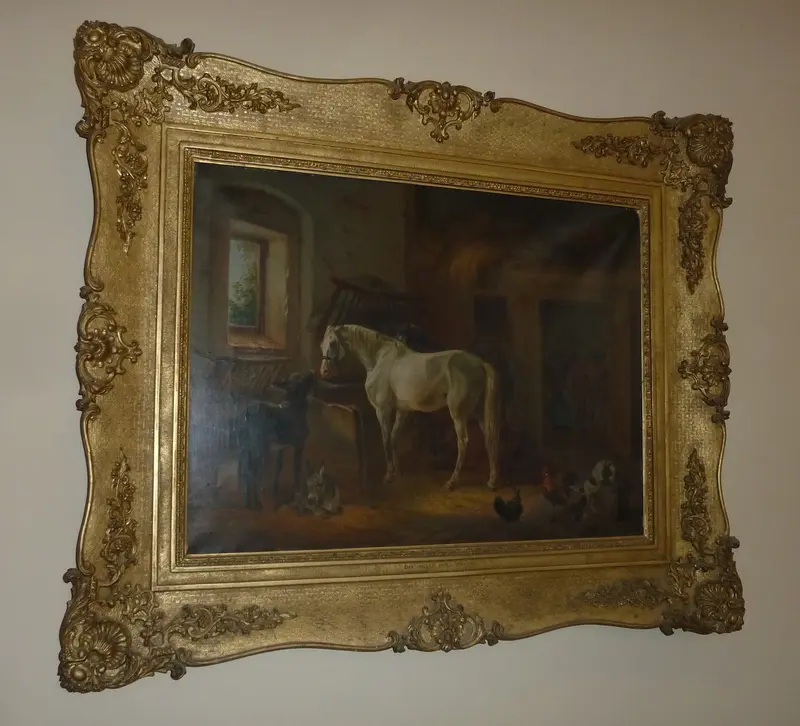
Interior of a Stable
Albrecht von Adam
Die Schlacht bei Abensberg am 20. April 1809
Albrecht von Adam





