
Soldat bei der Rast — History & Facts
What first catches the eye is the soldier’s unmistakable air of vigilance, even at rest. The crisp, gleaming buttons and braids of his uniform demand attention, their metallic shine echoed in the medals pinned to his chest—each one a silent witness to past campaigns. His posture, half-seated on a rough bench, is both relaxed and alert: one hand gripping his curved saber, the other resting on his thigh, ready to spring to action.
The wall behind him bears graffiti—faded, urgent words in Italian—hinting at a foreign land and the tensions simmering just out of view. Light pours in from the right, illuminating the soldier’s face and uniform, while the distant blue hills dissolve into a haze, reminding us that the world of battle is never far away. Painted in 1850 by Albrecht von Adam, this work belongs to a tradition that flourished in nineteenth-century Europe, when artists and patrons alike were captivated by the romance and reality of military life. Such images were often commissioned to commemorate campaigns or honor individual soldiers, and they reflect both the pride and the anxieties of a continent in flux.
The Italian graffiti on the wall roots this scene in a period when the Italian peninsula was a patchwork of contested territories, and foreign uniforms were a familiar sight. While history has kept few traces of this particular soldier or his story, Soldat bei der Rast stands as a vivid fragment of its era—inviting us to search the face, the medals, and the landscape for echoes of a world on the cusp of change.
More Artworks by Albrecht von Adam

Peasants Resting in the Field
Albrecht von Adam
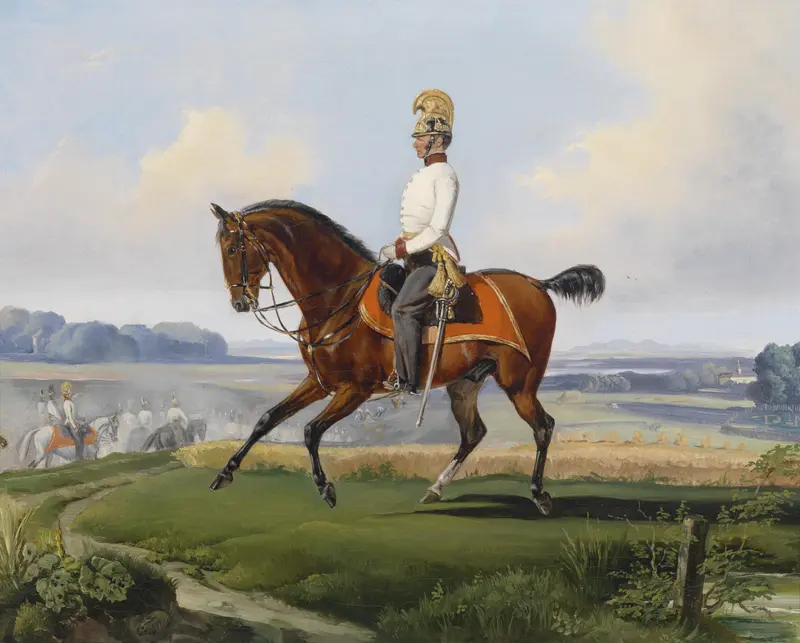
Portrait Oberleutnant Theodor von Klein zu Pferde
Albrecht von Adam
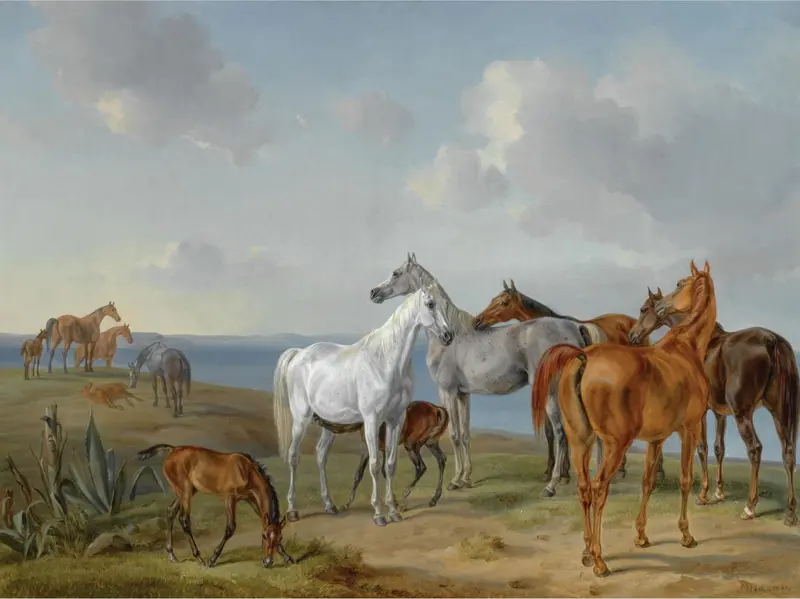
Arabian Horses at Pasture
Albrecht von Adam
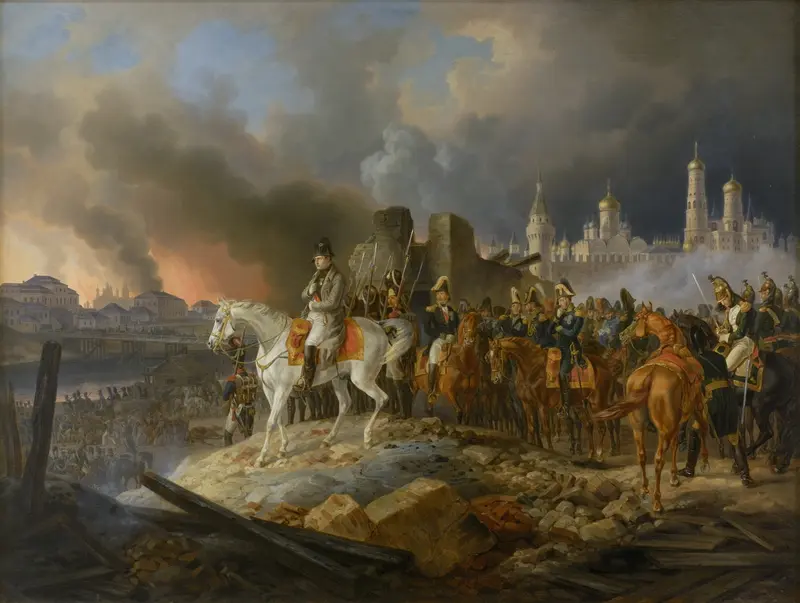
Napoleon in burning Moscow - Adam Albrecht
Albrecht von Adam
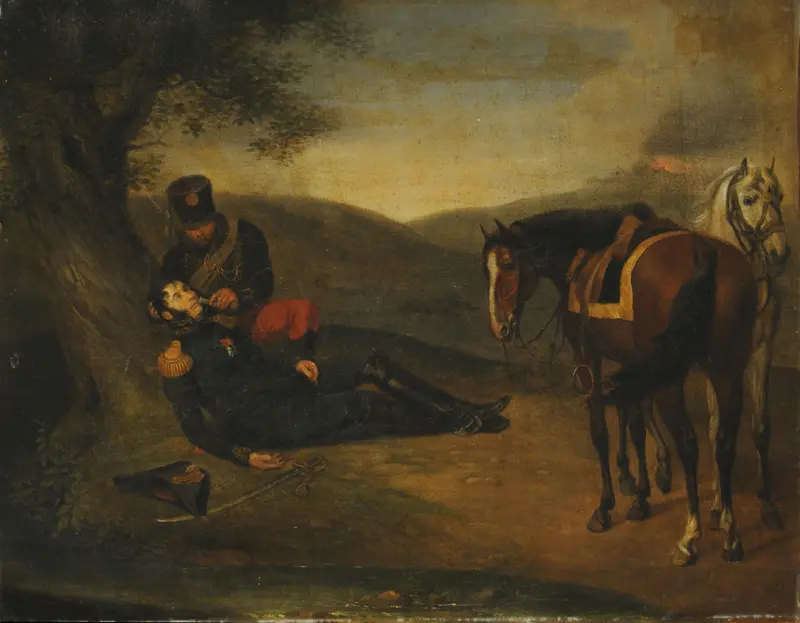
General wounded
Albrecht von Adam
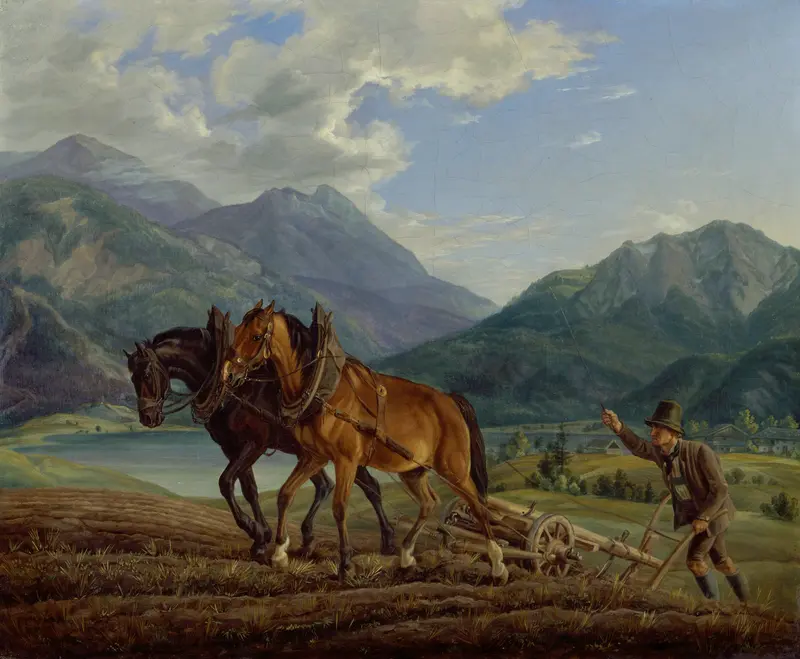
Gebirgslandschaft mit pflügendem Bauern G 303 Lenbachhaus
Albrecht von Adam
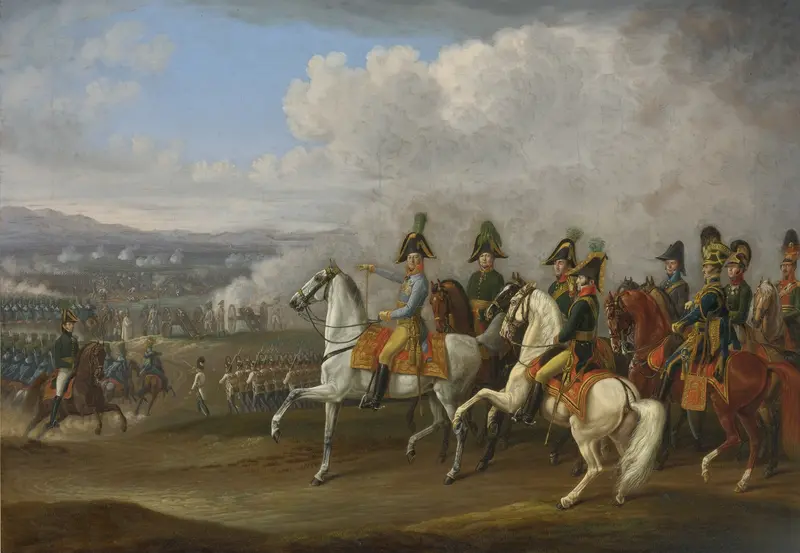
General von Bellegarde and his officers cbserving a battle
Albrecht von Adam
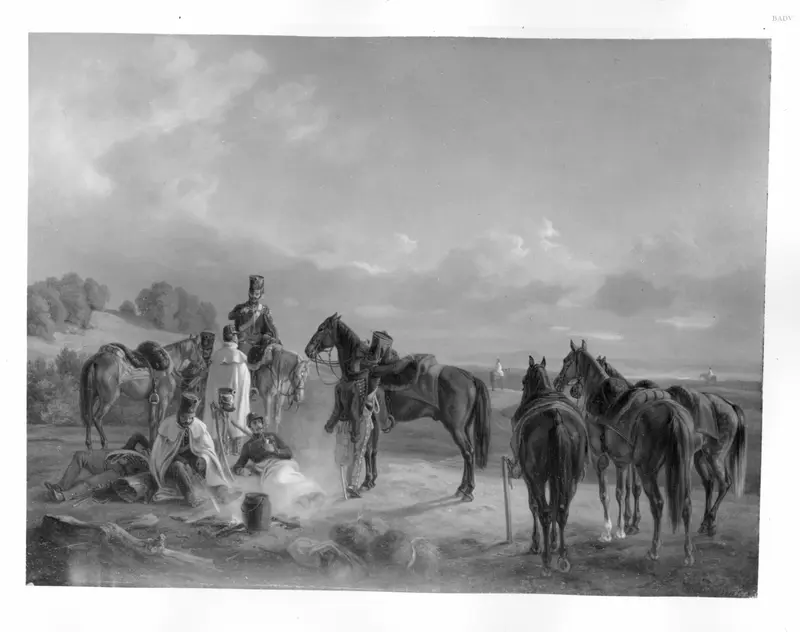
Soldaten und Pferde am Lagerfeuer 0420 Führermuseum
Albrecht von Adam
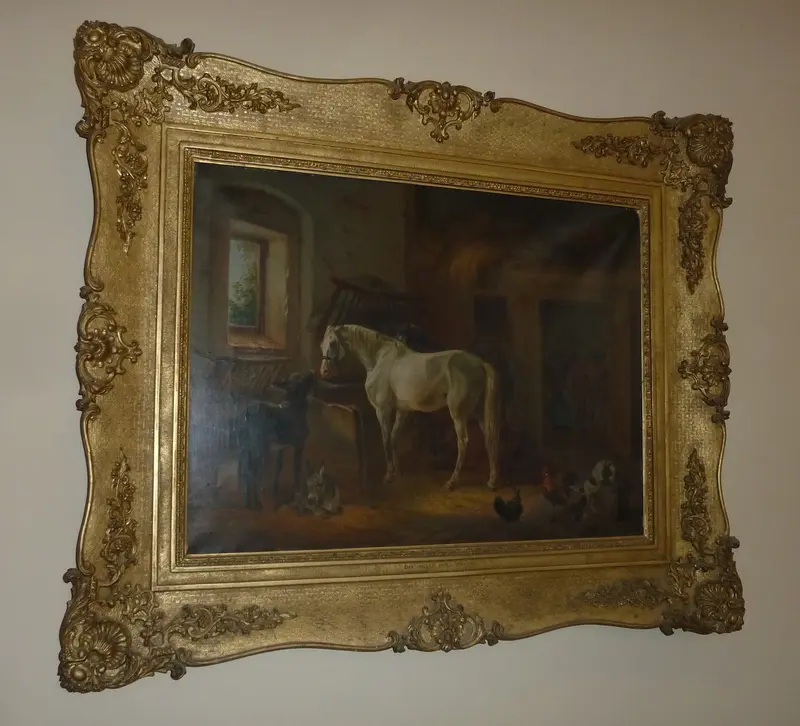
Interior of a Stable
Albrecht von Adam
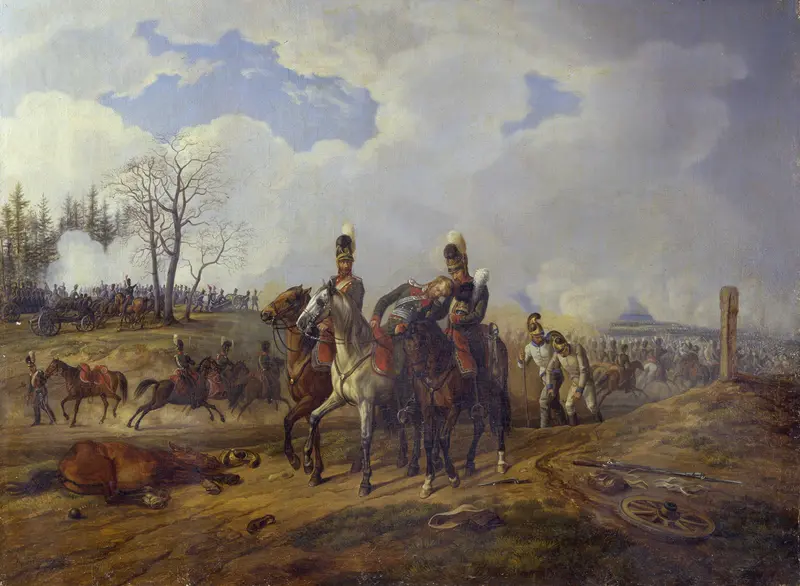
Die Schlacht bei Abensberg am 20. April 1809
Albrecht von Adam
More Genre Scene Art

Banquet of the Officers of the St George Civic Guard
Frans Hals

Rembrandt and Saskia in the Scene of the Prodigal Son
Rembrandt van Rijn

Bal du moulin de la Galette
Pierre-Auguste Renoir

Quadrille at the Moulin Rouge
Henri de Toulouse-Lautrec

A Burial at Ornans
Gustave Courbet

When Will You Marry?
Paul Gauguin