
Napoleon in burning Moscow - Adam Albrecht — History & Facts
What draws the eye first is the solitary figure on a white horse, set apart from the throng of officers and soldiers by both his bearing and the shaft of light that isolates him against the chaos. The city behind him—Moscow, unmistakable with its golden domes—smolders under a sky thick with smoke, the flames licking at the horizon. The painter, Albrecht von Adam, has frozen a moment of uneasy triumph: the conqueror surveys a ruined prize, his face unreadable, his hands clasped as if in thought or prayer.
Around him, the order of military discipline collides with the disorder of destruction—broken timbers, scattered bricks, and the dark river separating the invaders from the burning city. The palette is somber, the reds and golds of fire and uniform standing out against the ashen greys and browns, underscoring a mood of victory laced with foreboding. This painting, dated 1841 and preserved as a scan from a book, belongs to a tradition of grand historical canvases that flourished in nineteenth-century Europe. Such works were often commissioned to commemorate—or to warn against—the ambitions of rulers and the devastation of war.
Artists like von Adam, a German painter known for his military scenes, were called upon to give visual form to the turning points of their age, their canvases serving as both record and spectacle for an audience hungry for images of power and catastrophe. History has kept few traces of this particular painting’s journey, but its presence in the visual record reminds us how the Napoleonic wars continued to haunt the imagination of Europe decades after the cannons fell silent. The longer you look, the more you sense the uneasy balance between glory and ruin that defines both the scene and its era.
More Artworks by Albrecht von Adam

Peasants Resting in the Field
Albrecht von Adam
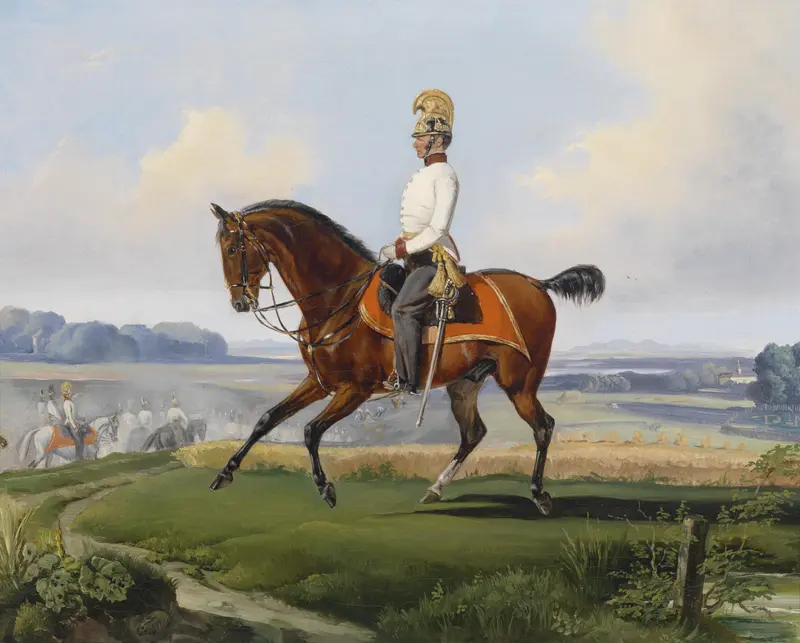
Portrait Oberleutnant Theodor von Klein zu Pferde
Albrecht von Adam
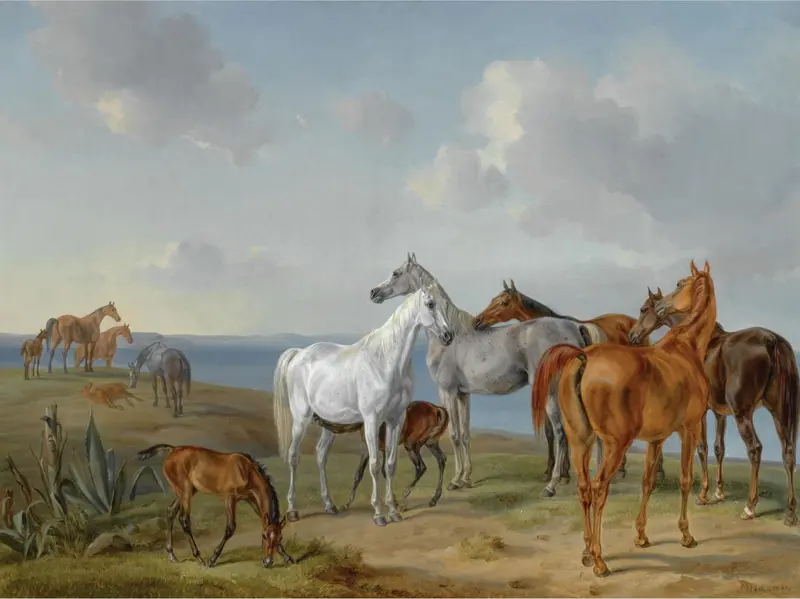
Arabian Horses at Pasture
Albrecht von Adam
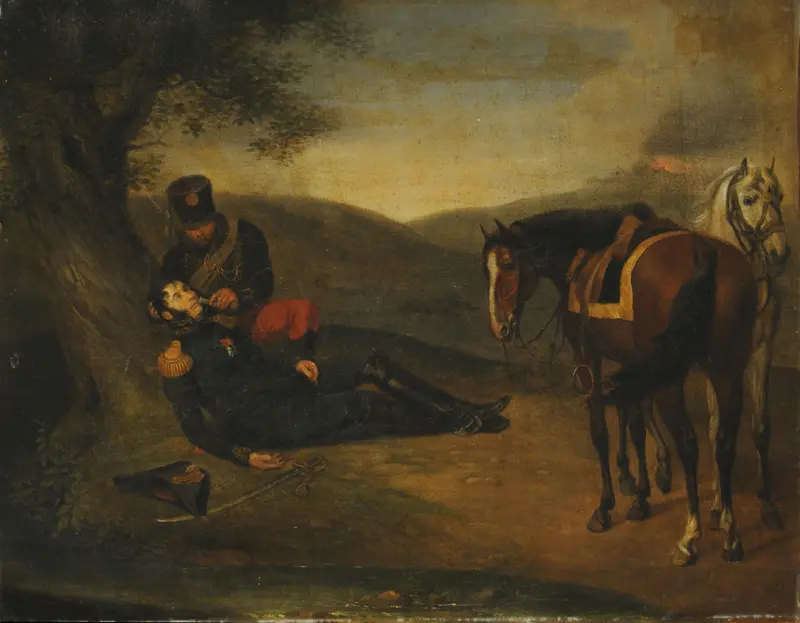
General wounded
Albrecht von Adam
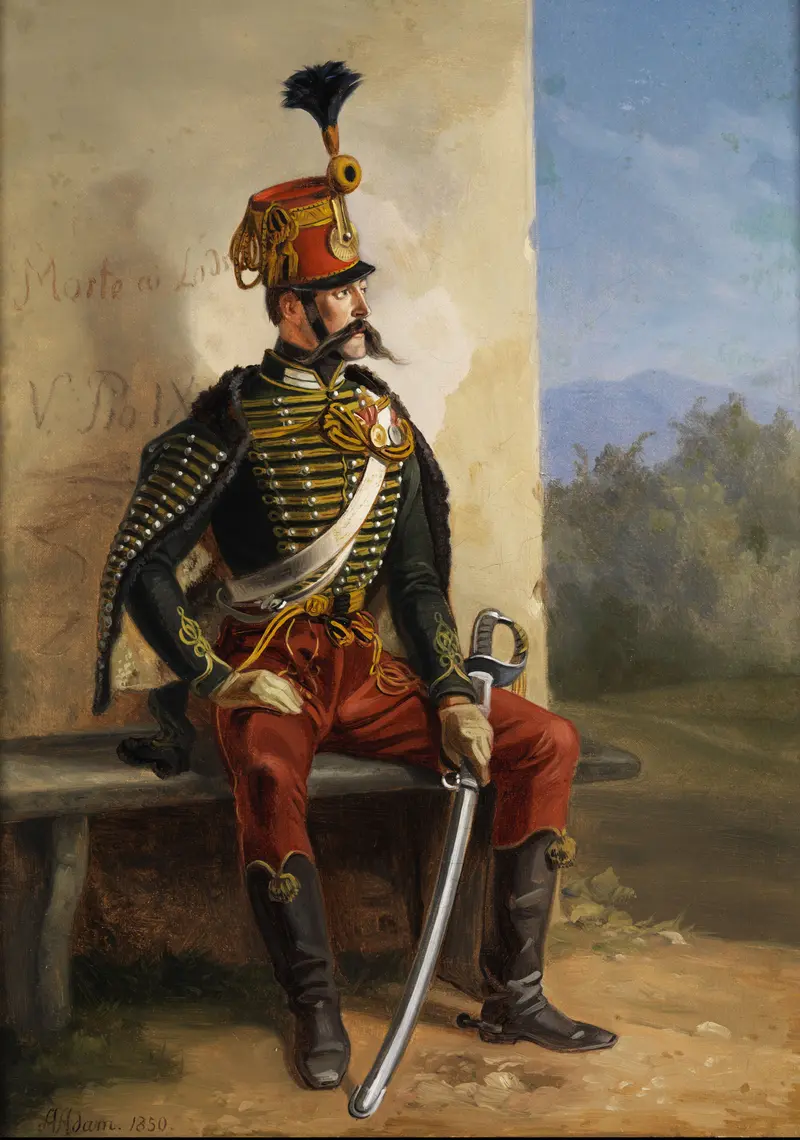
Soldat bei der Rast
Albrecht von Adam
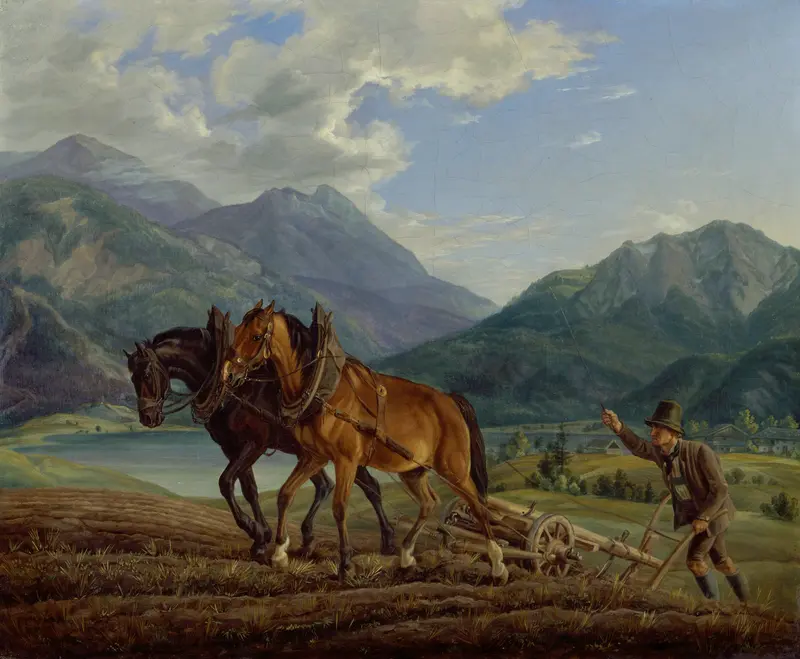
Gebirgslandschaft mit pflügendem Bauern G 303 Lenbachhaus
Albrecht von Adam
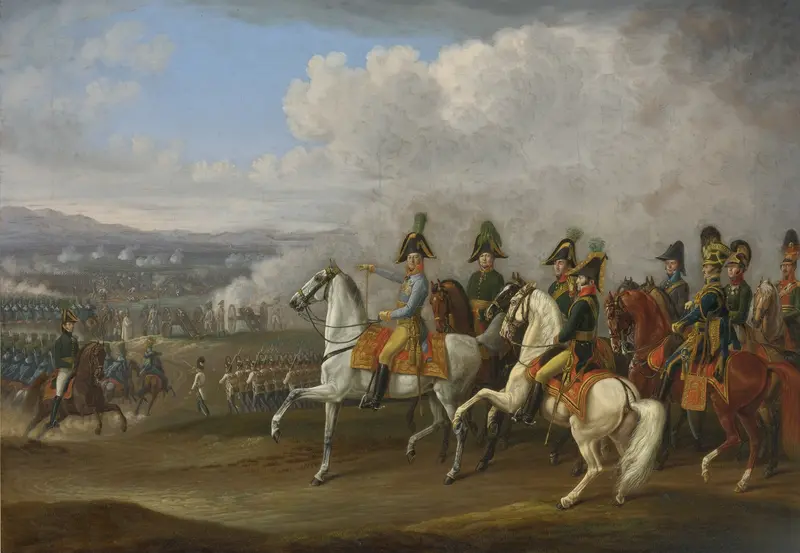
General von Bellegarde and his officers cbserving a battle
Albrecht von Adam
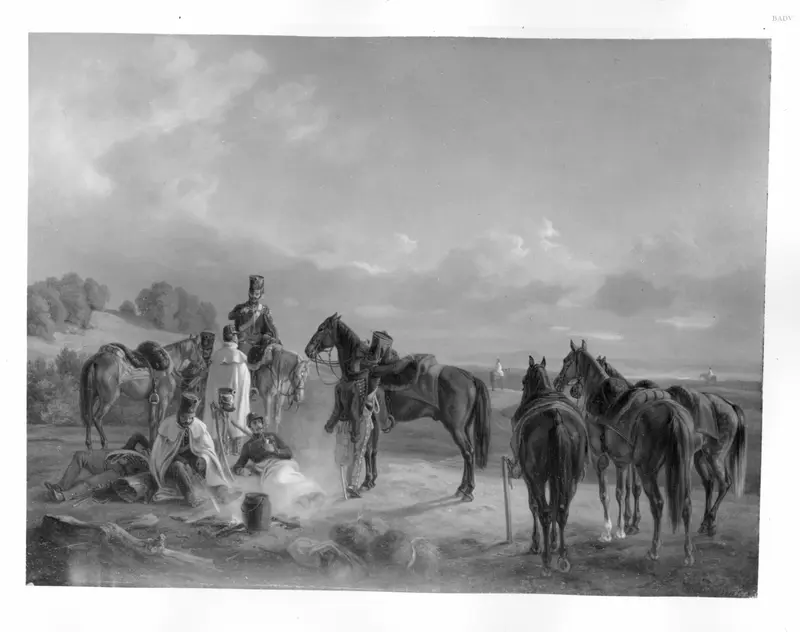
Soldaten und Pferde am Lagerfeuer 0420 Führermuseum
Albrecht von Adam
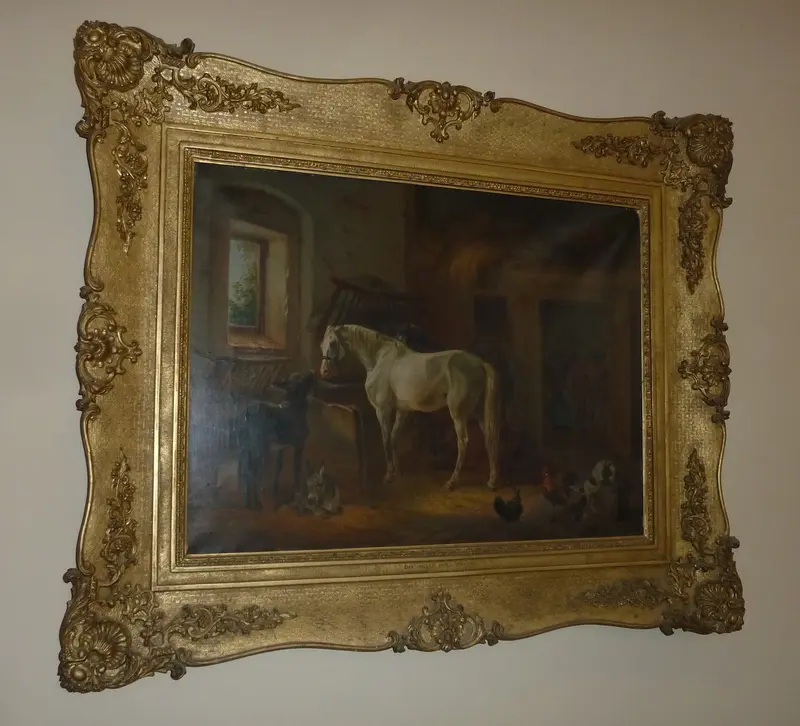
Interior of a Stable
Albrecht von Adam
Die Schlacht bei Abensberg am 20. April 1809
Albrecht von Adam





