Gerbes En Tas — History & Facts
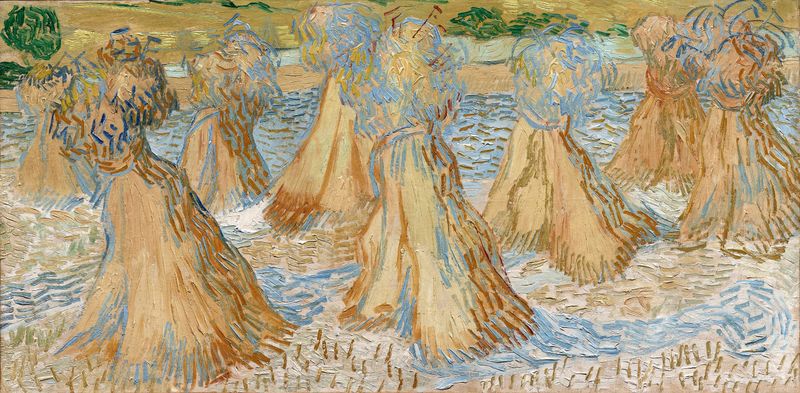
In Gerbes En Tas, the dance of movement becomes a testament to life’s unnoticed rhythms. Each stroke invites us to look deeper, illuminating the silent conversations between the artist and the essence of existence. Begin your exploration in the lower left corner, where a cascade of vibrant hues spills across the canvas. The rich tones of green and gold weave together swathes of hay, their texture almost tangible.
Notice how the light bathes the scene, creating a gentle shimmer that draws the eye upward, revealing figures immersed in the labor of harvest. The composition pulses with energy, as the careful arrangement of form suggests both chaos and harmony, blending the abstract with the intimate. Within this tapestry of life lies a poignant contrast. The figures, engrossed in their toil, evoke the struggles of the working class, their movements hinting at both fatigue and resilience.
While the foreground bursts with activity, the tranquil backdrop serves as a reminder of nature’s permanence, contrasting the fleeting nature of human effort. Each blade and stalk becomes a symbol of connection, illustrating how intertwined our lives are with the cycles of the earth. During the late 19th century, when this piece was created, Léon Augustin Lhermitte was deeply engaged with portraying rural life in France. This period was marked by a growing interest in realism and social themes, as artists sought to depict the everyday experiences of the working class.
As industrialization surged, Lhermitte's focus on the natural beauty of labor provided a counterbalance to the rapid changes in society, celebrating those who connect us to the land.
More Artworks by Léon Augustin Lhermitte
Browse all →
The Harvesters
Léon Augustin Lhermitte
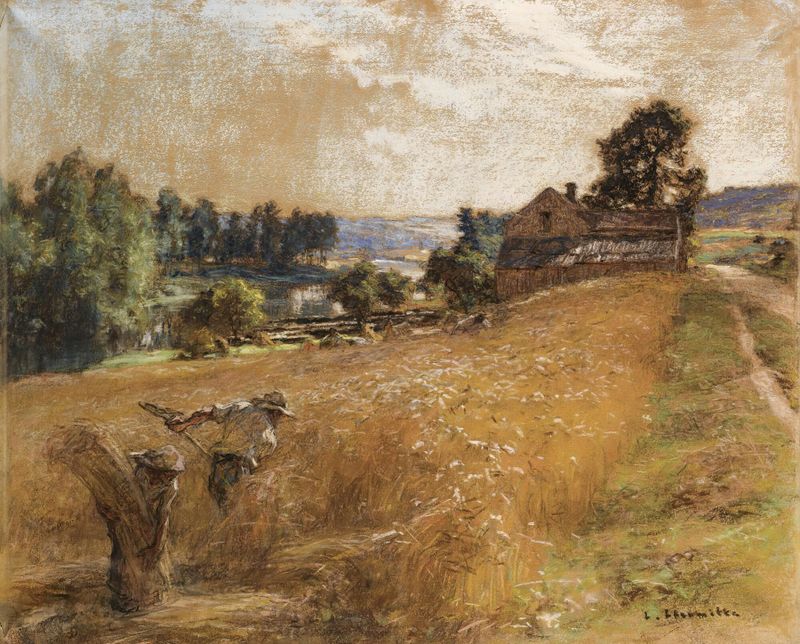
La Fenaison
Léon Augustin Lhermitte
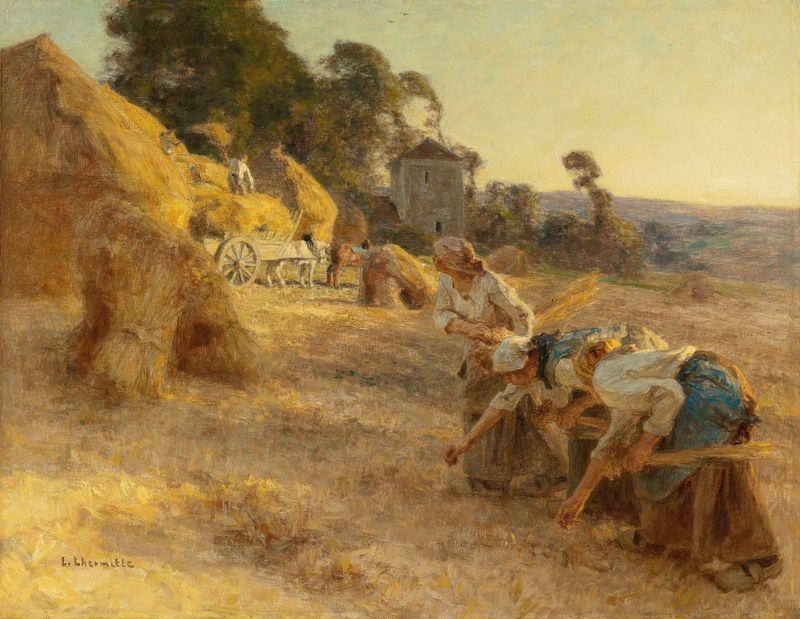
Glaneuses En Avant De Vieilles Meules
Léon Augustin Lhermitte
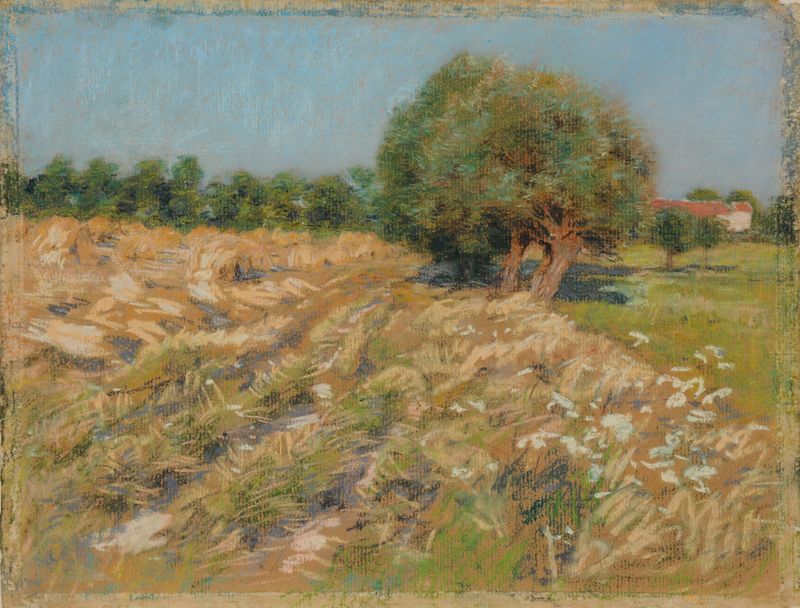
Le chemin de la ferme
Léon Augustin Lhermitte
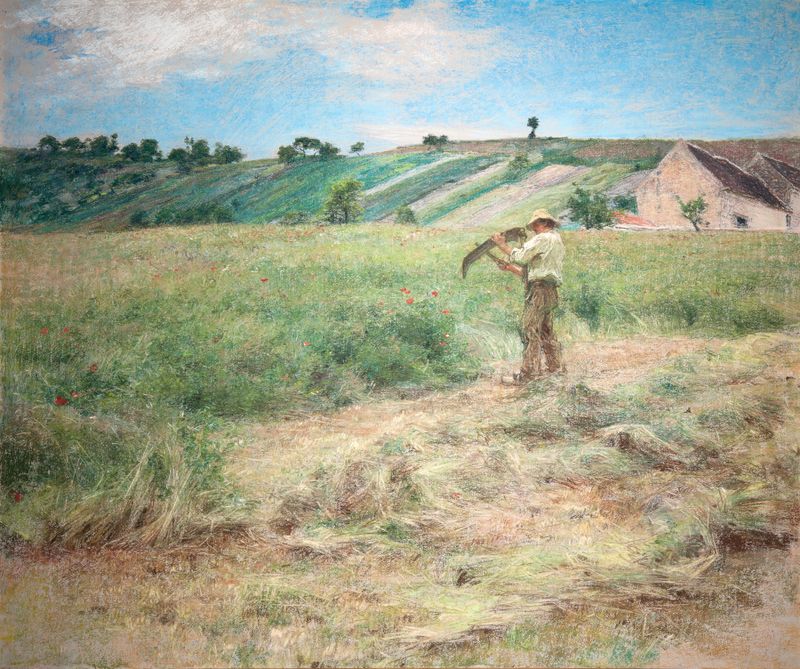
Haymaking
Léon Augustin Lhermitte
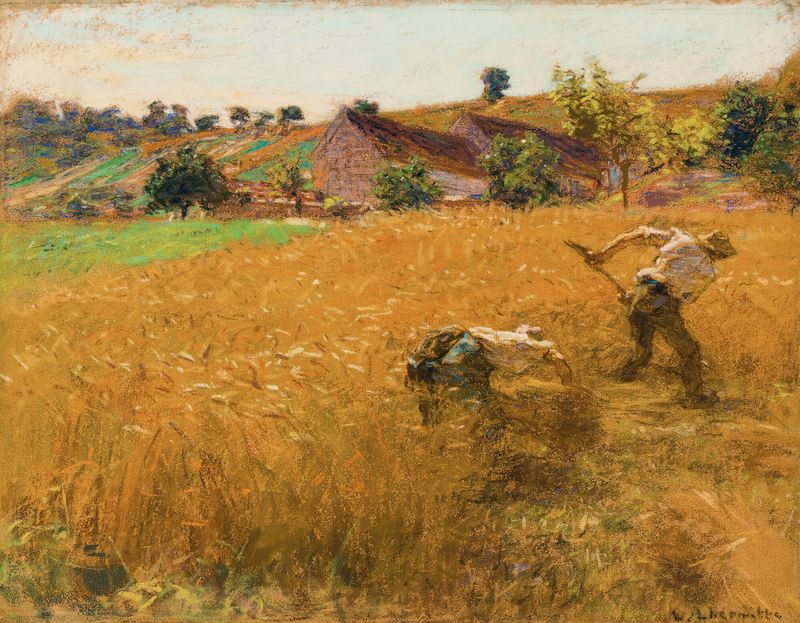
La Moisson
Léon Augustin Lhermitte
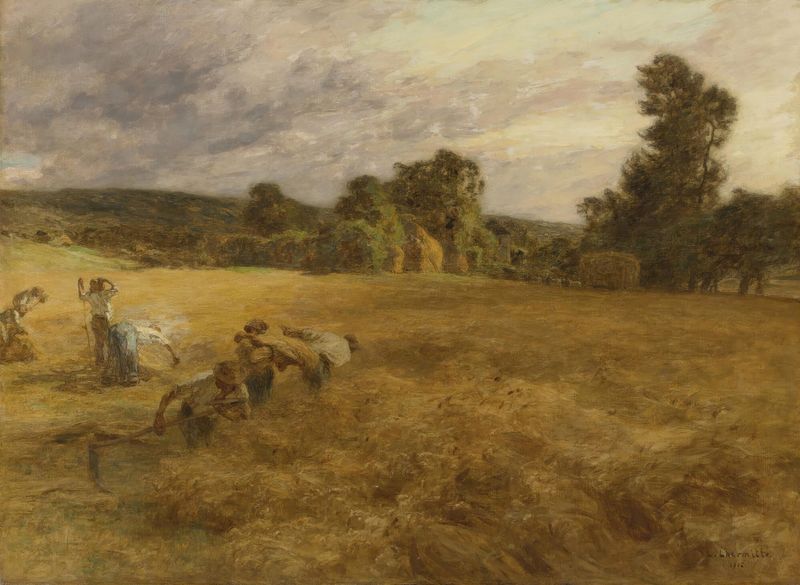
L’orage En Moisson
Léon Augustin Lhermitte
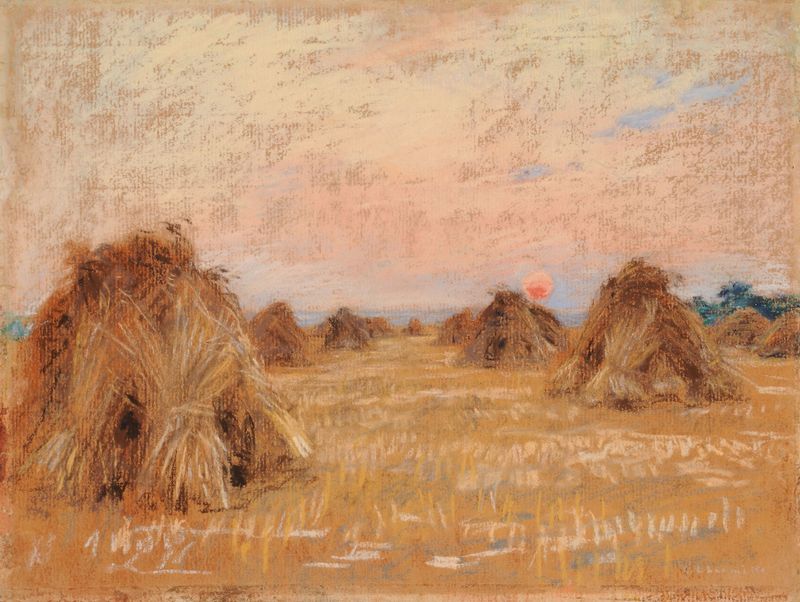
Fin de journée
Léon Augustin Lhermitte
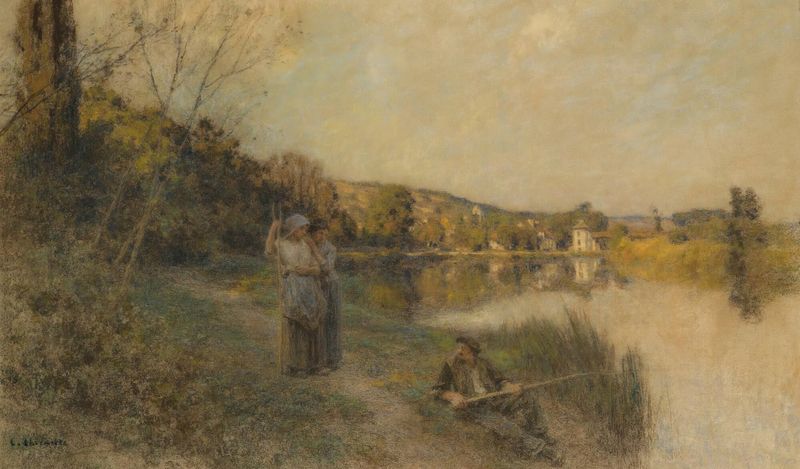
Fin De Belle Journee, Soleil Couchant, Pecheur
Léon Augustin Lhermitte

Quai au Sable, Chartèves
Léon Augustin Lhermitte